How to explore a city alone without rushing
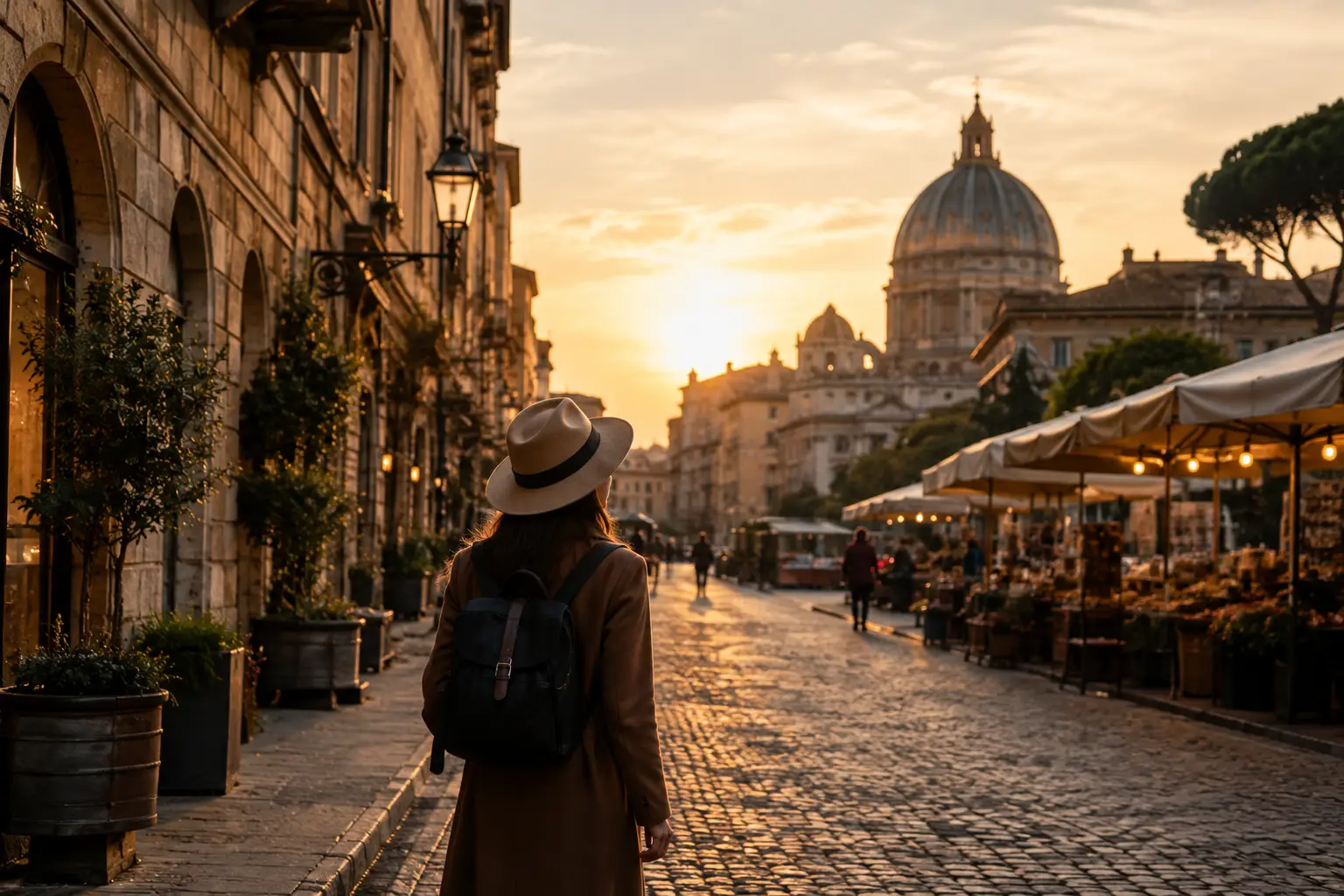
Learn how to explore a city alone at your own pace, from choosing a first walk to finding context in museums, markets and ordinary streets.
The first hour in a new city can feel strangely blank. You leave the station or airport, see a tram clatter past, smell coffee and wet stone, and realise nobody else is choosing the next turn. That is the pleasure of learning how to explore a city alone: the day belongs to your curiosity, not a timetable, a group vote, or somebody else’s lunch break.
Solo travel does not mean filling every minute. It means giving yourself enough structure to notice where you are. A good first day is often smaller than the plan you made at home: one neighbourhood, one major building, one proper meal, and a walk that leaves room for a wrong turn.
Start with a walk, not a checklist
Choose one area that gives you the city in miniature. In Rome, that might mean walking from the Pantheon through the narrow lanes towards Campo de’ Fiori. In Istanbul, it could be the slope from Galata down to Karaköy, where ferries, cafés, and old warehouses meet the water. In Mexico City, it may be a slow circuit around the Centro Histórico before the afternoon crowds thicken.
Aim for 60 to 90 minutes and give the walk a clear finish point. A square, a market, a museum, or a lunch place works better than “see where the day goes”. Total openness sounds romantic, but it can turn into checking your phone on every corner and seeing very little.
Walk the first stretch without headphones. Listen to the traffic pattern, the language around you, the sound of shutters lifting and plates being stacked. Cities have different tempos at nine in the morning and at four in the afternoon. You understand that faster on foot than from a taxi window.
Give each day one anchor
An anchor is the place you are willing to organise the day around. It might be the Prado, Prague Castle, the terracotta warriors, a cathedral, or a small museum devoted to one painter. It gives shape to the hours before and after, without turning the whole day into a race.
Arrive with a little context. A painting gallery is more rewarding when you know whether you are looking at a royal collection, a religious commission, or a modern argument in paint. A fortress becomes more than a view when you understand which road, river, or empire it was built to control.
Audio can help here, especially when you are alone and want company without conversation. Lokali offers free narrated walks and landmark guides in 45 languages across 190+ cities, with offline downloads for stretches where your connection disappears underground or behind thick stone walls. Use it selectively. Listen at the site, then put the phone away and look.
Not every place needs an hour of explanation. Some churches are worth entering for five quiet minutes because of the cool air, candle smoke, and worn floor. Some famous viewpoints are worth skipping if the queue is longer than the view will hold your attention. Being alone gives you permission to leave.
Let meals mark the map
A solo meal is not dead time between attractions. It is where the city stops being scenery. Choose somewhere with a view of ordinary movement: a counter beside a bakery window, a table facing a tram stop, a café near a market entrance.
If you are unsure what to order, keep it simple. Ask for one local dish or choose what the room is already eating. You do not need to turn every meal into a cultural test. A plate of soup, bread, and a seat near the window can tell you more about a neighbourhood than another twenty photographs.
Find the layer behind the postcard
The obvious sights matter because they hold real stories. The problem is not visiting them. The problem is seeing only their outer surface, then leaving with the same image everyone else has.
At a monument, ask one useful question: what was this place for when it was new? A grand square may have been a parade ground. A handsome station may have changed how workers reached the city. A palace may have been designed to make power visible from the street. That question turns stone into human intention.
Then look for the evidence that survives. Notice where a defensive wall has become the back wall of apartments. See whether old shop signs remain above newer businesses. In a port city, follow the route from the waterfront to the warehouses and then uphill towards the homes of merchants. The city often explains itself in these transitions.
Historical reconstructions can make this easier to imagine. They are useful when they help you connect a present-day street to a specific past moment, rather than treating history as costume drama. But leave space for uncertainty too. A city is not a museum label. It has been rebuilt, argued over, repainted, and lived in by people who did not plan to become part of a visitor’s story.
How to explore a city alone at your own pace
Pace is the main advantage of being solo, but it needs protecting. If you try to see six neighbourhoods in one day, you spend more time moving between them than noticing them. If you stay in one district all morning, the same street can change character three times.
Use a loose rhythm. Walk early when streets are being opened and deliveries arrive. Visit an indoor place when your feet need a break. Sit down in the middle of the day, even if you do not feel tired. Take a second walk near evening, when office workers, schoolchildren, worshippers, diners, and performers begin using the city differently.
Save places you notice but do not enter. A bookshop, a courtyard, a food stall, a concert poster, a side street with a tiled doorway: add them to your map and continue. This stops every appealing detail from interrupting the day, while giving you a personal list for tomorrow.
There is also value in repeating a route. Walk the same square in morning light and after dark. Take the same bridge twice. On the second pass, you stop looking for proof that you have arrived and start recognising details: the flower seller’s corner, the carved date over a doorway, the sound of a train crossing the river.
Know when a guide is worth paying for
Independent exploration is not a rule you have to obey. Some places are easier with a human guide, especially if access depends on a timed group, if the site is physically complex, or if you want to ask detailed questions about an unfamiliar craft, excavation, or collection. A scheduled walking tour can also be worthwhile when a neighbourhood’s story is difficult to read from the street.
A paid on-site audio guide may be useful when it contains material that is specific to one exhibition. The Louvre’s own guide, for example, costs €6 and is available in nine languages. That may suit you if you want the museum’s selected route and object-by-object commentary.
But do not pay simply because the desk is in front of you. If you only have 40 minutes, read the room labels, choose a small number of works, and give them your full attention. Renting an audio device for a rushed lap of a museum is rarely good value.
Leave room for an unfinished city
You will not understand a city in a weekend, and you do not need to pretend that you have. The aim is not to collect its landmarks like stamps. It is to leave with a few places that have become real: a street where laundry moved above the pavement, a museum room you stayed in too long, a late-afternoon square where you sat without needing anything else to happen.
That is the quiet strength of exploring alone. You can follow the route, abandon it, return to it tomorrow, and let one ordinary corner become the part you remember.