How to Plan Flexible Sightseeing Without Rushing
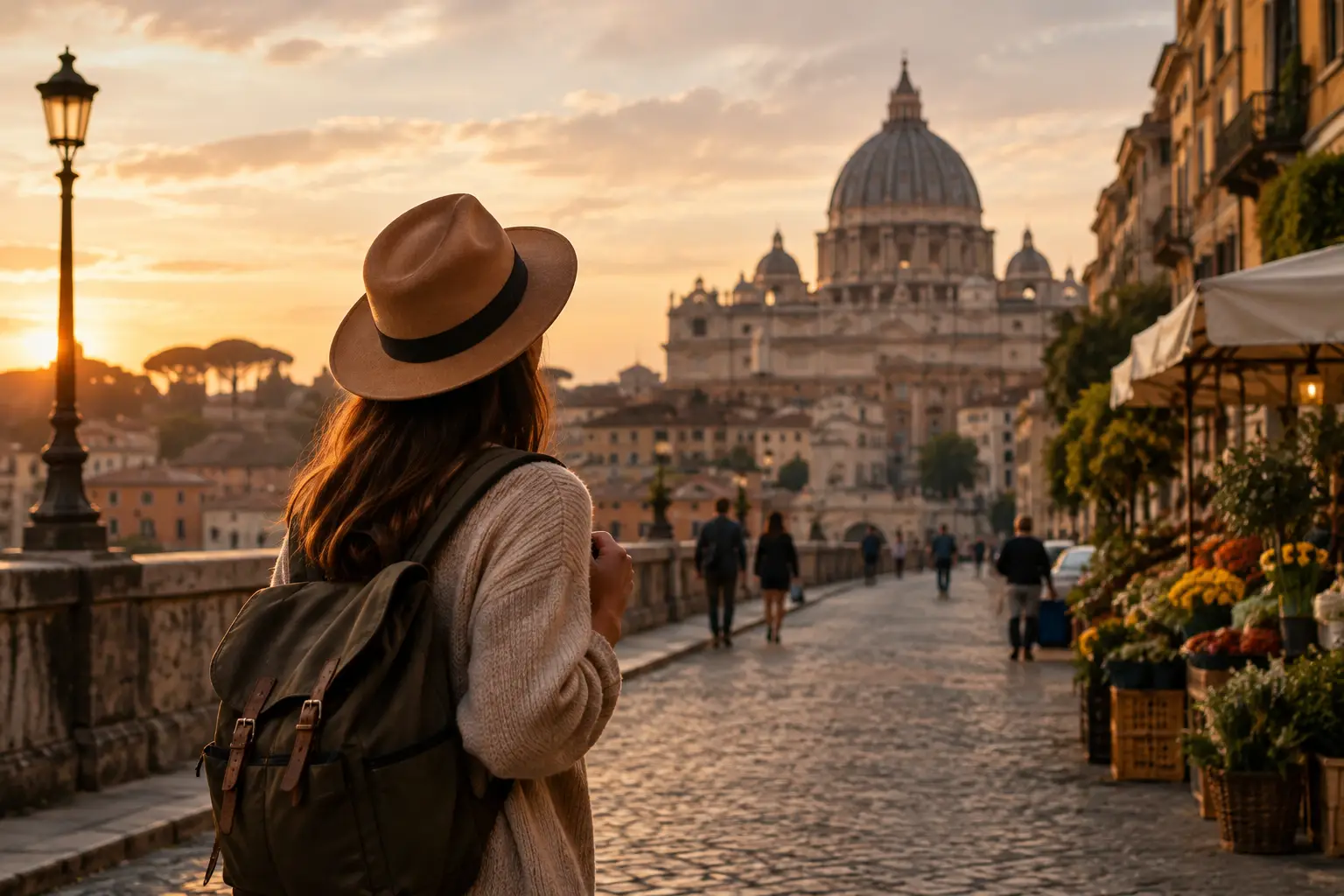
Plan flexible sightseeing around energy, weather, queues, and sudden discoveries. Build a day with structure, space, and room to change course abroad.
At 10:40 a.m., you are standing outside a museum with a long line, a coffee going cold in your hand, and a market street opening behind you. This is where you plan flexible sightseeing well or lose the day to a schedule made three weeks earlier. A good plan gives you a direction, not a set of handcuffs.
Flexible does not mean vague. It means you know what matters, what can move, and what is not worth forcing when the weather changes, your feet hurt, or a neighborhood proves more interesting than the famous square you saved.
Start with one fixed point
Give each day one appointment with the city. It might be a museum entry you have already arranged, a cathedral you want to see in the quiet morning, or a sunset view from a hill. Put it at the center of the day, then leave the hours around it open.
A fixed point works because it answers the practical question: where do you need to be, and when? Everything else can respond to the moment. If the morning is wet, spend longer inside. If the light is clear and the streets are lively, walk before going underground into a gallery.
Do not build a day around five fixed points. That is not flexibility. It is a race between map pins, usually with lunch eaten standing up and no memory of the streets between them.
For a first visit, choose one area rather than crossing the city repeatedly. A palace, a historic center, and a riverfront may look close on a phone map, but cobbled lanes, hills, station exits, and crowds change the pace. Keep the day geographically small.
Make a short list with different jobs
Before you leave your room, choose three kinds of stop: one place for history or art, one street or district for walking, and one place to sit. The first gives the day shape. The second leaves room for surprise. The third prevents the common mistake of treating rest as wasted time.
Your sitting place can be a park bench, a market hall, a café near a tram stop, or the steps beside a public square. It does not need a view famous enough for postcards. It needs a toilet nearby, a little shade or warmth, and a chance to look at the people who live around the visitor route.
Add only two optional stops. Write them as choices, not promises: a small museum if rain starts, a church interior if the afternoon becomes too hot, a food market if you finish early. With more than two, every detour begins to feel like failure.
Sort stops by how easily they move
Some places disappear from the day if you arrive late. Others are useful precisely because they wait for you. A timed exhibition, a ferry, or a building with limited access belongs in the first group. A neighborhood walk, a public viewpoint, a bookstore, or a broad city park belongs in the second.
Put the difficult stop early, when your attention is fresh. Save the movable ones for later. This simple order protects you from a delayed train, slow breakfast, or the temptation to stay longer at a place that deserves it.
Plan the route as a line, not a loop
Open a map and draw a rough path from your morning starting point to your evening area. The route should move forward through the city, with short side streets available for detours. A plan shaped like a zigzag often looks efficient on a screen and feels exhausting on the pavement.
Leave a blank zone between major stops. In an old center, that blank zone might contain an arcade, a produce stall, a courtyard, or a stairway leading to a different view. You cannot schedule these moments, but you can create space for them.
Walking time is not empty time. It is where a city begins to make sense. You notice how a grand avenue meets a working street, where the stone changes color, or how a former industrial edge becomes apartment blocks and cafes. A taxi between every landmark makes the day faster and thinner.
That said, do not turn walking into a moral test. Use transit when the next place is far away, when rain is persistent, or when the route climbs hard. Saving your energy for the museum room, the fortress wall, or the evening walk is sensible planning.
Use weather and energy as real information
Check the sky in the morning, then look outside. A forecast tells you about probability, not about the wind in a narrow street or the heat trapped in a paved square. If rain begins, do not spend twenty minutes trying to preserve the original plan. Move indoors and move the outdoor section later.
Heat changes what a good day looks like. Put exposed ruins, waterfronts, broad plazas, and hill walks earlier or later. In the middle hours, choose shade, a museum, a long lunch, or a slow neighborhood with covered passages. The same principle applies in cold weather: do not save every indoor place for the end, when you are already tired.
Your concentration also has a pattern. Many people can absorb a major museum for about ninety minutes before every portrait, vase, and battlefield starts to blur. Leave before that point if you can. A shorter visit with attention is more valuable than completing every room because the map says you should.
Give yourself a reason to linger
Flexible travel becomes shallow when every unplanned hour turns into scrolling for the next attraction. Prepare one layer of context before you arrive in a district. Learn why a bridge was built, what an old warehouse once held, or how a square changed after a fire, a railway, or an expanding port.
Then let the place answer back. You may see the old trade route in the width of the street, hear it in the bell pattern, or notice it in the carved sign over a shop door. History is often most vivid when it appears in an ordinary detail.
A free audio or written guide can help here because you choose the pace. Lokali covers cities around the world in 50+ languages, with guides you can save for offline use before heading out. Listen at the landmark, read on a bench, or skip ahead when the route pulls you elsewhere.
Audio is not always the right tool. In a crowded museum, you may prefer silence and a few carefully chosen labels. At a complicated archaeological site, a paid human guide can be worth the cost if you want to ask detailed questions and understand what you are looking at in real time. A scheduled walking tour can also be useful on your first evening if you need quick orientation and do not mind its pace.
Set a stopping rule before the day starts
The hardest part of flexible sightseeing is knowing when to stop. Without a rule, you keep adding one more square, one more museum wing, one more viewpoint, until the city becomes a blur and dinner becomes a problem to solve while tired.
Choose an end point that is easy to reach and pleasant after dark: the neighborhood near your room, a square with several food options, or a riverside path leading toward transit. Once you arrive, the plan is over. You can still wander, but you no longer owe the day another achievement.
This also makes room for the places that do not fit an itinerary. A bakery with a queue of local workers, a small concert heard through an open door, or a side street washed clean after rain may become the part you remember. You notice them because your day still has air in it.
Keep tomorrow partly unplanned
At the end of the day, do not immediately fill every gap in tomorrow's schedule. Save one period, perhaps a morning or late afternoon, for something you noticed today. It may be a museum you passed, a district someone mentioned, or simply a street you want to walk again in different light.
This is especially useful on a multi-day trip. The first day teaches you the city's scale and rhythm. The second day can be more precise. You no longer need to prove that you saw everything. You can return to the market, sit longer in the square, and follow the route that looked more alive than the one you planned.