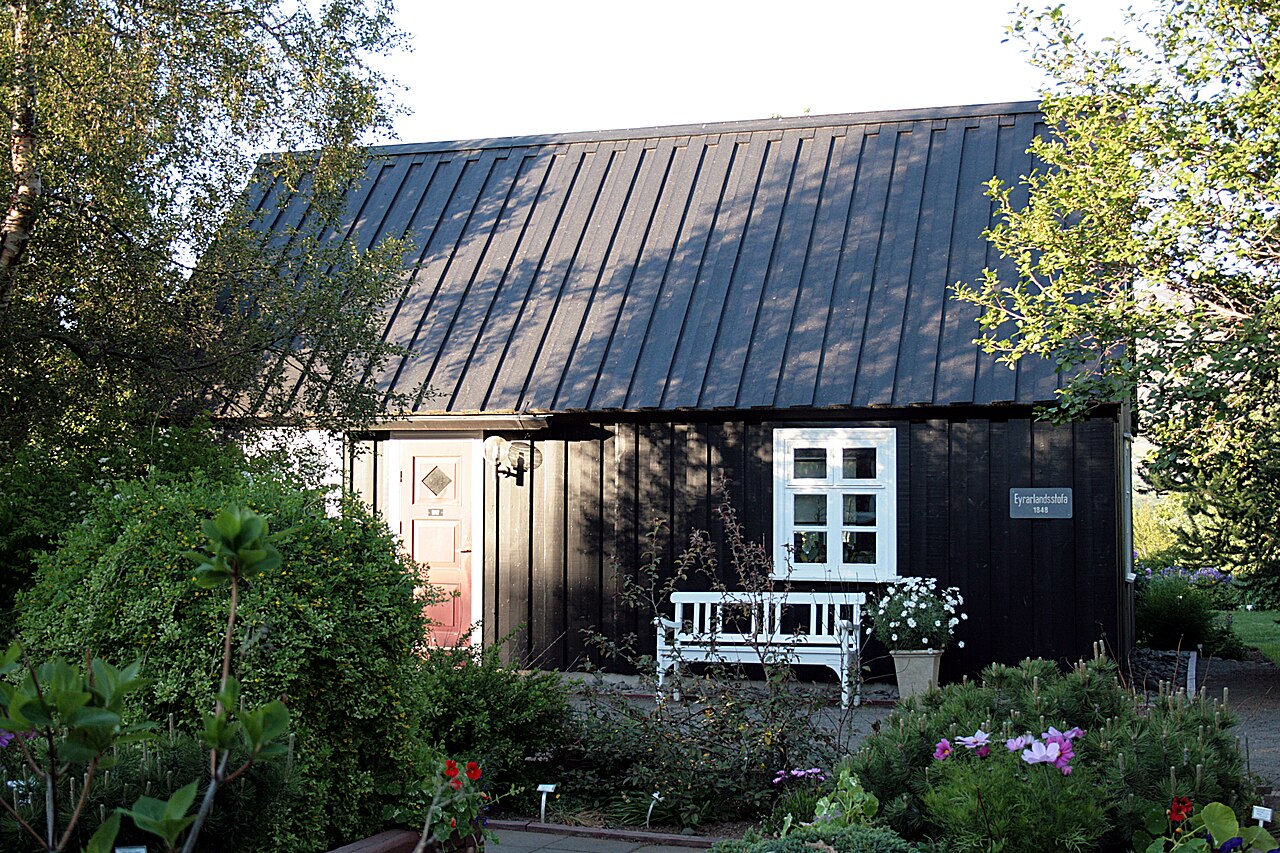
Botanical Garden Akureyri
65.6870° N · 18.0920° W · Park
Botanical Garden Akureyri is a park in Akureyri, Iceland. Iceland's largest botanical garden, established in 1912, featuring native Icelandic flora and an extensive collection of international plants adapted to northern conditions. Most visitors spend 45–90 min here. The free Lokali audio guide runs 5 minutes.
✓ Verified August 2026 · how we write these guides
Visitor facts
| Time needed | 45–90 min |
|---|---|
| Lokali audio guide | 5 min · free |
| Type | Park |
| Best for | Romantic |
| Location | Akureyri, Iceland |
| Coordinates | 65.6870, -18.0920 |
| Languages | 45, in the Lokali app |
The story
Push open the gate, and the air changes. The street noise fades behind you. Around you, leaves and petals crowd the path. Flowers nod in the breeze. Green fills every corner. This is a garden far in the north, where few would expect such color.
This is the botanical garden of Akureyri. In Icelandic it is called Lystigardurinn. It lies in the town of Akureyri, in the north of Iceland. The town sits at the head of a long fjord. The garden rests on a gentle slope just above the center of town. It is only a short walk from the main street. You could pass the entrance without noticing it.
The garden is one of the northernmost in the world. It lies just south of the Arctic Circle. This far north, the winters are long and dark. Snow covers the ground for months. The growing season is short. And yet, in this garden, plants from many lands grow well. That is the quiet wonder of the place. It is a small triumph over a hard climate.
The garden was opened in 1912. It began as a public park for the people of the town. Local residents planted it and cared for it by hand. Over time, it grew into something more. A wide collection of plants was gathered here from near and far. Each generation has added to it since. Today it serves as both a park and a living museum of plants.
You may wonder how so much grows so far north. The answer lies in the long summer light. Near the Arctic Circle, the summer days stretch on and on. The sun barely sets. Plants drink in many hours of light each day. This makes up for the short season. They grow quickly while the warmth lasts. By autumn, they have done a whole year's growing.
One part of the garden holds the plants of Iceland itself. Nearly all the wild plants of the island are gathered here. Small flowers, mosses, and grasses fill the beds. Many are easy to walk past out in the wild. Here you can lean in close. You can see their shapes and learn their names. It is a fine way to meet the plants of the island.
Another part holds plants from around the world. They come from high mountains and from cold lands. Some come from the far south, from places near the other pole. Side by side, they show what can survive in a cool climate. Gardeners have tested them here, year after year, to see what takes root. Labels name each one for the curious visitor.
Walk slowly along the paths. Notice the colors. Reds, yellows, blues, and purples sit close together. Bees move between the blooms. Birds call from the trees above. Benches wait in quiet corners. It is a place made for resting as much as for looking. Take a slow breath, and let the garden set your pace.
Listen as you walk. The sounds are soft here. There is the hum of insects. There is the rustle of leaves. Now and then, a bird calls out. Beyond the hedges, the town goes on with its day. But inside the gate, the pace slows down.
There is a small cafe in the garden. In summer, people sit outside with their coffee. Families come with children. Travelers rest their tired feet. The garden is free to enter. It belongs to everyone who walks through the gate, young and old alike.
The garden lives by the seasons. It opens in the summer months, when the plants are awake. Through June, July, and August, it is at its fullest. By autumn, the flowers fade and the garden grows quiet. In winter, it rests under snow and waits for the light to return in spring. The cycle repeats, year after year, without fail.
A garden like this means a great deal so far north. For much of the year, the land is bare and brown. Color is precious here. The people of the town built this place with their own hands. They wanted beauty in a hard climate. That care still shows today in every tidy bed.
Before you leave, find a bench and sit a while. Look at the flowers against the pale northern sky. Think of the short summer that brought them all here. In a few weeks many will fade. That is part of their beauty. They bloom brightly, just because their time is brief. Carry that thought with you back through the gate.
Key facts
What to look for
Practical tips
Common questions
How long do you need at Botanical Garden Akureyri?
Plan 45–90 min. That is the time most visitors spend at Botanical Garden Akureyri. The free Lokali audio guide adds about 5 minutes of narration you can listen to as you walk, so it fits inside your visit rather than adding to it.
Is there a free audio guide to Botanical Garden Akureyri?
Yes — the Lokali app narrates Botanical Garden Akureyri free of charge in 50+ languages. It covers the history, what to look for on site and practical tips, and it works offline once downloaded.
Where is Botanical Garden Akureyri?
Botanical Garden Akureyri is in Akureyri, Iceland, at 65.6870, -18.0920. Tap the map link on this page for directions from where you are.
What should you know before visiting Botanical Garden Akureyri?
Plan your visit between June and August.
What is Botanical Garden Akureyri known for?
Opened in 1912 as a public town park.
What is the best time to visit Botanical Garden Akureyri?
Visit in late spring or summer when the garden is in full bloom.
On the map
Opens directions to Botanical Garden Akureyri from your location.
Reference
More to see in Akureyri


Hear Botanical Garden Akureyri in your language
The full story, narrated, in 50+ languages. Download it before you go and it plays offline, at your own pace, with no ticket and no tour group.