Darat al-Funun is an art gallery in Amman, Jordan. Contemporary art centre in a restored 1920s mansion in Jabal Amman, hosting rotating exhibitions of regional and international artists. Most visitors spend 45–60 min here. The free Lokali audio guide runs 5 minutes.
✓ Verified August 2026 · how we write these guides
Visitor facts
| Time needed | 45–60 min |
|---|---|
| Lokali audio guide | 5 min · free |
| Type | Art Gallery |
| Best for | Editors' pick |
| Location | Amman, Jordan |
| Coordinates | 31.9465, 35.9298 |
| Languages | 45, in the Lokali app |
The story
You climb a quiet lane away from the noise of downtown. The traffic fades. Old stone houses appear among pine trees and flowering shrubs. A cat slips along a garden wall. You have reached Darat al-Funun, a place where art, gardens, and old stone come together on a hillside above the city. Birdsong replaces the sound of car horns.
The name means, roughly, the little house of the arts. In truth it is not one house but several. A cluster of old homes stands on the slope of Jabal al-Weibdeh, one of the hills of Amman. The houses were built in the early twentieth century, in the 1920s and 1930s, when this was a fashionable quarter of the growing town. Each house has its own character, its own rooms and stairways.
By the late twentieth century the houses had aged. They were carefully restored and brought together as a home for art. The work was led by the Khalid Shoman Foundation, set up by Suha Shoman, an artist herself. The doors opened to the public in 1993. Since then this has been one of the main gathering points for artists across the Arab world.
Step inside the main house. The rooms are cool, with thick stone walls and high windows. On the walls hang the work of living artists, mostly from Jordan and the wider Arab world. The shows change through the year, so what you see depends on when you come. Painting, photography, video, and sculpture all find a place here. Soft light from the tall windows falls across the floors.
Because the art is of our own time, it often speaks to the present. You may find work about memory, about home, about war and exile, about the lives of women, about the land itself. Take your time with it. Read the labels. These are voices from this region, speaking in their own terms rather than through the eyes of outsiders. Some pieces are quiet, others loud, but all reward a patient eye.
Then go back outside, because half of this place is its gardens. Paths and stone steps link the houses across the slope. There are terraces shaded by trees, benches set in quiet corners, and the smell of pine and earth. People come here simply to sit, to read, or to talk over coffee. It is one of the calmest spots in the whole city. In spring the gardens fill with the scent of blossom.
In the grounds, among the trees, you come upon something far older than the houses. Here lie the worn remains of a small church from the age of Byzantium, more than a thousand years old. Low stone walls trace where it once stood. You can step among them freely, where prayers were said long before any of the houses were built. Moss grows in the cracks where the old foundations remain.
This layering is part of the charm of the place. Ancient stone, old houses, and new art all share the same hillside. Each belongs to a different age, yet they rest together without strain. Standing among the ruins, with a modern painting just steps behind you, you feel how this land holds many times at once.
There is also a library here, with books on art and culture from across the region. Darat al-Funun is not only a place to look. It teaches, it gathers, and it supports. It offers space and time to young artists, and it holds talks, screenings, and workshops through the year. It is a living workshop, not a still museum. Many well-known artists of the region have passed through its rooms.
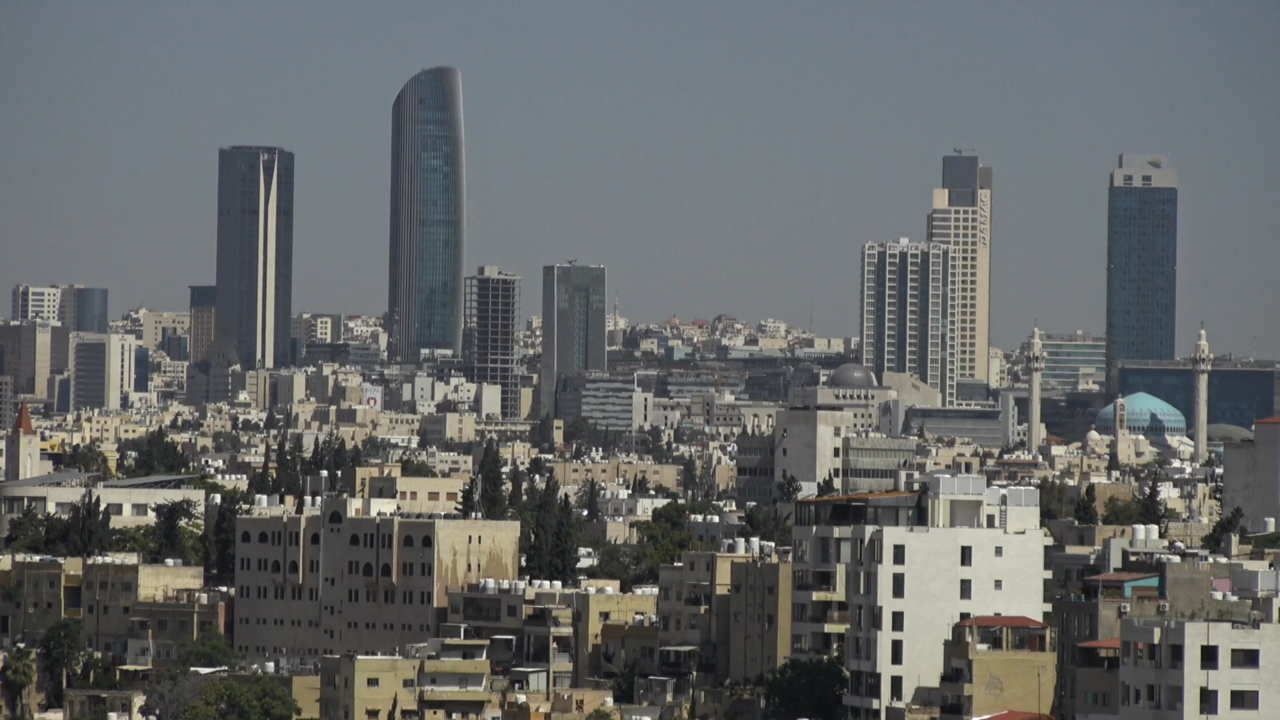
Find a spot at the edge of the terraces and look out. The old center of Amman spreads below you, pale and close. On the hill opposite stand the columns of the ancient citadel. From here you can take in the long shape of the city, the old and the new pressed together across the hills. It is a fine place to watch the sun go down.
Entry is usually free, which fits the spirit of the place. It was made to be open, a gift to the city and to anyone who climbs the hill to find it. There is often a small cafe where you can rest with a drink and watch the light move across the gardens. Local students and writers often fill the shaded tables.
When it is time to leave, go down slowly. Pause once more among the trees. Behind you are the rooms full of new work, and beneath your feet the stones of a church that fell quiet centuries ago. Few places hold the long memory of this land and its restless present quite so gently, side by side, on a single quiet slope.
Key facts
What to look for
Practical tips
Common questions
How long do you need at Darat al-Funun?
Plan 45–60 min. That is the time most visitors spend at Darat al-Funun. The free Lokali audio guide adds about 5 minutes of narration you can listen to as you walk, so it fits inside your visit rather than adding to it.
Is there a free audio guide to Darat al-Funun?
Yes — the Lokali app narrates Darat al-Funun free of charge in 50+ languages. It covers the history, what to look for on site and practical tips, and it works offline once downloaded.
Where is Darat al-Funun?
Darat al-Funun is in Amman, Jordan, at 31.9465, 35.9298. Tap the map link on this page for directions from where you are.
What should you know before visiting Darat al-Funun?
Entry is usually free, so just walk in.
What is Darat al-Funun known for?
Opened to the public in 1993.
What is the best time to visit Darat al-Funun?
The café in the garden courtyard is a quiet refuge.
On the map
Opens directions to Darat al-Funun from your location.
More to see in Amman

Hear Darat al-Funun in your language
The full story, narrated, in 50+ languages. Download it before you go and it plays offline, at your own pace, with no ticket and no tour group.