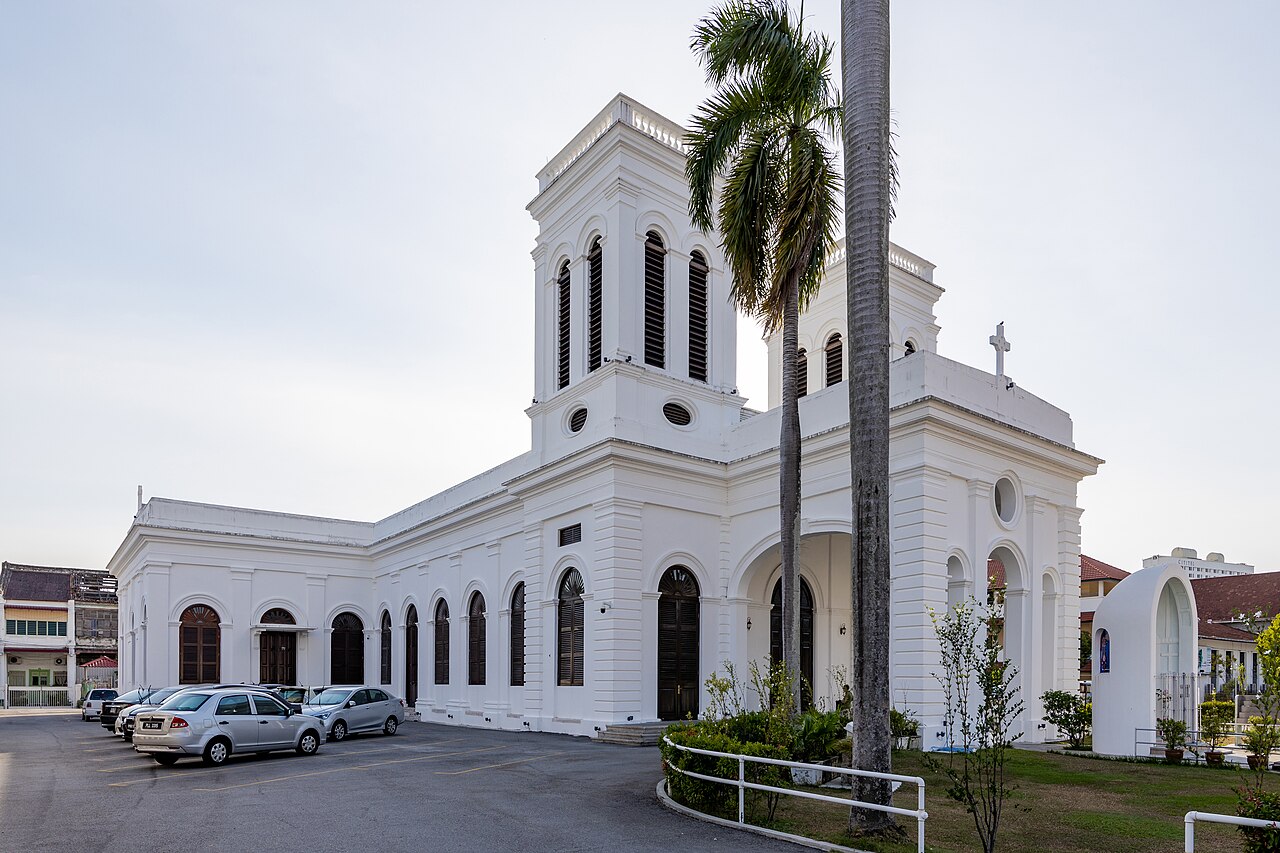
Church of the Assumption is a church in Bled, Slovenia. Baroque pilgrimage church built on Bled's island in the 17th century, reached by traditional wooden pletna boats or by swimming. Most visitors spend 20–40 min here. The free Lokali audio guide runs 5 minutes.
✓ Verified August 2026 · how we write these guides
Visitor facts
| Time needed | 20–40 min |
|---|---|
| Lokali audio guide | 5 min · free |
| Type | Church |
| Best for | Romantic |
| Location | Bled, Slovenia |
| Coordinates | 46.3617, 14.1150 |
| Languages | 45, in the Lokali app |
The story
The boat touches the landing, and a stairway rises in front of you, straight up into the trees. At the top, a bell tower shows white above the leaves. Somewhere inside, a rope waits. The lake laps softly against the stone behind you, and the boatman holds the dock while you step off.
This small island is the only one in Slovenia, and a church has stood on it for a very long time. The church is given to the Assumption of Mary. People have crossed the water to worship here across many centuries, long before the building you see today took its present shape above the trees.
From the landing, a stone stairway climbs to the church door. There are ninety-nine steps. By an old custom, a groom carries his bride up all of them before their wedding, while she stays silent the whole way. Couples still try it today, to laughter and cheering from the people watching at the bottom.
The church you see now took form in the seventeenth century, in the full Baroque style of that age. But it stands on much older ground. Beneath it lie the traces of earlier churches, Gothic and Romanesque, each one raised in turn upon the ruins of the church that stood before it.
Older stories reach back further still. Long before the church, people say a temple to a goddess once stood on this same island, in the time before these lands turned to the Christian faith. No one can show you its walls now. The tale survives only as a tale, passed down by word from far back.
Step inside. The room is small but richly worked. Gold catches the light on the altar. Painted figures look down from the walls and the curved ceiling above. After the bright lake outside, the dimness takes a moment to settle, and then, slowly, the detail and the color appear all around you.
At the center hangs the rope of the bell. This is the part most visitors come for. You take the rope in both hands and pull, and high in the tower above the bell answers, full and clear. By tradition, you may make a wish as it rings. Many people do, and the line for it is patient. Children pull hardest of all, and the bell forgives them.
A story is tied to that bell. People tell of a widow who once lived by the lake, grieving a husband lost to the water. She gathered her silver and had a bell cast in his memory. As it was carried across the lake, a storm rose, and the bell sank to the bottom, where some say it rings still on the quietest nights.
The story goes on. The widow, in her sorrow, left for Rome and gave the rest of her days to the church. When she died, the Pope heard of her grief, had a new bell made, and sent it to be blessed and hung on the island. That is the bell, people say, whose rope you hold today. Whether the tale is true, no record can prove. It is offered as a story, and a fine one.
Behind the altar, a worn patch of older painting survives from a time before the Baroque work began. It shows that this room has been changed and repainted again and again, each generation leaving its own mark upon the walls, none of them quite able to erase the hand that came before.
Outside again, walk the short path around the island. It takes only a few minutes. Old trees lean out over the water. A few low buildings stand near the church, including a house for the clergy and a small place to rest and drink. From the edge, the castle is visible, high on its distant cliff across the lake.
Time your visit for a quieter hour if you can. In the middle of the day the boats arrive together, and the small church fills quickly with people and voices. Early or late, the island calms. The steps empty. The bell, when it rings, carries clean and alone across the surface of the water.
Before you go back down, stand a moment at the top of the steps. The lake spreads out on every side, ringed by mountains. The rope is warm where many hands have held it. Pull it once, listen, and let the sound travel out over the water toward the peaks, and then begin your slow way down. Each step down opens a new view of the water.
Key facts
What to look for
Practical tips
Common questions
How long do you need at Church of the Assumption?
Plan 20–40 min. That is the time most visitors spend at Church of the Assumption. The free Lokali audio guide adds about 5 minutes of narration you can listen to as you walk, so it fits inside your visit rather than adding to it.
Is there a free audio guide to Church of the Assumption?
Yes — the Lokali app narrates Church of the Assumption free of charge in 50+ languages. It covers the history, what to look for on site and practical tips, and it works offline once downloaded.
Where is Church of the Assumption?
Church of the Assumption is in Bled, Slovenia, at 46.3617, 14.1150. Tap the map link on this page for directions from where you are.
What should you know before visiting Church of the Assumption?
Pull the bell rope and make a quiet wish.
What is Church of the Assumption known for?
Ninety-nine stone steps climb to the church door.
What is the best time to visit Church of the Assumption?
The bell inside the church tower has a rope within reach — locals ring it for good fortune.
On the map
Opens directions to Church of the Assumption from your location.
More to see in Bled


Hear Church of the Assumption in your language
The full story, narrated, in 50+ languages. Download it before you go and it plays offline, at your own pace, with no ticket and no tour group.