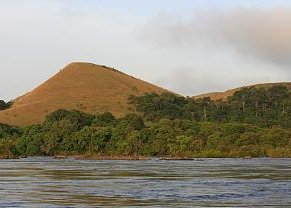
Photo: FX · CC BY-SA 3.0 · Wikimedia Commons
Lopé National Park is a national park in Gabon. UNESCO listed Lopé as a World Heritage Site in 2007. The free Lokali audio guide runs 7 minutes.
✓ Published October 2026 · how we write these guides
Visitor facts
| Lokali audio guide | 7 min · free |
|---|---|
| Type | National Park |
| Location | Booué, Gabon |
| Coordinates | -0.5253, 11.5428 |
| Official website | parcsgabon.org |
| Languages | 50+, in the Lokali app |
The story
Listen first. Out here, the loudest sound is often the grass. Tall savanna stems brush against each other in the wind, dry and papery, while somewhere beyond them the forest edge stands dark and green. The air smells of warm earth and, after rain, of wet leaves. Above, the sky opens wide in a way that surprises most people who arrive expecting only jungle. This is Lopé, in central Gabon, and that mix of open grass and deep forest is the first clue to its story.
The park sits along the Ogooué, the great river of Gabon, which runs west from the interior toward the Atlantic coast. The town of Booué lies upstream to the east, on the same river. Lopé covers roughly five thousand square kilometres, most of it rainforest. Its northern part, though, is a patchwork of grassland and forest islands. From a high point, it looks like someone has painted pale gold shapes across a green map. That pattern is very old, and it is the reason scientists come here.
Here is the first surprise. These savannas are not new clearings made by modern farming. Researchers describe them as relict savannas. That means they are survivors from a drier period, during the last ice age, when grassland spread across much of central Africa and the forest shrank. When the climate became wet again, the rainforest returned, but some grasslands held on. So when you look across these open hills, you are looking at a landscape that has stayed open for thousands of years.
The edge between grass and trees is where much of the life of Lopé gathers. Animals use both worlds. They feed in the open and shelter in the forest. Pay attention to where the trees meet the savanna. The line is not sharp. Small fingers of forest reach out into the grass, often along streams. Scientists have studied how the forest slowly advances into the savanna when fire does not stop it. Here, the boundary is alive and always moving.
Lopé is perhaps best known for one animal: the mandrill. Mandrills are large monkeys with brilliant faces. Adult males carry bright red and blue colours on the nose and cheeks, almost like paint. In Lopé, mandrills travel in groups of extraordinary size. Researchers have recorded hordes of several hundred animals moving together through the forest. These are among the largest natural groups of any primate on Earth. If one passes nearby, you may hear it before you see it — a rolling noise of branches, calls, and movement.
The forest holds much more. Western lowland gorillas live here, and so do chimpanzees. Forest elephants walk the trails. They are smaller than savanna elephants, with straighter tusks, and they play an important role. They eat fruit and carry the seeds across long distances, so they help to plant the forest itself. You may also find buffalo grazing in the savanna, and many kinds of birds along the river and the forest edge. Sightings are never guaranteed. Patience matters more than luck.
Lopé also has a long history of research. A primate research station has worked here since the 1980s, studying gorillas, chimpanzees, mandrills, and the forest they depend on. Much of what the world knows about central African rainforest ecology has roots in long-term work done in places like this. Lopé is also one of the oldest protected areas in Gabon. It was first set aside as a wildlife reserve in the mid twentieth century. It became a national park in 2002, when Gabon created a whole network of new parks.
Now the second surprise. Lopé is not only a natural landscape. It is also a human one, and a very old one. In 2007, UNESCO listed it as a World Heritage Site under the name Ecosystem and Relict Cultural Landscape of Lopé-Okanda. It was recognised for both its nature and its culture. That combination is rare in central Africa. The open savannas and the river valley made this area a natural route for people moving through the region over thousands of years.
Archaeologists have found traces of these people across the park. There are stone tools, remains of old settlements, and evidence of early iron working. Most striking of all are the rock engravings. People carved more than a thousand images into stones in the area. Many are circles and concentric rings. Others are lines, geometric shapes, and a few simple figures, sometimes interpreted as tools or weapons. Their exact meaning is still not known. They are a quiet record left by communities whose names we no longer have.
The Ogooué valley is often described as one of the corridors for the great movements of Bantu-speaking peoples. These were farming and iron-using communities who spread across much of central and southern Africa over many centuries. Here, the river gave water, transport, and fish. The savannas gave open ground for travel. The forest gave food and materials. Standing in this landscape, it becomes easier to imagine why people would choose to pass through, settle, and return, generation after generation.
Today, many visitors reach the area by the Trans-Gabon railway. The line follows the river valley and connects the coast near Libreville with the interior. There is a station at the village of Lopé, near the edge of the park. The train ride itself shows the change in the land, from dense forest to the first open hills. From the village, guided drives and walks lead into the savanna, to viewpoints over the river, and along forest trails.
Take a moment with the light. In the early morning, mist often lies in the valleys and over the river, and the forest edge looks soft and grey. As the sun rises, the grass turns gold and the shadows of the forest islands stretch across the slopes. Late afternoon brings warmer colours again. The heat in the middle of the day is strong, and many animals rest then. The landscape changes its mood several times in a single day.
So, before you move on, look around once more. Notice the line where grass gives way to trees. Listen for a bird call from the forest, or the river somewhere below. Think of the stones carved by hands long gone, and the mandrills moving through the shade. Lopé is not one landscape but two, living side by side — and people have walked between them for a very long time. Now you are walking here too.
Key facts
What to look for
Practical tips
Common questions
Is there a free audio guide to Lopé National Park?
Yes — the Lokali app narrates Lopé National Park free of charge in 50+ languages. The guide runs about 7 minutes, covers the history, what to look for on site and practical tips, and works offline once downloaded.
Where is Lopé National Park?
Lopé National Park is near Booué, Gabon, at -0.5253, 11.5428. Tap the map link on this page for directions from where you are.
What is Lopé National Park known for?
UNESCO listed Lopé as a World Heritage Site in 2007. Recognised for both natural and cultural heritage value.
What should you look for at Lopé National Park?
Fingers of forest reaching into the open savanna. Concentric circles carved into rock surfaces. Bright red and blue faces of male mandrills.
What should you know before visiting Lopé National Park?
Visit early morning for mist over the Ogooué valley. Book a local guide for savanna drives and forest walks.
When is the best time to visit Lopé National Park?
Visit early morning for mist over the Ogooué valley.
On the map
Opens directions to Lopé National Park from your location.
Hear Lopé National Park in your language
The full story, narrated, in 50+ languages. Download it before you go and it plays offline, at your own pace, with no ticket and no tour group.