
Belgian Comic Strip Center
50.8513° N · 4.3602° E · Museum
Photo: Ramón · CC BY-SA 2.0 · Wikimedia Commons
Belgian Comic Strip Center is a comics museum in the Pentagon, Brussels, Belgium. Building designed by Art Nouveau architect Victor Horta. The free Lokali audio guide runs 7 minutes.
✓ Published October 2026 · how we write these guides
Visitor facts
| Lokali audio guide | 7 min · free |
|---|---|
| Type | Museum |
| Location | Brussels, Belgium |
| Coordinates | 50.8513, 4.3602 |
| Official website | comicscenter.net |
| Languages | 50+, in the Lokali app |
The story
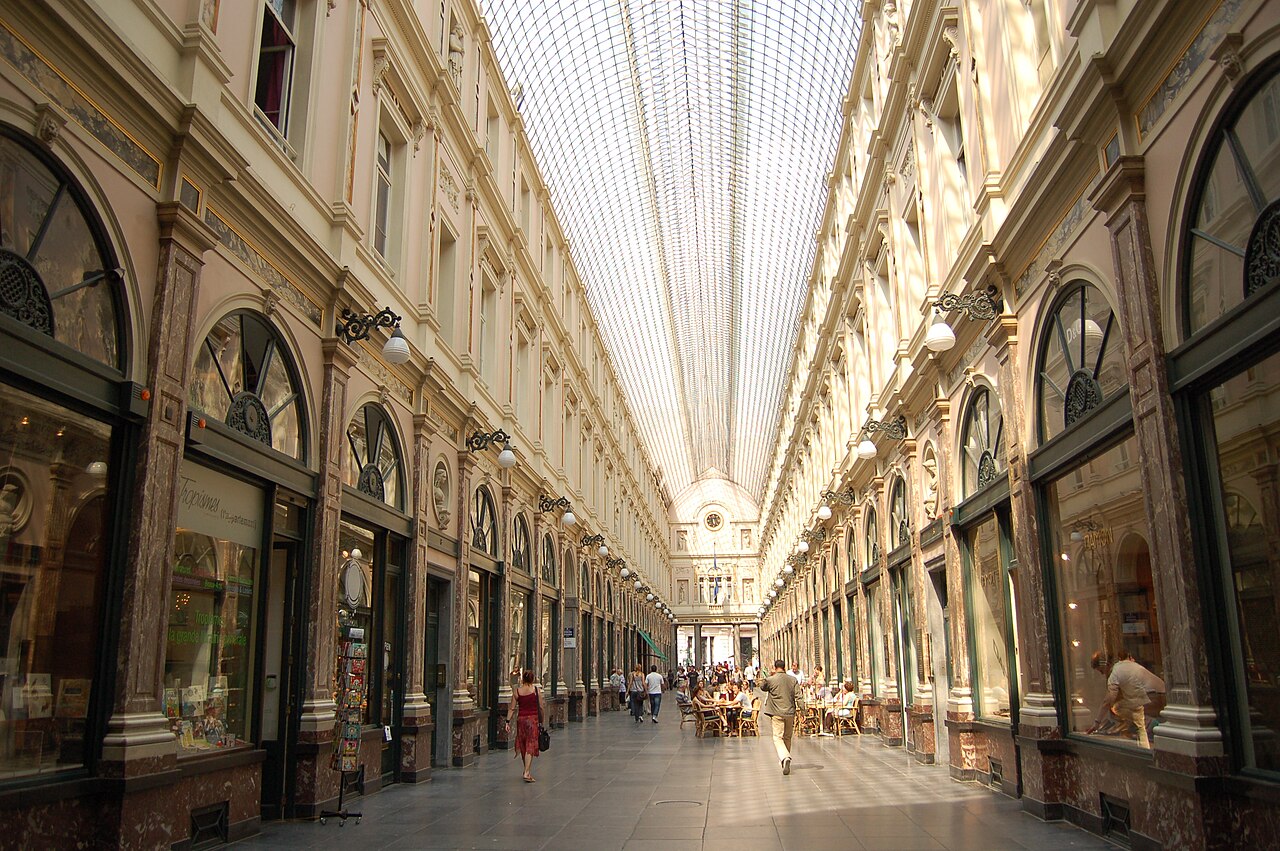
Push through the doors and the street noise drops away. Cool stone is under your feet, and soft daylight falls from somewhere high above. Look up. A great glass roof sits over a wide hall, held by slender curves of iron. The light here is pale and even, the kind of light that makes paper look its best. And just ahead stands a tall red-and-white rocket, the one that carried a young reporter and his little white dog to the Moon.
This is the Belgian Comic Strip Center, in the heart of Brussels. Before we talk about cartoons, though, it is worth knowing that the building itself is a treasure. It was never meant to be a museum. It began life as a department store, a place where people came to buy fabric. The name of that business was Waucquez, and you may still see it mentioned around the building. It sold textiles in the years when Brussels was growing rich and confident.
The architect was Victor Horta, one of the great names of Art Nouveau. Art Nouveau was a style from around 1900 that turned away from heavy, old-fashioned decoration. Instead, it borrowed lines from nature — stems, vines, the curl of a wave. Horta was a master of this style in Brussels. Here, he designed a store that was also a showroom for light. The building was completed in the early twentieth century, around 1906, and the glass roof did a very practical job. Shoppers could judge the true colour of cloth by daylight.
Take a moment to follow the ironwork with your eyes. Notice how the columns do not simply stop at the ceiling. They bend and branch, almost like plants reaching upward. Look at the grand staircase too. It rises in a gentle sweep, built for people to be seen as well as to climb. Horta wanted the structure itself to be the decoration. Nothing here is hidden behind plaster. The iron, the glass, and the stone all stay in plain view.
Here is something many visitors do not realise. This building came close to disappearing. After the fabric business ended, the store stood empty for years. Its condition grew worse, and its future looked uncertain. Many buildings by Horta in Brussels were lost during the twentieth century, torn down as tastes changed. This one was saved. It was carefully restored, and in 1989 it opened its doors again — this time as a home for comic art.
So why comics, and why Belgium? In much of Europe, comics are taken very seriously. In French they are called bande dessinée, which simply means drawn strip. People here often call comics the ninth art, placing them beside painting, music, and cinema. Belgium has produced an unusual number of famous comic creators for such a small country. Brussels in particular became a centre for publishers, magazines, and studios. Children grew up reading weekly comic magazines, and many of those children became artists themselves.
The most famous of them all is Hergé, the creator of Tintin. Tintin first appeared in 1929, in a children's supplement of a Brussels newspaper. He is a young reporter with a quiff of hair and a loyal dog named Snowy. Over the decades, his adventures were translated into many languages and read around the world. Hergé's drawing style became known as the clear line. That means clean outlines, flat colours, and very little shading. Once you notice it, you will see its influence everywhere in this collection.
Tintin is not alone here. Look out for the Smurfs, the small blue creatures created by the Belgian artist Peyo. They first appeared in 1958, as side characters in another series, before they became stars in their own right. You may also meet Lucky Luke, the cowboy who shoots faster than his own shadow, created by the artist Morris. And there is Gaston, the lazy and accident-prone office worker drawn by André Franquin. Each one carries a slightly different sense of humour.
What makes a visit here special is the chance to see how comics are actually made. Look closely at the original drawings when you find them on display. You may see pencil marks under the ink, small corrections, and patches of white paint covering mistakes. Artists often drew their pages much larger than the printed version. When you stand close, you can see the hand of the artist in a way that a printed book never shows. It feels personal, almost private.
The exhibitions change over time, so the rooms upstairs may look different from one visit to the next. Some displays focus on a single artist. Others explore a theme, a period, or a new generation of creators. Belgian comics did not stop with the classics. Younger artists today work in many styles, from gentle stories about family life to dark graphic novels for adults. The Center tries to show both the old favourites and this newer, more experimental work.
As you move through the building, notice how the old store and the new purpose fit together. Wide floors that once held rolls of fabric now hold panels and glass cases. The open galleries let you look down into the hall below. You can watch other visitors pause, point, and laugh. There is often a quiet hum of many languages at once. Families, students, and serious collectors all share the same space, and the comics give them something in common.
When you step back outside, keep your eyes open. Brussels has turned its love of comics into part of the street itself. Across the city, large comic murals are painted on the sides of buildings. Many of them show well-known characters climbing stairs, running across rooftops, or peering out of windows. Following these murals is a pleasant way to explore neighbourhoods that most tourists miss. The Center is a good place to start that walk, since you will now recognise many of the faces.
Before you leave, stand once more beneath the glass roof. Listen to the soft echo of footsteps on stone. Look at the iron curves overhead, shaped more than a century ago to let light fall on cloth. Today that same light falls on drawings, on rockets, on small blue figures with white hats. Two very different kinds of Belgian creativity meet here, under one roof. As you walk back into the street, you might find yourself looking at the city a little differently — almost as if it were drawn.
Key facts
What to look for
Practical tips
Common questions
Is there a free audio guide to Belgian Comic Strip Center?
Yes — the Lokali app narrates Belgian Comic Strip Center free of charge in 50+ languages. The guide runs about 7 minutes, covers the history, what to look for on site and practical tips, and works offline once downloaded.
Where is Belgian Comic Strip Center?
Belgian Comic Strip Center is in Brussels, Belgium, at 50.8513, 4.3602. Tap the map link on this page for directions from where you are.
What is Belgian Comic Strip Center known for?
Building designed by Art Nouveau architect Victor Horta. Originally the Waucquez fabric department store.
What should you look for at Belgian Comic Strip Center?
The red-and-white Tintin Moon rocket in the hall. Iron columns that branch like plant stems. The sweeping grand staircase in the main hall.
What should you know before visiting Belgian Comic Strip Center?
Pause in the entrance hall before heading upstairs. Look up from the galleries for views over the hall.
On the map
Opens directions to Belgian Comic Strip Center from your location.
More to see in Brussels


Hear Belgian Comic Strip Center in your language
The full story, narrated, in 50+ languages. Download it before you go and it plays offline, at your own pace, with no ticket and no tour group.