Marcianopolis
43.2250° N · 27.5850° E · Archaeological Site
Photo: Cplakidas · Public domain · Wikimedia Commons
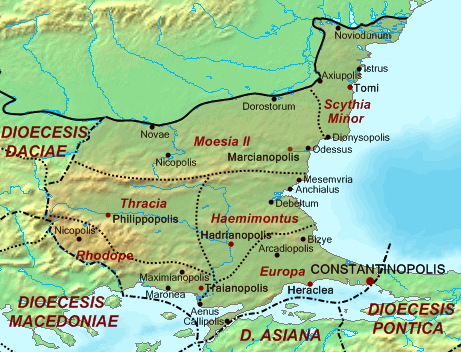
Marcianopolis is an ancient Roman city in Thracia. Founded by Emperor Trajan in the early second century. The free Lokali audio guide runs 7 minutes.
✓ Published October 2026 · how we write these guides
Visitor facts
| Lokali audio guide | 7 min · free |
|---|---|
| Type | Archaeological Site |
| Location | Burgas, Bulgaria |
| Coordinates | 43.2250, 27.5850 |
| Languages | 50+, in the Lokali app |
The story
Imagine cool air rising from the ground on a warm Black Sea morning. Water moves somewhere beneath your feet, steady and clear. Under a modern roof, the floor of a Roman house spreads out in thousands of tiny stone cubes. Some are cream, some are rust-red, some are slate-grey. They were set by hand, one by one, by people who lived here more than fifteen centuries ago. This is Marcianopolis. Once it was one of the great Roman cities of the lower Danube lands.
First, a quick point about where you are. Marcianopolis is not inside Burgas itself. The ancient city lies beneath the modern town of Devnya, a short way west of Varna. That is a comfortable drive north from Burgas along the coast and then inland. Many visitors make it a day trip from the southern beaches. So if you are standing among mosaics under a museum roof, you are in Devnya. You are in the right place, at the heart of the old Roman city.
The city's name tells part of its story. It honours Ulpia Marciana, the elder sister of the Roman emperor Trajan. Trajan ruled in the early second century and pushed the empire's borders hard along the Danube. He founded new cities across this region to hold the land and to organise it. Naming a city after a beloved sister was a public gesture. It said that this place mattered to the imperial family. It also tied local loyalty directly to the emperor's household.
Why build here, and not on the coast? The answer is water. This valley is fed by powerful natural springs. They pour out of the limestone at a steady rate all year round. For a Roman city, a reliable water supply meant baths, fountains and clean drinking water. The springs still flow today. You can follow them into the small lakes and channels around Devnya. They are a quiet reminder of why people first gathered here.
Marcianopolis sat in a Roman province called Lower Moesia. Moesia was the name for the lands south of the Danube, roughly modern northern Bulgaria and parts of Serbia. The city lay on important roads between the Danube frontier and the Black Sea ports. Soldiers, merchants and officials passed through constantly. Over time the city grew wealthy. Later, when the empire reorganised its provinces, Marcianopolis became the capital of a province called Moesia Secunda. That made it a centre of government for the whole region.
Here is a detail many visitors miss. Marcianopolis had its own mint for a time. In the late second and early third centuries, it struck bronze coins for local use. Many show the portrait of the emperor on one side. On the other side they show gods, city gates or other local images. Collectors today still find these coins. The inscriptions are in Greek, not Latin. That small fact shows you something important. In this part of the empire, Greek remained a language of daily life and trade.
Now look down at the floor around you. The Museum of Mosaics in Devnya was built directly over the remains of a large late Roman building. The roof protects the original floors where they were found. You are not looking at copies brought from somewhere else. These floors stayed in place. Notice the borders first. They often use repeating geometric patterns, like knots, waves and interlocking squares. Then look toward the centre panels, where the designers placed their most careful work.
Mosaic work was slow and expensive. Craftsmen cut small cubes from coloured stone, and sometimes from glass. They pressed each cube into a bed of wet mortar. A large floor could take a team many weeks. The owner of this house clearly had money and wanted guests to see it. Walk slowly along the edges. In places you can see old repairs, where later hands filled a damaged area with slightly different stones. The floor shows how long people lived with it.
The city's wealth also made it a target. In the third century, Gothic groups crossed the Danube and raided deep into the Roman provinces. Marcianopolis came under attack more than once. In the fourth century, the emperor Valens used the city as a base during his war against the Goths. Later in that same century, tensions between Roman officials and Gothic refugees near Marcianopolis helped spark a major Gothic revolt. That revolt led to the disaster at Adrianople, where Valens himself was killed.
The troubles did not end there. In the fifth century, the Huns under Attila swept through the Balkans. Marcianopolis was among the cities that suffered in those campaigns. The city recovered in part and continued as a bishop's seat and a regional centre. But by the late sixth century, attacks by Avars and Slavs had broken Roman control over much of this land. The great city slowly faded. Its stones were reused, and soil covered what remained.
Archaeologists have worked here for many years. Excavations in Devnya have uncovered city walls, streets, houses and an amphitheatre. An amphitheatre was an oval arena for public shows, like the famous Colosseum in Rome, though much smaller. Much of the ancient city still lies under modern homes and roads. So when you walk through Devnya, remember that the Roman street grid may run just below the pavement. The town above and the city below share the same ground.
The modern landscape is very different from the Roman one. Today Devnya is known for industry, with large chemical and cement plants nearby. Chimneys and pipelines stand where Roman villas once looked over the valley. It can feel like a strange contrast. But in a way, it continues an old pattern. People came here because of water, roads and resources. They still do. The springs that served Roman baths now serve factories and farms as well.
Before you leave the museum, stand still for a moment at one end of the hall. Let your eyes travel across the whole floor at once. From here the small cubes blend into a single surface of colour and pattern. Somebody walked across this floor every morning. Children played on it. Guests admired it. When you step outside, listen for the water in the channels nearby. It is the same water that first made Marcianopolis possible.
Key facts
What to look for
Practical tips
Common questions
Is there a free audio guide to Marcianopolis?
Yes — the Lokali app narrates Marcianopolis free of charge in 50+ languages. The guide runs about 7 minutes, covers the history, what to look for on site and practical tips, and works offline once downloaded.
Where is Marcianopolis?
Marcianopolis is near Burgas, Bulgaria, at 43.2250, 27.5850. Tap the map link on this page for directions from where you are.
What is Marcianopolis known for?
Founded by Emperor Trajan in the early second century. Named after Ulpia Marciana, Trajan's elder sister.
What should you look for at Marcianopolis?
Geometric knot patterns running along the mosaic borders. Patches of mismatched stones marking ancient repairs. Rust-red and slate-grey cubes set into the floors.
What should you know before visiting Marcianopolis?
Plan it as a day trip north from Burgas. Combine the visit with nearby Varna on the same day.
On the map
Opens directions to Marcianopolis from your location.
More to see near Marcianopolis


Hear Marcianopolis in your language
The full story, narrated, in 50+ languages. Download it before you go and it plays offline, at your own pace, with no ticket and no tour group.