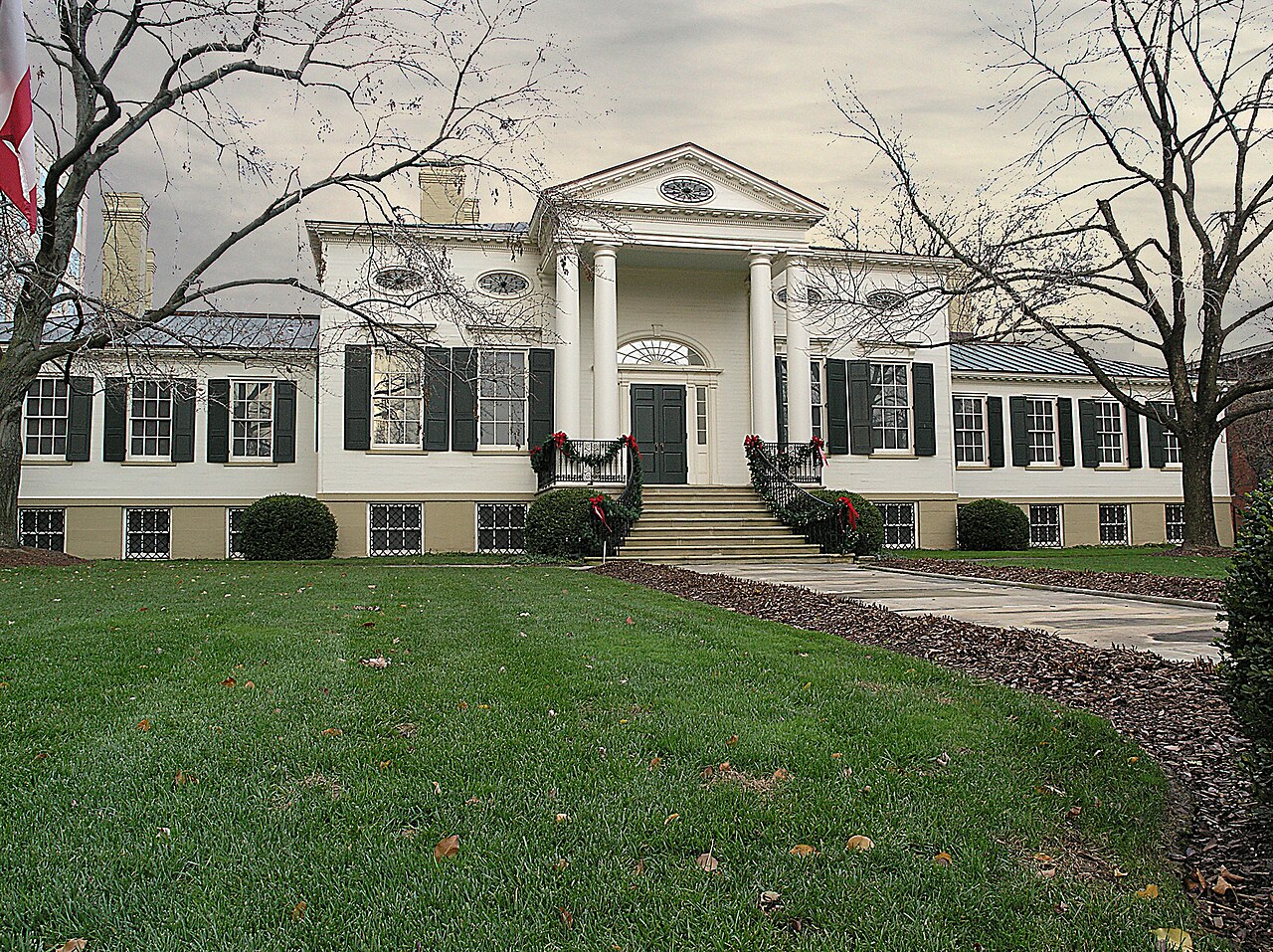
The Taft Museum of Art is a quiet lawn opens before you, set back from the busy street. It is in Cincinnati, United States. The free Lokali audio guide runs 5 minutes.
✓ Verified August 2026 · how we write these guides
Visitor facts
| Lokali audio guide | 5 min · free |
|---|---|
| Location | Cincinnati, United States |
| Coordinates | 39.1032, -84.5070 |
| Languages | 45, in the Lokali app |
The story
A quiet lawn opens before you, set back from the busy street. Old trees throw cool shade across the grass. A white house stands at the far end, low and wide, with tall columns beside its door. The traffic of downtown fades softly behind you. This is the Taft Museum of Art, waiting calmly at the end of the path.
The house is older than the museum held inside it. It was built around 1820, in the Federal style. That style favors balance, calm, and clean straight lines. The pale white front faces the open green of the park. Few houses of this age and grace still stand in the city center. This one has survived for two full centuries.
Over the years the house held several different families. In the late nineteenth century it became the home of Charles Phelps Taft and his wife, Anna Sinton Taft. They were people of wealth and a strong, steady interest in art. Slowly, room by room and year by year, they filled the quiet house with a fine and lasting collection.
Charles was the half-brother of William Howard Taft, who became president of the United States. In 1908, William Howard Taft accepted his nomination for president from this very house. So the quiet lawn outside once held a large gathered crowd, cheering speeches, and a real turning moment of national history right here on the grass.
In 1932, the Tafts gave the house and all of its art to the public. They wanted ordinary people to share freely in what they had carefully gathered over a lifetime. The house then became a museum, but it kept the warm feeling of a home. You walk through real lived-in rooms here, not large and empty marble halls. It still feels like someone's home.
Step inside. The scale is gentle and deeply human. The rooms are the size of rooms in a house, because that is exactly what they once were. Paintings hang on softly papered walls. Daylight comes gently through the windows. You move from parlor to parlor, much as a guest of the family might have done long ago.
The collection holds European paintings of very high quality. There are works by Rembrandt and Frans Hals from the Dutch tradition. There are fine English portraits and landscapes, including work by Turner. Each painting has quiet room to breathe on the wall. You can stand close, almost alone, with a single face or a single open sky.
There is more than paint here to find. The Tafts collected Chinese porcelain in deep, rich, flowing glazes. They gathered small French enamels from the Renaissance, made in the town of Limoges. These bright, jewel-like objects rest in glass cases. Lean in close to see the fine detail worked patiently into such small and careful surfaces.
One feature belongs to the house itself. In the front hall are landscape murals painted around 1850 by Robert S. Duncanson. He was an African American artist of great skill, working in a time of deep injustice. His painted scenes of trees, hills, and water still cover the walls of the entrance hall today, soft and green.
Take your time with the Duncanson murals. They were nearly lost over the long years, then carefully saved and restored by skilled and patient hands. They turn the plain entrance hall into a calm imagined landscape. Few houses anywhere hold wall paintings of this age and this importance, made by an artist with a story like his.
Find the garden, or a window that looks out onto it. The house sits beside Lytle Park, a green square set in the middle of downtown. The trees soften the steady noise of the surrounding city streets. For two hundred years, this small piece of green has stayed close beside the old white walls of the house.
Walk back through the rooms once more before the door. Let your eye move from the small bright enamels to the large dark portraits. The house gathers many distant times and places into a few quiet connected rooms. A Dutch face, a Chinese bowl, a painted Ohio hill, all rest here together under a single roof.
Step back out to the lawn. The columns rise white behind you. The city sounds return slowly to your ears. You have walked through a family's home and a family's lasting gift to the public. The house keeps its deep quiet, holding paintings and murals together under one old roof, ready for the next visitor to come.
Key facts
What to look for
Practical tips
Common questions
How long is the audio guide for The Taft Museum of Art?
The free Lokali audio guide for The Taft Museum of Art runs about 5 minutes. Allow extra time beyond that to look around at your own pace.
Is there a free audio guide to The Taft Museum of Art?
Yes — the Lokali app narrates The Taft Museum of Art free of charge in 50+ languages. It covers the history, what to look for on site and practical tips, and it works offline once downloaded.
Where is The Taft Museum of Art?
The Taft Museum of Art is in Cincinnati, United States, at 39.1032, -84.5070. Tap the map link on this page for directions from where you are.
What should you know before visiting The Taft Museum of Art?
Move slowly through the small house-sized rooms.
What is The Taft Museum of Art known for?
The house was built around 1820 in Federal style.
On the map
Opens directions to The Taft Museum of Art from your location.
More to see in Cincinnati

Hear The Taft Museum of Art in your language
The full story, narrated, in 50+ languages. Download it before you go and it plays offline, at your own pace, with no ticket and no tour group.