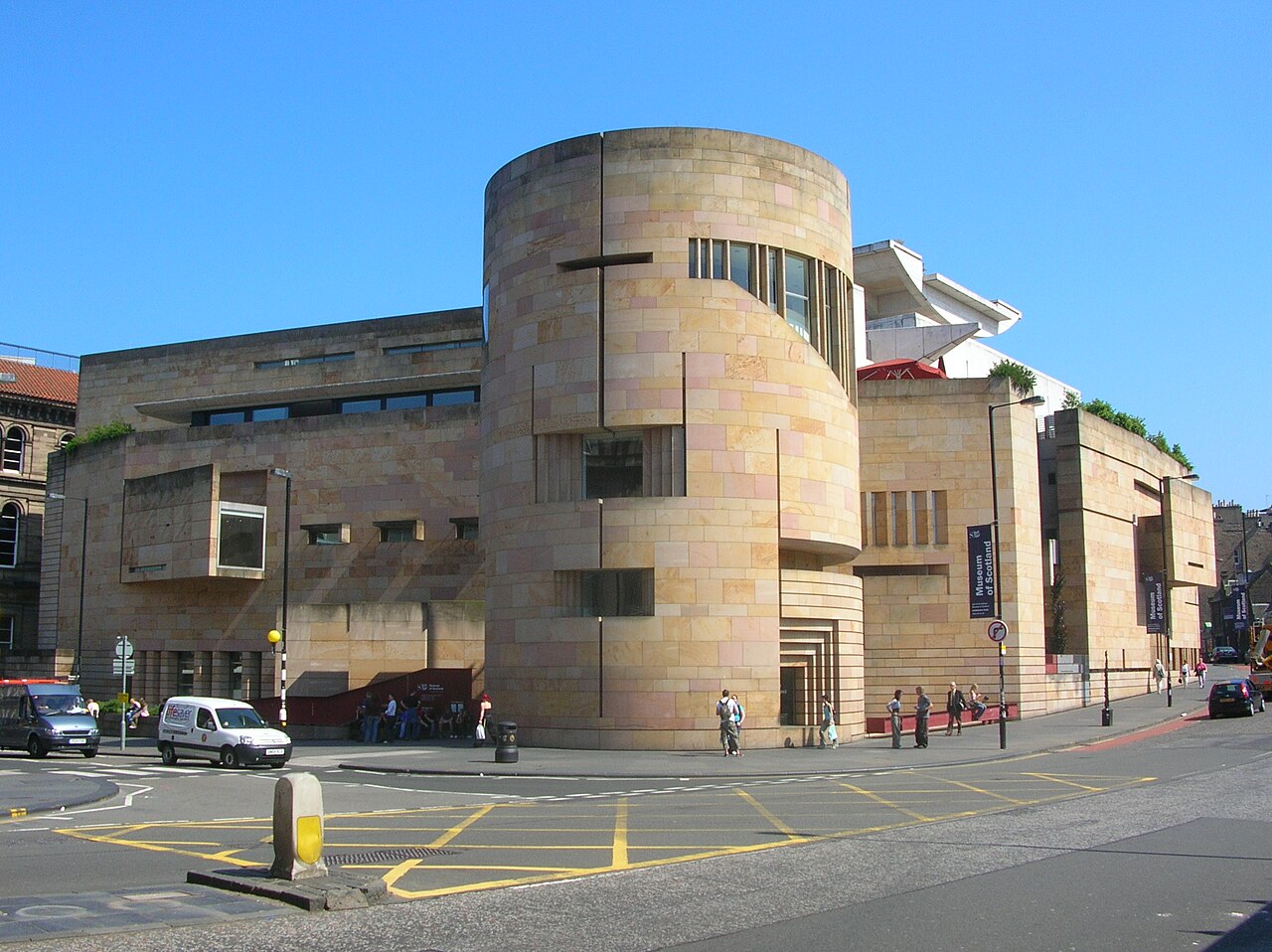
National Museum of Scotland
55.9474° N · 3.1889° W · Museum
National Museum of Scotland is a museum in Edinburgh, United Kingdom. Five-storey institution covering Scottish natural history, art, design, and culture from prehistoric times to the present. Most visitors spend 2–3 hours here. The free Lokali audio guide runs 5 minutes.
✓ Verified August 2026 · how we write these guides
Visitor facts
| Time needed | 2–3 hours |
|---|---|
| Lokali audio guide | 5 min · free |
| Type | Museum |
| Best for | Editors' pick |
| Location | Edinburgh, United Kingdom |
| Coordinates | 55.9474, -3.1889 |
| Languages | 45, in the Lokali app |
The story
You step out of the grey street into a hall full of light. A high roof of glass and iron arches far above your head. White stone columns rise in rows. Sunlight pours down onto a floor crowded with strange and wonderful objects. You have entered the National Museum of Scotland, where the whole world is gathered under one bright roof.
The museum stands on Chambers Street, in the old part of the city. It is really two buildings joined into one. The older half is a tall Victorian hall of stone and glass. The newer half, beside it, is built of pale sandstone in a modern shape. In 2006 the two were brought together as a single museum, free for all to enter.
Begin in the great hall, the heart of the older building. It was built between 1861 and 1888, in an age that loved iron and glass. The roof was a feat of engineering for its time. Light floods in from above, even on a grey day. This bright hall was made to lift the spirit and to open the mind to the wider world.
The collections here reach across every field of human interest. There are animals from every continent, fossils from deep in the earth, and machines that changed how people live. There is art, there is clothing, and there are tools from many cultures. You can move from the bones of a whale to the engine of a train within a few short steps.
One small glass case draws many visitors. Inside stands a stuffed sheep named Dolly. She was the first large animal grown from a single cell of another adult animal, a process called cloning. Scientists near Edinburgh created her, and her birth in 1996 made news around the world. She looks quite ordinary. Her quiet fame lies in how she came to be.
Climb higher to find a tall and strange clock. It stands several floors high, dark and full of moving figures. Bells, wheels, and small carved people fill its frame. At certain times each day it comes to life, turning and ringing as visitors gather to watch. The clock was made to mark the turning of the year 2000 and to make us think about time itself.
Do not rush past the section on Scotland's own past. Here the museum tells the long story of this land and its people. There are stones carved more than a thousand years ago. There are tools, jewelry, and everyday things left behind by those who lived here. Each object is a small, direct link to a person who walked this ground before you.
The museum was built with families in mind. Many displays invite you to touch, to pull, and to try. Children can lift, build, and test ideas with their own hands. In some galleries you can feel how a machine works or see how an animal moves. Learning here is meant to be active, not silent, and the rooms often fill with happy noise.
Take time with the great hall once more before you climb. Along one wall stands a tall display many floors high, filled with hundreds of objects side by side. Animals, statues, machines, and tools rise together toward the roof. It is arranged to show the sheer range of the world. You could stand before it for an hour and still find something new.
Near the top of the building, a door leads out to a roof terrace. From here the city spreads around you. You can see the castle on its rock, the old rooftops, and the green hills beyond the town. Many visitors miss this quiet place. It rewards the climb with one of the finest free views in the whole city.
Entry to the museum is free, though some special shows may ask for a ticket. The building is large, so pick up a map at the door. There is a cafe in the great hall and more places to eat higher up. Allow at least half a day if you can. Comfortable shoes help, since there is much walking across many floors.
When you leave, step back out onto Chambers Street. The light of the great hall fades behind you. In a single visit you have touched many worlds, from deep time to far countries to the story of this small northern land. The museum gathers it all and asks only that you look. Carry one object in your memory, and the whole place stays with you.
Key facts
What to look for
Practical tips
Common questions
How long do you need at National Museum of Scotland?
Plan 2–3 hours. That is the time most visitors spend at National Museum of Scotland. The free Lokali audio guide adds about 5 minutes of narration you can listen to as you walk, so it fits inside your visit rather than adding to it.
Is there a free audio guide to National Museum of Scotland?
Yes — the Lokali app narrates National Museum of Scotland free of charge in 50+ languages. It covers the history, what to look for on site and practical tips, and it works offline once downloaded.
Where is National Museum of Scotland?
National Museum of Scotland is in Edinburgh, United Kingdom, at 55.9474, -3.1889. Tap the map link on this page for directions from where you are.
What should you know before visiting National Museum of Scotland?
Pick up a map; the building is large.
What is National Museum of Scotland known for?
Free museum on Chambers Street in Edinburgh's Old Town.
What is the best time to visit National Museum of Scotland?
The rooftop terrace offers unexpected views across the Old Town and castle.
On the map
Opens directions to National Museum of Scotland from your location.
More to see in Edinburgh


Hear National Museum of Scotland in your language
The full story, narrated, in 50+ languages. Download it before you go and it plays offline, at your own pace, with no ticket and no tour group.