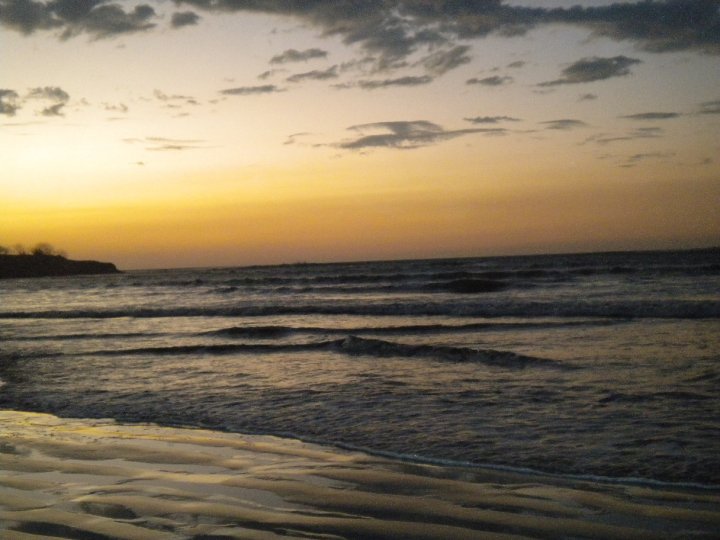
Tamarindo Estuary
10.3058° N · 85.8425° W · Viewpoint
Tamarindo Estuary is a tidal estuary bordered by mangroves and palm forest, the estuary is a peaceful counterpoint to the busy beach. It is in Costa Rica. Most visitors spend 1–2 hours here. The free Lokali audio guide runs 5 minutes.
✓ Verified August 2026 · how we write these guides
Visitor facts
| Time needed | 1–2 hours |
|---|---|
| Lokali audio guide | 5 min · free |
| Type | Viewpoint |
| Best for | Local life |
| Location | Costa Rica, Costa Rica |
| Coordinates | 10.3058, -85.8425 |
| Languages | 45, in the Lokali app |
The story
The noise of the town fades behind you. The boat slips into a narrow channel of calm, brown water. Tall mangrove trees lean in from both sides. Their roots reach down into the mud like thin, bent fingers. The air smells of salt and wet earth. You have entered the Tamarindo Estuary.
An estuary is a place where fresh water and salt water meet. Here, a river flows down to the sea, and the tide pushes back inland. The water rises and falls each day. This mix of salt and fresh creates a special home for plants and animals that live nowhere else. Scientists call a place like this a nursery of the sea. Many ocean fish begin their lives here, in the shelter of the calm, shallow water.
The Tamarindo Estuary lies at the north end of Tamarindo Beach. It separates the town from the next beach, Playa Grande. It is also part of Las Baulas National Marine Park. So the mangroves you travel through are protected land, set aside along with the turtle beaches nearby. The boat ramp sits right at the edge of town.
The mangrove trees are the key to everything here. They are among the few trees that can live in salty water. Their tangled roots rise above the surface to breathe. Those same roots hold the muddy banks in place. They also shelter young fish and crabs from larger hunters out in the open sea. Some mangroves drop seeds shaped like long, green darts. The seeds float away on the tide and take root in fresh mud downstream.
Most people come here for the animals. Howler monkeys move through the high branches. You often hear them before you see them. Their deep, rolling call carries a long way across the water. It is one of the loudest sounds made by any land animal.
Look along the banks and you may see more. Crocodiles rest in the mud, still as logs. Iguanas hang in the branches, warming in the sun. Crabs climb the roots near the waterline. Now and then a snake lies coiled on a limb above the channel. American crocodiles live here, and some of them grow quite large. They mean you no harm, as long as you stay in the boat and keep your hands inside.
The estuary is also a world of birds. Hundreds of kinds live here or pass through. Herons stand still in the shallows, waiting to strike. Kingfishers dart low over the water. Roseate spoonbills sweep their wide bills from side to side. Egrets stand bright white against the green. In the dry season, when the pools shrink, the birds gather in even greater numbers.
The best way to see all this is by boat. Small covered boats glide slowly through the channels. A local guide steers and points out the animals. Many people miss the well-hidden ones, so a trained eye makes a real difference. The boat moves quietly, so it does not disturb the wildlife.
Tours are timed around the tide. At high tide, the water is deep enough to reach far into the narrow channels. The boat can move smoothly under the arching roots. At low tide, more mud shows, and crabs and wading birds come out to feed. Each tide shows a different face of the estuary.
In the middle of the estuary, the guide may cut the engine. For a moment, everything goes still. You hear water dripping from the roots. A bird calls somewhere in the green. Insects hum in the heat. The town feels very far away, though it is only minutes behind you. Close your eyes for a moment and simply listen. The estuary has a sound all its own.
This quiet place does hard work. The mangroves clean the water that flows through them. They guard the coast against storms and waves. They feed the sea by sending out young fish that grow up among their roots. A healthy estuary keeps the whole coast healthy.
Mangroves like these are under pressure around the world. People cut them down to build along the shore. The protection of Las Baulas helps keep this one whole. What looks like a simple swamp is in truth one of the richest habitats on the coast. Mangroves also store large amounts of carbon deep in their mud. That makes them one of our quiet allies against a warming world.
The estuary asks you to slow down and look. Nothing here rushes. The trees grow slowly. The tide turns on its own time. The animals wait and watch. Drift through these green channels for an hour, and you carry some of that stillness back into the bright noise of the town.
Key facts
What to look for
Practical tips
Common questions
How long do you need at Tamarindo Estuary?
Plan 1–2 hours. That is the time most visitors spend at Tamarindo Estuary. The free Lokali audio guide adds about 5 minutes of narration you can listen to as you walk, so it fits inside your visit rather than adding to it.
Is there a free audio guide to Tamarindo Estuary?
Yes — the Lokali app narrates Tamarindo Estuary free of charge in 50+ languages. It covers the history, what to look for on site and practical tips, and it works offline once downloaded.
Where is Tamarindo Estuary?
Tamarindo Estuary is in Costa Rica, Costa Rica, at 10.3058, -85.8425. Tap the map link on this page for directions from where you are.
What should you know before visiting Tamarindo Estuary?
Take a guided boat tour timed to high tide.
What is Tamarindo Estuary known for?
The estuary is part of Las Baulas National Marine Park.
What is the best time to visit Tamarindo Estuary?
Paddle a kayak at high tide to glide deeper into the mangroves.
On the map
Opens directions to Tamarindo Estuary from your location.
More to see in Costa Rica

Hear Tamarindo Estuary in your language
The full story, narrated, in 50+ languages. Download it before you go and it plays offline, at your own pace, with no ticket and no tour group.