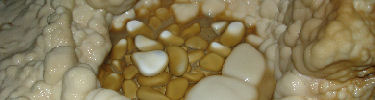
Jewel Cave National Monument
43.7294° N · 103.8294° W · Monument
Photo: NPS Photo · Public domain · Wikimedia Commons
Jewel Cave National Monument is a cave in the Black Hills of South Dakota, USA. Proclaimed a national monument by Theodore Roosevelt in 1908. The free Lokali audio guide runs 6 minutes.
✓ Published October 2026 · how we write these guides
Visitor facts
| Lokali audio guide | 6 min · free |
|---|---|
| Type | Monument |
| Location | Custer County, United States |
| Coordinates | 43.7294, -103.8294 |
| Official website | nps.gov |
| Languages | 50+, in the Lokali app |
The story
Stand still for a moment and listen. Up here, in the southern Black Hills, the wind moves through ponderosa pines with a soft, steady hush. The air smells of warm bark and resin. The ground underfoot is dry and stony, scattered with pine needles. Nothing on the surface suggests that beneath your feet lies one of the longest caves on Earth... a maze of passages that explorers are still mapping today.
The story begins with the wind. Around 1900, two local brothers, Frank and Albert Michaud, were working in this rugged canyon. According to the traditional account, they noticed cold air rushing out of a small hole in the rock. They widened the opening and climbed inside. What they found glittered in the light of their lamps — walls lined with sparkling calcite crystals. Those crystals gave the cave its name.
The brothers hoped to turn the cave into a business. They filed a mining claim, built a trail, and tried to attract visitors. But this corner of South Dakota was remote, and travel was slow. Very few people came. Then, in 1908, President Theodore Roosevelt proclaimed Jewel Cave a national monument. That made it one of the earliest places protected under a new law that allowed presidents to preserve sites of scientific interest.
So what is a jewel, down there? Most of the sparkle comes from calcite, a common mineral that grows in clear, angular crystals. In much of the cave, the walls are coated with a crust of calcite spar. Some crystals form sharp points, often called dogtooth spar. Others are blunt, like the heads of nails, and cavers call them nailhead spar. When a light passes across them, the walls seem to flicker and shine.
Here is something most visitors never hear. For more than half a century after its discovery, people believed Jewel Cave was fairly small. Only a few miles of passages were known. Then, starting in 1959, a husband and wife named Herb and Jan Conn began exploring with remarkable patience. Over many years and many hundreds of trips, they pushed into tight crawls and mapped passage after passage, adding miles to the known cave.
Their work changed everything. Exploration by the Conns and the cavers who followed them showed that this was not a small cave at all. Today, more than two hundred miles of passages have been surveyed, and the total keeps growing. Jewel Cave now ranks among the longest known caves in the world. And yet, all of those passages lie under a fairly small patch of forest. The cave twists and stacks upon itself like tangled string.
And here is the second surprise. The cave breathes. When the air pressure outside drops, air flows out of the cave entrances. When outside pressure rises, air flows back in. That is the same wind the Michaud brothers felt. Scientists have studied this airflow to estimate how much empty space remains underground. Their calculations suggest that the cave is far larger than what has been mapped so far. Most of Jewel Cave, it seems, is still unknown.
How did such a vast cave form? The rock here is limestone, laid down long ago in a shallow sea. Over a very long time, slightly acidic water slowly dissolved the stone and opened up hollow spaces. Later, water rich in minerals filled those spaces and left the calcite crust behind. The result is a cave where the walls themselves glitter. There are few dripping stalactites in many sections — instead, there is crystal.
If you take a guided tour, you will likely ride an elevator down into the rock. The doors open, and the world changes. The air is cool and damp, and it stays at a similar temperature all year round. Sounds feel softer. Your own footsteps echo on the walkways and stairs. Bring a light jacket, even in midsummer. The chill arrives quickly after the warmth of the forest above.
Look closely and you may see some of the cave's rarer formations. Delicate white frostwork grows in feathery sprays, like ice on a winter window. Thin, ribbed boxwork stands out from some ceilings. In a few places, there are fragile formations called hydromagnesite balloons — tiny, papery bubbles of mineral. They are so delicate that a breath or a touch could damage them. That is one reason rangers ask everyone to keep their hands to themselves.
Back on the surface, the forest carries its own story. In 2000, a large wildfire swept through this area, and much of the monument's pine forest burned. You can still see the signs in places — standing grey trunks, open hillsides, and younger trees rising between them. Wildflowers and grasses now fill the clearings. Mule deer and wild turkeys sometimes move through the trees, especially in the early morning.
The Black Hills hold deep meaning for many Native American nations, especially the Lakota, who know this land by their own names and stories. The cave, the forest, and the hills all belong to a longer human history than the century of maps and claims. As you look at the dark pines and pale rock around you, remember that this landscape was known and cared for long before anyone filed a mining claim.
Before you leave, pause outside again. Feel the sun on your face after the cool air below. Listen for the wind in the pines. Somewhere beneath you, that same air is slowly moving through hundreds of miles of crystal-lined passages, most of them never seen by any human eye. As you walk back to the parking area, look at the small cracks in the rock... and imagine what might lie behind them.
Key facts
What to look for
Practical tips
Common questions
Is there a free audio guide to Jewel Cave National Monument?
Yes — the Lokali app narrates Jewel Cave National Monument free of charge in 50+ languages. The guide runs about 6 minutes, covers the history, what to look for on site and practical tips, and works offline once downloaded.
Where is Jewel Cave National Monument?
Jewel Cave National Monument is near Custer County, United States, at 43.7294, -103.8294. Tap the map link on this page for directions from where you are.
What is Jewel Cave National Monument known for?
Proclaimed a national monument by Theodore Roosevelt in 1908. Discovered around 1900 by brothers Frank and Albert Michaud.
What should you look for at Jewel Cave National Monument?
Dogtooth spar crystals glittering under the tour lights. Feathery white frostwork growing from cave walls. Grey burned trunks from the 2000 wildfire.
What should you know before visiting Jewel Cave National Monument?
Book guided cave tours ahead, as spaces fill quickly. Bring a light jacket for the cool cave air.
When is the best time to visit Jewel Cave National Monument?
Arrive early in summer for calmer trails and parking.
On the map
Opens directions to Jewel Cave National Monument from your location.
More to see in Custer County


Hear Jewel Cave National Monument in your language
The full story, narrated, in 50+ languages. Download it before you go and it plays offline, at your own pace, with no ticket and no tour group.