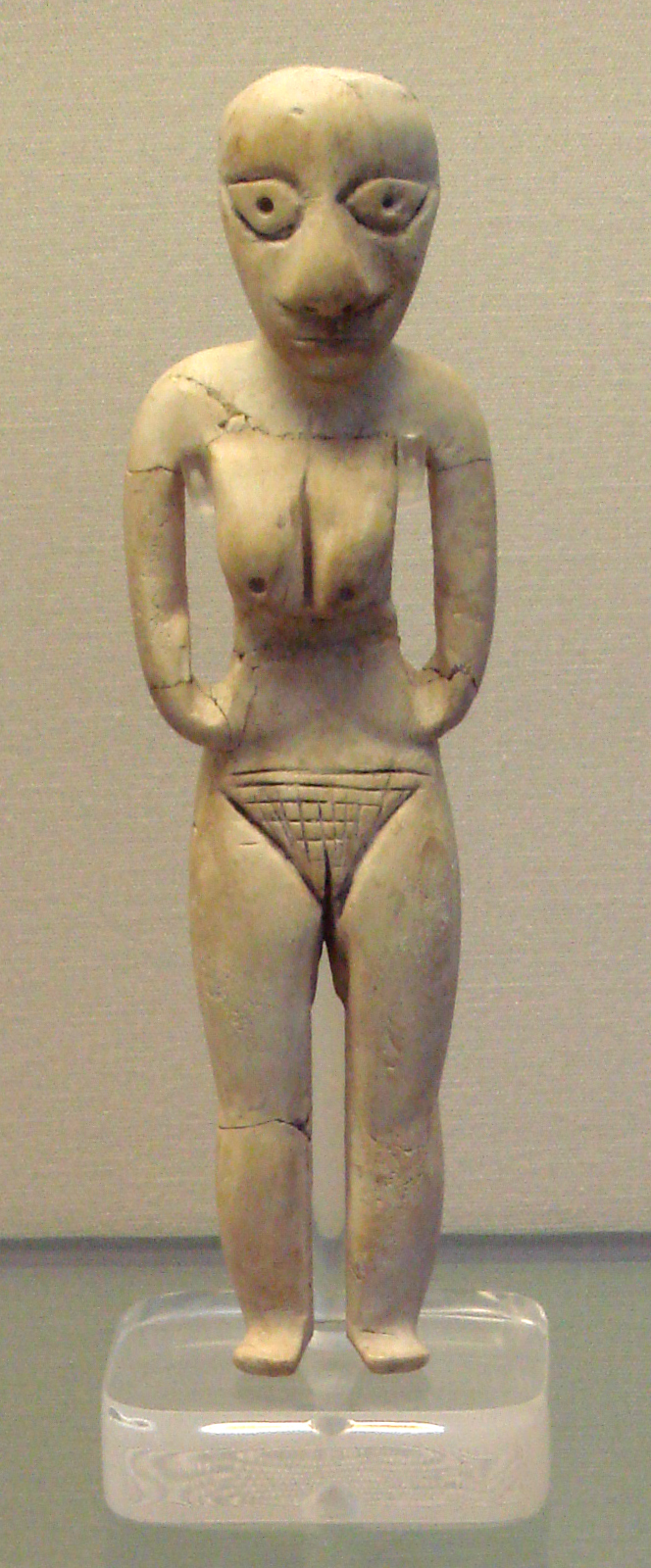
Badarian culture
27.0000° N · 31.4167° E · Archaeological Site
Photo: Bobak Ha'Eri · CC BY 2.5 · Wikimedia Commons
Badarian culture is a culture in Upper Egypt during the Predynastic Era. Named after the El Badari district in Asyut Governorate. The free Lokali audio guide runs 6 minutes.
✓ Published October 2026 · how we write these guides
Visitor facts
| Lokali audio guide | 6 min · free |
|---|---|
| Type | Archaeological Site |
| Location | El Badari, Egypt |
| Coordinates | 27.0000, 31.4167 |
| Languages | 50+, in the Lokali app |
The story
Feel the ground change under your feet. On one side lies the dark, damp soil of the Nile floodplain, green with fields. A few steps further, it turns to pale, dry gravel and sand. That line between the black land and the desert is where this story lives. Behind you, limestone cliffs rise in a long wall. The light here is hard and white at midday, softer and golden near evening.
You are standing in the region of El Badari, on the east bank of the Nile in Middle Egypt, in Asyut Governorate. The name may be unfamiliar, but archaeologists use it for something large. The Badarian culture is one of the earliest farming cultures known in Upper Egypt. It flourished long before the pyramids. It came long before the pharaohs, and long before hieroglyphic writing. Most scholars place it in the fifth millennium before Christ, roughly six thousand years ago.
Here is the first surprise. There is no grand monument to look at. There are no temple columns and no carved gateway. The Badarian people are known mostly from what they left in the ground: graves, pots, tools, and small personal objects. So this guide is not about one building. It is about a way of life that once filled this stretch of the valley. The landscape around you is the real setting.
The culture became known to modern science in the 1920s. The Egyptologist Guy Brunton worked in this district during that decade, excavating cemeteries along the desert edge. The archaeologist Gertrude Caton-Thompson also worked nearby, at a settlement site called Hemamieh. There she dug through layers of ancient occupation, one above another. Together, their published work gave the Badarian culture its name and its place in Egypt's long timeline.
Why does the desert edge matter so much? Because the Badarians buried their dead in the dry ground just beyond the fields. The sand and the dry air protected what was placed there. Bodies were usually laid on their side, knees drawn up, in a curled position. They were often wrapped in mats or animal skins. Many graves held offerings for the dead: pottery, beads, and items for daily care and decoration.
The pottery is the most famous thing the Badarians made, and it is remarkable. The best pieces have very thin walls, finer than many later wares. Their surfaces were often combed and then polished, which left a delicate rippled texture. Many pots are red or brown with a glossy black band around the rim. That black top came from the way the pot was fired. To a trained eye, this rippled ware is a clear signature of the culture.
Now imagine the people themselves. They were farmers and herders. They grew early cereal crops such as wheat and barley. They kept cattle, sheep, and goats. They also still fished in the river and hunted in the surrounding land. Their villages were simple. Homes were likely light shelters and huts, which is one reason so little survives above ground. Life followed the river: the yearly flood, the planting, the harvest.
Here is the second surprise. These early farmers cared a great deal about appearance. Archaeologists found flat stone palettes in their graves. These were used to grind minerals into powder, including green malachite, a copper ore. The green powder was probably used as eye paint. It may have protected against glare and insects, as well as looking beautiful. This habit of painted eyes continued in Egypt for thousands of years, right into the age of the pharaohs.
The Badarians also carved small, careful objects from ivory and bone. They made combs, spoons, pins, and bracelets. They made small human figures too, some of them female, in ivory and clay. Their beads are especially interesting. Some were made of a soft stone called steatite and then glazed, giving them a shiny surface. Small copper items also appear in Badarian graves. They are among the earliest uses of the metal in Egypt.
That copper raises a bigger question. Where did these materials come from? Malachite and copper do not occur in the floodplain. Some shells found in the graves came from the Red Sea. So the people of this valley were connected to wider networks of trade and travel, across the eastern desert and beyond. A village here was not isolated. Goods, and probably ideas, moved along routes we can only partly trace today.
In Egypt's long history, the Badarian culture sits near the very beginning. Over time, it was followed in this part of the valley by the Naqada culture. Naqada is another early tradition, named after a different site to the south. Over many centuries, these predynastic communities grew larger and more organised. Eventually Egypt became a single kingdom under one ruler. Many later Egyptian habits, from cosmetics to careful burial, have early roots in places like this.
If you want to see Badarian objects up close, you will need to travel. Most finds from the early excavations are now kept in museums. Major collections are held in Cairo, and in museums in Britain and elsewhere. In some displays, the thin rippled pots sit beside the stone palettes and ivory combs. Seeing them after standing here gives them a new weight. You will know the ground they came from.
Before you leave, look once more at that line between the fields and the desert. Listen to the sounds around you: a water pump, a donkey, voices from a nearby village, the wind over the gravel. Farmers still work the same black soil. The same cliffs still catch the afternoon light. Six thousand years ago, people stood near this edge too. They watched the river, tended their animals, and buried their dead with care.
Key facts
What to look for
Practical tips
Common questions
Is there a free audio guide to Badarian culture?
Yes — the Lokali app narrates Badarian culture free of charge in 50+ languages. The guide runs about 6 minutes, covers the history, what to look for on site and practical tips, and works offline once downloaded.
Where is Badarian culture?
Badarian culture is near El Badari, Egypt, at 27.0000, 31.4167. Tap the map link on this page for directions from where you are.
What is Badarian culture known for?
Named after the El Badari district in Asyut Governorate. Flourished in the fifth millennium before Christ.
What should you look for at Badarian culture?
The sharp line between green fields and pale desert. Limestone cliffs rising along the eastern valley edge. Low gravel terraces where ancient cemeteries lay.
What should you know before visiting Badarian culture?
Hire a local guide familiar with the desert-edge sites. Check access rules with local antiquities authorities first.
When is the best time to visit Badarian culture?
Visit late afternoon for softer light on the cliffs.
On the map
Opens directions to Badarian culture from your location.
Hear Badarian culture in your language
The full story, narrated, in 50+ languages. Download it before you go and it plays offline, at your own pace, with no ticket and no tour group.