Salonga National Park
2.0000° S · 21.0000° E · National Park
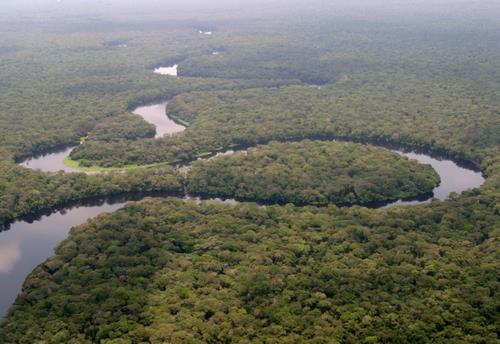
Photo: Radio Okapi · CC BY 2.0 · Wikimedia Commons
Salonga National Park is a national park in the Democratic Republic of the Congo. Largest tropical rainforest national park in Africa. The free Lokali audio guide runs 8 minutes.
✓ Published October 2026 · how we write these guides
Visitor facts
| Lokali audio guide | 8 min · free |
|---|---|
| Type | National Park |
| Location | Équateur, Democratic Republic of the Congo |
| Coordinates | -2.0000, 21.0000 |
| Official website | salonga.org |
| Languages | 50+, in the Lokali app |
The story
Listen first. The air here is thick and warm, and it carries sound in layers. Insects form a steady hum. Water drips from leaves high above you. Somewhere in the canopy, a bird calls once and then falls silent. The light reaches the ground in green fragments, filtered through tree after tree. Underfoot, the soil is soft and damp, covered with fallen leaves. This is Salonga National Park, in the heart of the Congo Basin. It is one of the quietest and most remote places a traveller can stand.
The scale of this forest is hard to hold in your mind. Salonga is the largest tropical rainforest national park in Africa. It covers roughly 36,000 square kilometres. That is larger than some European countries. And yet very few people ever see it. There are no highways leading in. Most visitors arrive by small aircraft or by boat along the rivers. The journey itself is part of the experience. Distance here is measured in days on the water, not hours on a road.
The park sits in the central basin of the Congo River, in the Democratic Republic of the Congo. It is not one single block of land. It is made of two large sectors, a northern one and a southern one. A strip of land between them is not part of the park, and people live and farm there. Its territory crosses several provinces, including Équateur. This split shape matters for wildlife. Animals move between the sectors, and conservation teams work to protect the land that connects them.
Rivers are the roads of Salonga. Waterways such as the Salonga, the Lomela, the Luilaka and the Yenge wind through the forest. Their water is often dark, the colour of strong tea. That colour comes from tannins, natural compounds that leach out of fallen leaves. On a calm day, the surface holds a near-perfect reflection of the trees. Fishermen in wooden dugout canoes move slowly along the banks. Watch how they read the current and the shallows. For local people, these rivers have carried trade and family visits for generations.
The park was created in 1970. In 1984, UNESCO listed it as a World Heritage Site. UNESCO is the United Nations agency for culture and science. Its World Heritage list marks places of value to all humanity. Salonga earned that status because it is a vast, largely intact block of equatorial forest. It holds plant and animal life that has developed here in isolation. Few places on Earth keep a forest of this size so far from roads and cities.
Here is something many visitors do not know. In 1999, Salonga was placed on the list of World Heritage in Danger. Poaching, armed conflict in the region and weak protection all put the forest at risk. For more than twenty years, it stayed on that list. Then, in 2021, it was removed. Patrols had improved, and the threats were judged to be reduced. That change came from long, difficult work by rangers and partners on the ground. It is a rare piece of good news in conservation.
The animal most closely linked to this forest is the bonobo. Bonobos are great apes, close relatives of chimpanzees. They live in the wild only in the Democratic Republic of the Congo, south of the great Congo River. Salonga protects one of the most important populations. Bonobos are known for a social life that is often more peaceful than that of chimpanzees. Females hold strong positions in their groups. Seeing them is never guaranteed. They are shy, and the forest is dense. But simply knowing they are here changes how you hear every rustle in the leaves.
Other large animals move through this forest too. African forest elephants live here. They are smaller than savanna elephants, with straighter tusks pointing downward. Their paths help shape the forest, opening trails and spreading seeds. The rivers hold crocodiles, including the slender-snouted crocodile, with its narrow jaw built for catching fish. Many kinds of monkeys travel the canopy. And the Congo peafowl, a forest bird found only in this country, lives in parts of the basin. Most of these animals stay hidden. Patience matters more than luck.
The forest is not empty of people, and it never has been. Communities live around the park and in the land between its two sectors. Their knowledge of plants, animals and seasons is deep. Many rangers and guides come from these villages. Conservation here depends on their trust and their work. When you walk with a local guide, notice what they notice. A broken twig, a print in soft mud, a particular smell. Each one tells them something about who passed by, and when.
Protecting a park this size is a huge task. The Congolese nature conservation authority, known by its French initials ICCN, manages Salonga. Since 2015, it has shared management with the conservation organisation WWF. Rangers patrol on foot and by boat for days at a time. They face heat, rain, disease and sometimes armed poachers. Their camps are simple. If you meet them, you are meeting the people who keep this forest standing. A greeting and a thank you are always welcome.
Now look up. The canopy forms a ceiling far above your head. Some trees rise much higher than the rest, their crowns spreading wide in the sunlight. Lianas, thick woody vines, hang down and twist around the trunks. Look closer at the bark. Mosses, ferns and small orchids grow on it. Many trees have broad buttress roots, flaring out like walls at the base. These roots help tall trees stay upright in thin, wet soil. Every surface here is home to something living.
Rain is a constant companion. This is equatorial forest, so heavy showers can come at almost any time of year. You often hear the rain on the canopy before you feel it. The sound grows like distant applause. Then the drops arrive, slowed and scattered by the leaves. After the rain, the air smells of wet earth and green sap. Mist rises from the rivers. Frogs begin to call. The whole forest seems to start a new conversation.
Before you move on, take one more moment to stand still. Feel the warm, heavy air on your skin. Listen to the layers of sound around you — insects, water, birds, perhaps a distant splash. You are inside one of the largest forests left on this continent. Few people ever stand where you stand now. As you walk away, keep looking at the edges of the path, at the trunks and the river banks. The forest is always watching, quietly... and it has much more to show to those who wait.
Key facts
What to look for
Practical tips
Common questions
Is there a free audio guide to Salonga National Park?
Yes — the Lokali app narrates Salonga National Park free of charge in 50+ languages. The guide runs about 8 minutes, covers the history, what to look for on site and practical tips, and works offline once downloaded.
Where is Salonga National Park?
Salonga National Park is near Équateur, Democratic Republic of the Congo, at -2.0000, 21.0000. Tap the map link on this page for directions from where you are.
What is Salonga National Park known for?
Largest tropical rainforest national park in Africa. Covers roughly 36,000 square kilometres of Congo Basin forest.
What should you look for at Salonga National Park?
Dark tea-coloured river water stained by fallen leaves. Wide buttress roots flaring from the base of tall trees. Woody lianas twisting from the canopy down to the ground.
What should you know before visiting Salonga National Park?
Plan access by small aircraft or river boat well ahead. Always travel inside the park with an authorised guide.
On the map
Opens directions to Salonga National Park from your location.
Hear Salonga National Park in your language
The full story, narrated, in 50+ languages. Download it before you go and it plays offline, at your own pace, with no ticket and no tour group.