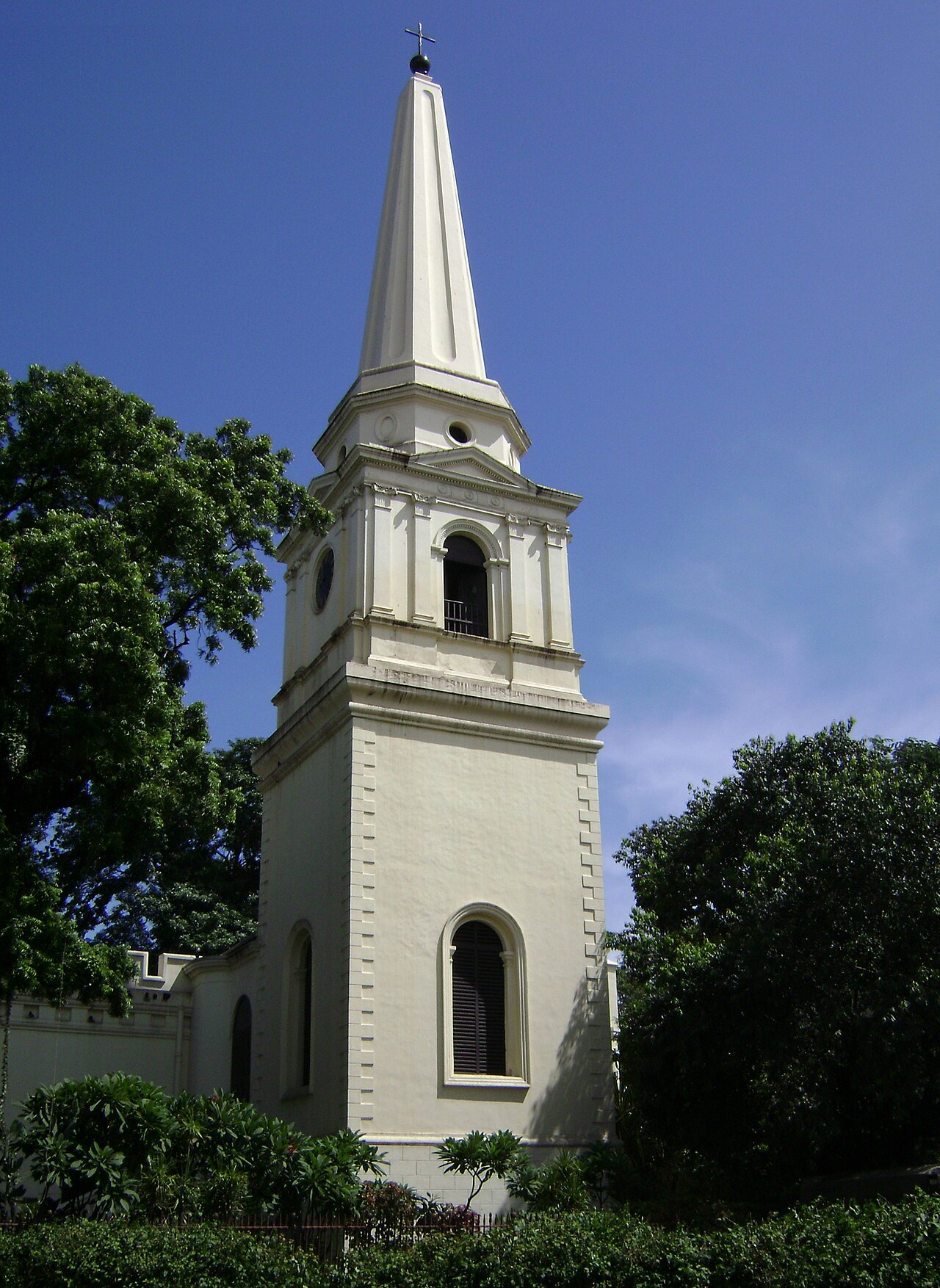
St. Mary's Church is a cathedral in Gdańsk, Poland. One of Europe's largest brick churches, built over 159 years (1343–1502). Most visitors spend 1–1.5 hours here. The free Lokali audio guide runs 5 minutes.
✓ Verified August 2026 · how we write these guides
Visitor facts
| Time needed | 1–1.5 hours |
|---|---|
| Lokali audio guide | 5 min · free |
| Type | Cathedral |
| Best for | History |
| Location | Gdańsk, Poland |
| Coordinates | 54.3721, 18.6432 |
| Languages | 45, in the Lokali app |
The story
Step inside and the air turns cool and still. Your footsteps echo on the stone floor. Above you, white vaulted ceilings rise so high that the top seems to dissolve into shadow. Light falls through tall windows in pale columns. After the noise of the street, the silence here settles over you like a held breath.
This is St. Mary's Church, one of the largest churches built from brick anywhere in the world. Its scale is hard to take in. The interior can hold many thousands of people at once. The main body stretches more than one hundred meters in length. Walls of red brick climb upward and meet in fans of white stone.
Building it took a very long time. Work began in 1343. It continued, on and off, for more than one hundred fifty years, finishing around 1502. Generations of masons were born, worked, and died while the church slowly took shape. The people who laid the first bricks never saw the finished roof.
From outside, the church looks less like a delicate cathedral and more like a fortress. Its walls are broad and solid. Its great tower is square and strong. This heavy style suited a city of merchants and sailors, who wanted a house of worship as sturdy and proud as their port.
Inside, walk slowly down the central aisle. Notice how the columns soar before branching into the ceiling. The builders used brick because good stone was scarce in this flat, coastal land. Yet they shaped that humble brick into something soaring and grand. It is a lesson in making beauty from what you have.
Look for the astronomical clock along one wall. It is tall, painted, and covered in dials and figures. Made in the fifteenth century, it once tracked not only the hours but the movements of the sun, the moon, and the saints' days. At certain times, carved figures would move in slow procession. People have stood before it in wonder for centuries.
Around the church you will find altars, tombs, and works of art gathered over many lifetimes. Stone slabs in the floor mark the graves of merchants and officials. Some are worn smooth by countless feet. Each carved name and date is a small window into a life lived in this city long ago.
The great tower invites those with energy to spare. A narrow staircase winds upward, step after step, more than four hundred in all. The climb is steep and the passage tight. But at the top, the reward is wide: the red rooftops of the old town spread below, the river curling through, and the sea glinting in the distance.
Like much of Gdansk, this church suffered greatly in 1945. Fire and shelling damaged the roof and interior near the end of the Second World War. Many treasures were lost or scattered. In the years after, the church was repaired and its surviving art carefully returned and restored.
Because of this, what you see blends the very old and the rebuilt. Some elements have survived since the medieval age. Others are faithful repairs. The church stands as both an ancient monument and a record of patient recovery, much like the city around it.
Find a place to sit for a moment in the cool quiet. Watch the light move across the brick as clouds pass outside. Listen to the soft sounds of footsteps and distant voices. In a space this large, even a crowd feels small, and a single visitor can feel held by the stillness.
When you rise to leave, glance back once at the high ceiling fading into shadow. Hundreds of years of faith, labor, loss, and care brought this room into being. It asks nothing of you but to stand beneath it for a while. Carry the cool quiet with you as you step back into the daylight and the noise of the living city.
Key facts
What to look for
Practical tips
Common questions
How long do you need at St. Mary's Church?
Plan 1–1.5 hours. That is the time most visitors spend at St. Mary's Church. The free Lokali audio guide adds about 5 minutes of narration you can listen to as you walk, so it fits inside your visit rather than adding to it.
Is there a free audio guide to St. Mary's Church?
Yes — the Lokali app narrates St. Mary's Church free of charge in 50+ languages. It covers the history, what to look for on site and practical tips, and it works offline once downloaded.
Where is St. Mary's Church?
St. Mary's Church is in Gdańsk, Poland, at 54.3721, 18.6432. Tap the map link on this page for directions from where you are.
What should you know before visiting St. Mary's Church?
Climb over four hundred steps for rooftop views.
What is St. Mary's Church known for?
Construction began in 1343, finishing around 1502.
What is the best time to visit St. Mary's Church?
Climb the 82-metre tower for views across the Old Town's terracotta roofs and the Motława River.
On the map
Opens directions to St. Mary's Church from your location.
More to see in Gdańsk


Hear St. Mary's Church in your language
The full story, narrated, in 50+ languages. Download it before you go and it plays offline, at your own pace, with no ticket and no tour group.