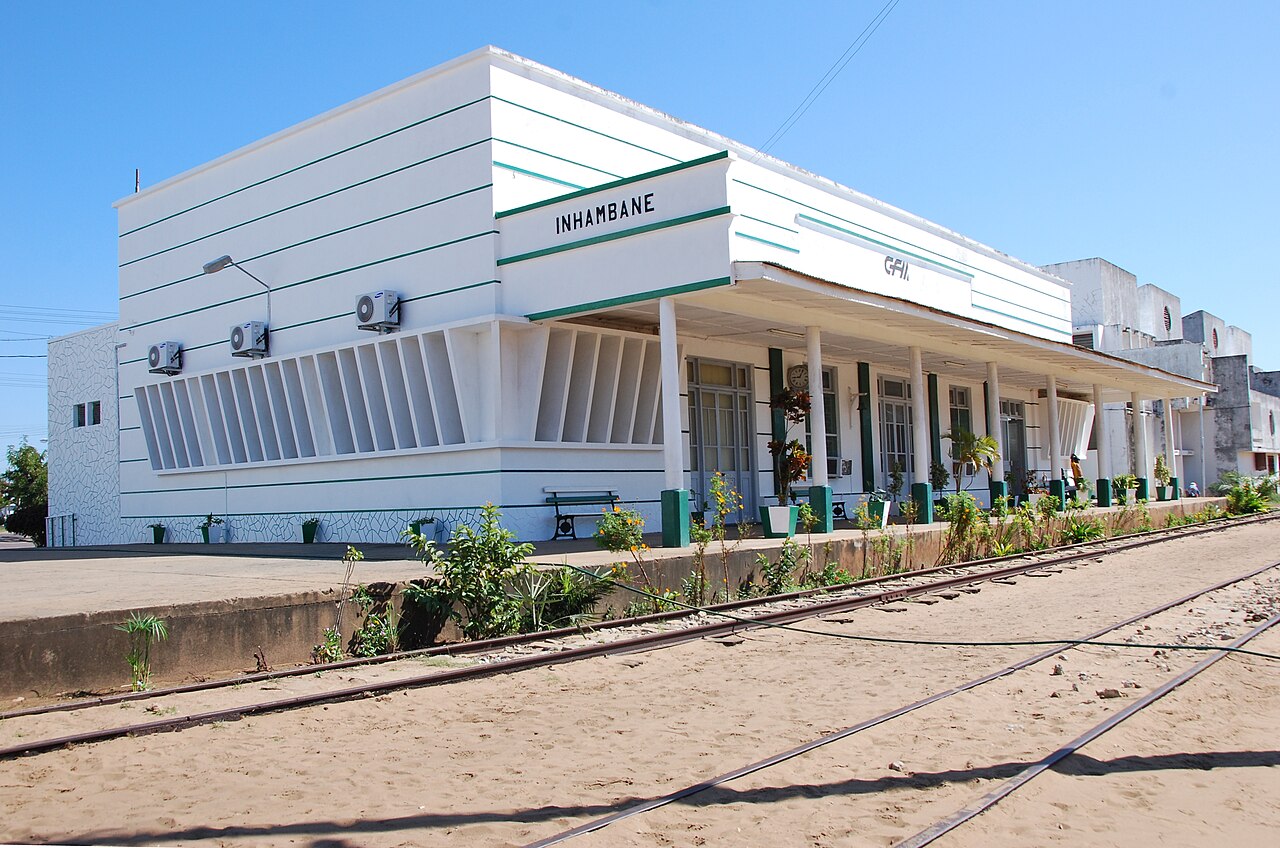
Inhambane Town
23.8633° S · 35.3833° E · Historic Town
Inhambane Town is a colonial-era port town 25 kilometres north of Tofo, featuring Portuguese architecture, a working cathedral, and a waterfront market. It is in Inhambane, Mozambique. Most visitors spend 2–3 hours here. The free Lokali audio guide runs 5 minutes.
✓ Verified August 2026 · how we write these guides
Visitor facts
| Time needed | 2–3 hours |
|---|---|
| Lokali audio guide | 5 min · free |
| Type | Historic Town |
| Best for | History |
| Location | Inhambane, Mozambique |
| Coordinates | -23.8633, 35.3833 |
| Languages | 45, in the Lokali app |
The story
The bay is calm in the early morning. White sails move slowly across the water. Each one belongs to a wooden boat, low and heavy, full of people crossing to the far shore. The air is soft and warm. This is Inhambane, an old town on a quiet inlet of the Indian Ocean, in southern Mozambique.
Inhambane is one of the oldest towns on this whole coast. Long before Europeans arrived, traders sailed here on the seasonal winds. Arab and Swahili merchants visited as early as the eleventh century. They came for pearls and for ambergris, a rare material from the sea that was used to make perfume. The name of this bay was known far across the ocean trade.
In 1498, a Portuguese fleet sailed into the bay. Vasco da Gama was searching for a sea route to India. He stopped here and met the people who lived along the shore. He was struck by how warmly they received him. He named the place Terra de Boa Gente, the Land of the Good People. That name has stayed with the region ever since.
The Portuguese came back to stay. In 1534, they built a permanent trading post on the bay. They traded ivory and ambergris, and in later, darker years, enslaved people were carried through this port as well. For centuries Inhambane was a working harbor. Ships came and went with the tides. The town slowly grew around the water's edge.
In 1763, Inhambane was granted the formal status of a town, with its own council. Through the nineteenth century the center filled with new buildings. Merchants built homes with deep, shaded porches. Churches rose above the streets. Many of these old structures still stand today, their paint faded by years of sun and salt air.
Walk through the streets now and the past feels close. Some buildings have been restored and painted bright. Others are worn and quiet, with cracked walls and open windows where the breeze moves through. Tall palms lean over the roads. The old colonial architecture sits side by side with the daily life of a working African town.
The heart of Inhambane is still its bay. The traditional sailing boat, called a dhow, remains the main way to cross the water. Each day, hundreds of people travel under white sails to Maxixe, the sister town on the opposite shore. The crossing has looked much the same for a very long time. Wind and tide set the schedule, not a clock.
Down at the waterfront, the dhows load and unload. Passengers step carefully over the wooden sides. Bags and goods are passed from hand to hand along the boat. Many of these vessels have no engine at all, only a single sail and the wind. When the wind drops, everyone simply waits for it to return.
In the market, the town comes fully alive. Vendors sell cassava, dried fish, peanuts, and stacks of fruit. The air smells of salt, ripe mango, and woodsmoke. People greet one another in Portuguese and in local languages. The talk is easy and constant. This is where the town meets itself, every single day.
Above the rooftops rises the old cathedral, white and tall against the sky. Not far away stand the remains of Portuguese fortifications, built long ago to guard the entrance to the bay. From higher ground you can see the whole inlet at once, the boats, the far shore, and the open sea beyond. The view makes the town's long story easy to understand.
Inhambane is not loud, and it is not large. It moves at the speed of the tide and the wind. Fishermen still fish the bay. Boats still cross under sail. The town has watched empires rise and fall over five centuries, and yet its daily rhythm has held steady through all of it.
Food here comes from the sea and the land around it. Grilled fish arrives with rice and a sharp pepper sauce. Cashew trees grow across the province, and roasted cashews are sold by the bag. Coconut palms lean over the gardens. In the warm evenings, families sit outside their homes. Children chase one another down the sandy lanes. The day cools slowly, and the light turns soft and golden over the bay.
Find a place near the water in the late afternoon. Watch a dhow push off from the shore and catch the wind. It leans, then steadies, then glides away toward the far side. People have watched this same quiet sight for five hundred years. Some things here do not rush, and some things simply continue.
Key facts
What to look for
Practical tips
Common questions
How long do you need at Inhambane Town?
Plan 2–3 hours. That is the time most visitors spend at Inhambane Town. The free Lokali audio guide adds about 5 minutes of narration you can listen to as you walk, so it fits inside your visit rather than adding to it.
Is there a free audio guide to Inhambane Town?
Yes — the Lokali app narrates Inhambane Town free of charge in 50+ languages. It covers the history, what to look for on site and practical tips, and it works offline once downloaded.
Where is Inhambane Town?
Inhambane Town is in Inhambane, Mozambique, at -23.8633, 35.3833. Tap the map link on this page for directions from where you are.
What should you know before visiting Inhambane Town?
Cross the bay to Maxixe aboard a sailing dhow.
What is Inhambane Town known for?
Vasco da Gama landed in the bay in 1498.
What is the best time to visit Inhambane Town?
The cathedral's interior holds original tiles and woodwork.
On the map
Opens directions to Inhambane Town from your location.
More to see in Inhambane

Hear Inhambane Town in your language
The full story, narrated, in 50+ languages. Download it before you go and it plays offline, at your own pace, with no ticket and no tour group.