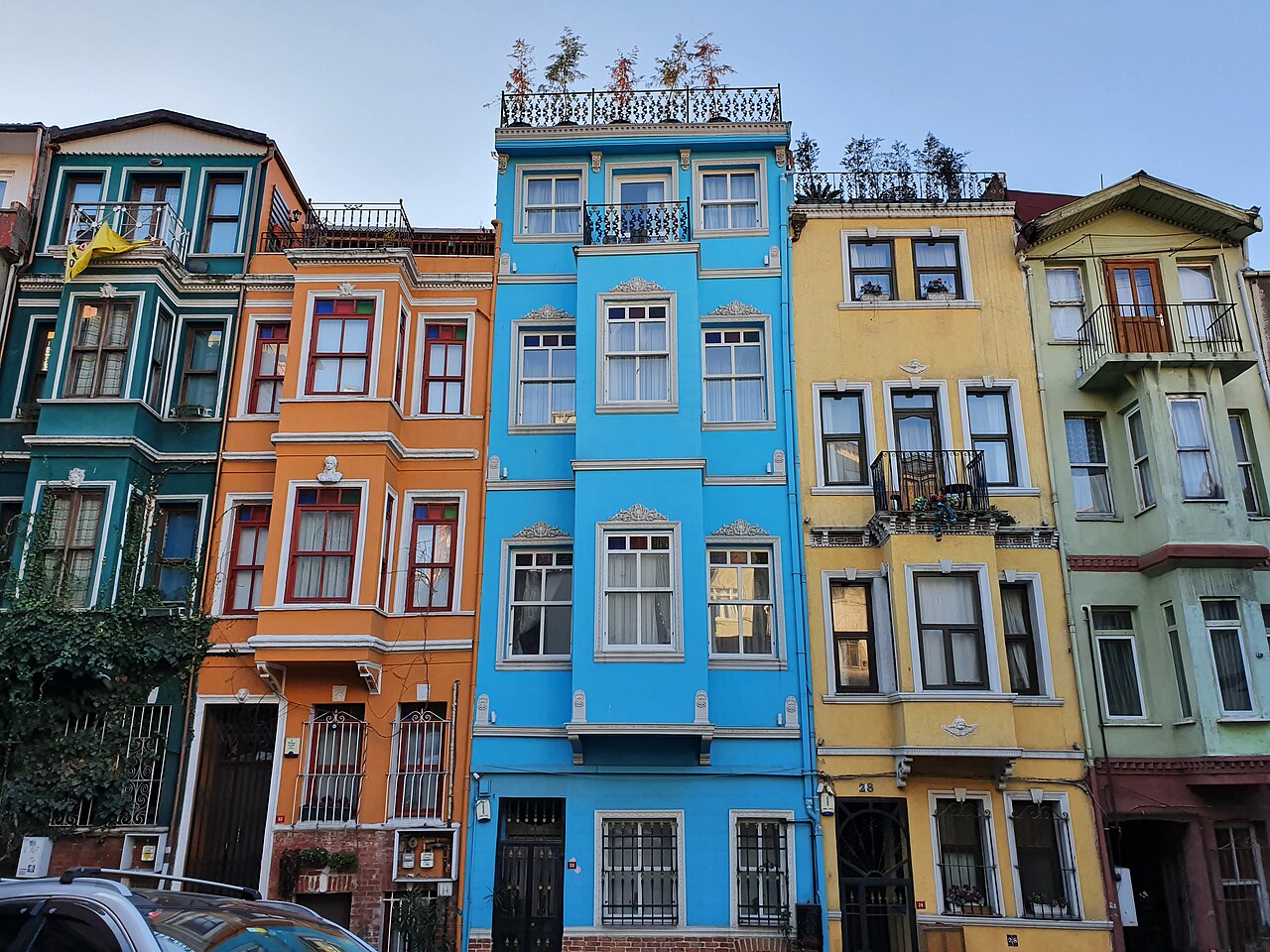
Balat Neighbourhood
41.0127° N · 28.9616° E · Neighborhood
Balat Neighbourhood is a neighborhood in Istanbul, Türkiye. This historic district on the Golden Horn's European shore preserves Byzantine and Ottoman architecture in narrow, steeply sloped streets. Most visitors spend 1–1.5 hours here. The free Lokali audio guide runs 6 minutes.
✓ Verified August 2026 · how we write these guides
Visitor facts
| Time needed | 1–1.5 hours |
|---|---|
| Lokali audio guide | 6 min · free |
| Type | Neighborhood |
| Best for | Local life |
| Location | Istanbul, Türkiye |
| Coordinates | 41.0127, 28.9616 |
| Languages | 45, in the Lokali app |
The story
Start with the color. In front of you, houses in red, ocher, and faded blue climb the slope. Their paint is cracked and peeling. Laundry hangs on lines strung between the windows. Somewhere a radio plays. The air smells of coffee and warm bread. You are standing in Balat, on the European shore of Istanbul, where the land rises in steep steps from the Golden Horn.
Balat sits inside the old district of Fatih. For hundreds of years it was home to many communities at the same time. Jewish families lived here. So did Greeks and Armenians. They shared the same narrow streets. They built their houses close together on the hill, wall against wall. They prayed in different buildings, often only steps apart. That mix shaped everything you see around you today.
The Jewish story here is a long one. Many of these families came after they were forced to leave Spain in 1492. The Ottoman sultan opened his city to them. They settled along the water in Balat, close to the docks and the trade. They opened workshops and small shops. They sold cloth, metal, and food. For many generations, this was one of the main Jewish quarters of Istanbul.
The Ahrida Synagogue still stands among these streets. It is one of the oldest in the whole city. Step inside and you notice the reading platform at the center. It is shaped like the front of a wooden boat. Some say it recalls Noah's ark. Others say it recalls the ships that once carried Jewish families to safety across the sea. To see it, you arrange permission in advance through the community.
Walk uphill and the story shifts. The quarter next door is called Fener. This was the Greek heart of the city for a very long time. On the slope above you, a tall building of dark red brick rises over the rooftops. People call it the Red Castle. It is in fact a Greek school. It has taught students on this hill for generations, and it still does.
Hidden in the lanes nearby is a small church, St. Mary of the Mongols. Its outer walls are painted a deep red. Locals call it the Red Church. It holds a quiet record. It is the one Byzantine church in the city that never became a mosque. It has held Greek Orthodox services without a single break for many centuries. The low door is easy to walk past without noticing.
Down by the water there is a different kind of surprise. The Bulgarian church of St. Stephen looks like it was carved from pale stone. It was not. The whole building is made of cast iron. The panels were cast in a workshop far away. Then they were floated here along the Danube and across the Black Sea in the 1890s. Workers bolted them together piece by piece on the shore.
Now let the streets themselves lead you. Balat is a place best seen on foot. The lanes are steep and uneven under your shoes. They turn without warning and end in small squares. Cats sleep in the sun on doorsteps. Old men sit outside the cafes and play backgammon, the dice clicking on the board. Cameras come out at every corner, because every corner makes its own picture.
In recent years, change has come quickly. First the antique shops arrived, their windows full of old lamps and mirrors. Then came the cafes, with painted wooden chairs set out on the slope. A few of these streets have become well known on the internet. On weekends they fill with visitors and their phones. Yet turn one street over, and the ordinary life of the neighborhood goes on as it always has.
Stop somewhere for something to eat. Bakeries sell börek, thin layers of pastry with cheese folded inside. Small kitchens serve plates of home cooking, whatever was made that morning. You can buy fruit from a wooden cart in the street. You can drink black tea from a small tulip-shaped glass for very little money. This is not a place to hurry. It is a place to slow down.
Balat is changing, and it knows it. Some old houses have been restored and freshly painted in bright colors. Others wait with their shutters closed, leaning, ready for their turn. The communities that first built this place are much smaller now than before. But their churches, their synagogue, and their tall narrow houses remain, standing side by side on the same crowded hill.
Find a step near the top of the hill and sit for a moment. Below you, the Golden Horn shines in the light. Ferries cross slowly from shore to shore. The call to prayer rises, and somewhere a church bell answers it. In this one small neighborhood, many different lives have overlapped for centuries. Balat has kept their colors. It asks only that you walk gently through them.
Key facts
What to look for
Practical tips
Common questions
How long do you need at Balat Neighbourhood?
Plan 1–1.5 hours. That is the time most visitors spend at Balat Neighbourhood. The free Lokali audio guide adds about 6 minutes of narration you can listen to as you walk, so it fits inside your visit rather than adding to it.
Is there a free audio guide to Balat Neighbourhood?
Yes — the Lokali app narrates Balat Neighbourhood free of charge in 50+ languages. It covers the history, what to look for on site and practical tips, and it works offline once downloaded.
Where is Balat Neighbourhood?
Balat Neighbourhood is in Istanbul, Türkiye, at 41.0127, 28.9616. Tap the map link on this page for directions from where you are.
What should you know before visiting Balat Neighbourhood?
Wear shoes with grip for the steep streets.
What is Balat Neighbourhood known for?
Balat lies in Fatih district along the Golden Horn.
What is the best time to visit Balat Neighbourhood?
Wander the backstreets rather than the main avenue—the real Balat hides in the alleys.
On the map
Opens directions to Balat Neighbourhood from your location.
More to see in Istanbul


Hear Balat Neighbourhood in your language
The full story, narrated, in 50+ languages. Download it before you go and it plays offline, at your own pace, with no ticket and no tour group.