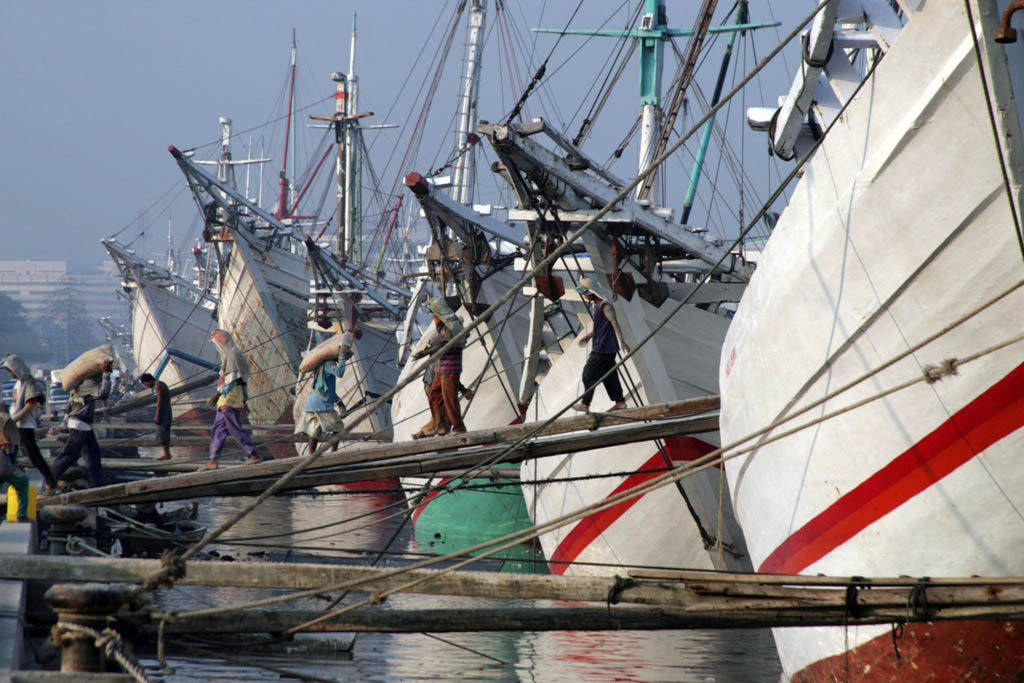
Sunda Kelapa Harbor is a viewpoint in Jakarta, Indonesia. Jakarta's historic port, still active with traditional wooden sailing ships called pinisi. Most visitors spend 45–60 min here. The free Lokali audio guide runs 5 minutes.
✓ Verified August 2026 · how we write these guides
Visitor facts
| Time needed | 45–60 min |
|---|---|
| Lokali audio guide | 5 min · free |
| Type | Viewpoint |
| Best for | Photography |
| Location | Jakarta, Indonesia |
| Coordinates | -6.1330, 106.8220 |
| Languages | 45, in the Lokali app |
The story
The smell reaches you first. Salt, tar, old wood, and the sea. Then you see them: a long row of wooden ships, their tall hulls painted bright, lined up along the quay. Men walk up and down narrow planks with heavy loads on their shoulders. This is Sunda Kelapa, the old harbor where Jakarta began. The sound of the sea and shouting men fills the air.
Long before there was a Jakarta, there was this port. It served the old Sunda Kingdom, whose ships traded pepper and other goods with merchants from far away. The name Sunda Kelapa joins the kingdom's name with the local word for coconut. From this one small harbor, a great city would slowly grow.
A turning point came in 1527. A commander named Fatahillah took the port by force. He renamed the place Jayakarta, a name meaning something close to "complete victory." Over the centuries, that name was worn down by daily use into the single word we say today: Jakarta. The city counts its birthday from that year.
Later, Dutch traders came and saw the great value of the harbor. They built a walled town here and made it the base of their trading empire in the East. For a long time, the wealth of a vast region flowed across these docks. The old city grew up just inland from where you now stand.
What makes this place rare is that it still works. This is not a museum harbor, frozen in place for visitors. Cargo still moves across these planks by hand, the same way it has for generations. The ships you see are working vessels, loading and unloading goods bound for the far islands of the country. There are no ticket booths here, only the work itself.
Look closely at the ships themselves. These are called pinisi, tall wooden sailing ships with two masts. They are built by hand, mostly by the seafaring people of Sulawesi, a large island lying to the east. For many centuries, these people have sailed such ships across the wide waters of the country.
The hulls rise high above the water, and they are painted in strong, bright colors. Up close, you can see that they are made almost entirely of wood, fitted and pegged together by skilled hands. Modern engines now help to move them along, but the shape of the ships reaches back many hundreds of years. Each ship is a little different from the next.
Watch the workers for a while. Long planks bridge the narrow gap between ship and shore. Across them, men carry sacks of cement, timber, and other goods on their backs and shoulders, one heavy load at a time. The work is slow and hard, set to the steady rhythm of footsteps on bending wood.
The light here is part of the whole experience. In the early morning, a soft haze hangs over the water, and the masts stand out as dark lines against the pale sky. In the late afternoon, the low sun turns the wooden hulls warm and golden, and the water shines between the ships. It is the kind of light that photographers wait all day for.
Nearby, you can still find traces of the older town. A tall watchtower from the harbor's past still stands, and now serves as a small lookout. The old warehouses from the trading days survive in the streets just inland, and some of them have now been turned into museums about the city's beginnings.
A few small wooden boats wait along the edge of the water. For a small fee, a boatman will row you out among the great hulls for a closer look. From the low seat of such a boat, the ships rise above you like wooden walls, and their true size finally becomes clear. Agree on the price before you climb aboard.
A word of care as you explore. This is a busy working dock, not a tidy park. The planks are narrow, and they bend underfoot. Trucks and heavy loads move around you all the time. Watch your step, keep well clear of the workers, and the harbor will reward you with a rare, honest sight.
Stand at the edge of the quay for one last look. Almost five hundred years ago, a city was born at this very spot of water and wood. The ships still come and go, loaded slowly by hand, as they always have. The sea air, the creak of wood, the calls of the crew, all of it remains. Few places let you stand so close to where it all began.
Key facts
What to look for
Practical tips
Common questions
How long do you need at Sunda Kelapa Harbor?
Plan 45–60 min. That is the time most visitors spend at Sunda Kelapa Harbor. The free Lokali audio guide adds about 5 minutes of narration you can listen to as you walk, so it fits inside your visit rather than adding to it.
Is there a free audio guide to Sunda Kelapa Harbor?
Yes — the Lokali app narrates Sunda Kelapa Harbor free of charge in 50+ languages. It covers the history, what to look for on site and practical tips, and it works offline once downloaded.
Where is Sunda Kelapa Harbor?
Sunda Kelapa Harbor is in Jakarta, Indonesia, at -6.1330, 106.8220. Tap the map link on this page for directions from where you are.
What should you know before visiting Sunda Kelapa Harbor?
Hire a small boat to row among the ships.
What is Sunda Kelapa Harbor known for?
Jakarta's original port, older than the city itself.
What is the best time to visit Sunda Kelapa Harbor?
Visit early morning when light is soft and the harbor is most active with loading and unloading.
On the map
Opens directions to Sunda Kelapa Harbor from your location.
Hear Sunda Kelapa Harbor in your language
The full story, narrated, in 50+ languages. Download it before you go and it plays offline, at your own pace, with no ticket and no tour group.