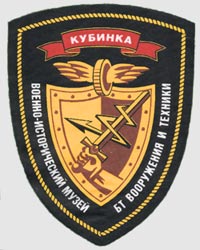
Photo: The original uploader was Fastboy at Russian Wikipedia. · Public domain · Wikimedia Commons
Kubinka Tank Museum is a museum of armoured fighting vehicles in Kubinka, Odintsovsky District, Moscow Oblast, Russia. The collection grew from a Soviet armoured vehicle testing ground. The free Lokali audio guide runs 7 minutes.
✓ Published October 2026 · how we write these guides
Visitor facts
| Lokali audio guide | 7 min · free |
|---|---|
| Type | Museum |
| Location | Kubinka, Russia |
| Coordinates | 55.5651, 36.7155 |
| Official website | tankmuseum.ru |
| Languages | 50+, in the Lokali app |
The story
Listen for a moment. Inside these long hangars the air is cool and still. It carries a faint smell of grease, old paint and cold steel. Your footsteps echo off concrete floors. All around you, in long rows, stand armoured machines that once shook the ground. Today they make no sound at all. That silence is the first surprise of this place. You are among a crowd of tanks, and every one of them is perfectly quiet.
You are in Kubinka, a small town west of Moscow. For most of the twentieth century, this area was known for one thing. It was a military testing ground. Soviet engineers brought armoured vehicles here to drive them, fire them and push them until something broke. This museum grew out of that work. The collection was not first gathered for the public. It was gathered for study by engineers who wanted to understand every machine they might face.
That origin explains why the collection feels so unusual. Many military museums show the vehicles their own country built. Kubinka shows those, but it also shows the vehicles of rivals and allies. Engineers collected foreign tanks, captured or obtained in other ways, and tested them closely. They measured armour, studied engines and compared guns. Over the decades, this created one of the largest collections of armoured vehicles anywhere. Visitors were allowed in much later, after the collection had already grown huge.
The museum is arranged in a series of pavilions. Broadly, each hall groups vehicles by country or by period. You might walk from early Soviet designs into a hall of German machines, then on to British, American or Japanese vehicles. Take your time with this layout. It works like a slow conversation between nations. You can stand between two tanks from rival armies and see how differently their designers solved the same problem.
Look at the Soviet halls first, if you can. Here you will find the tank family that many people in this country still speak about with emotion — the T-34. It was a medium tank of the Second World War, built in enormous numbers. Notice its sloped armour plates. The angle was not decoration. A sloped plate makes an incoming shell travel through more steel, or bounce away. Many later designs around the world borrowed this idea.
Now look for something much stranger. Kubinka holds a T-35, a Soviet heavy tank from the 1930s. It carries several turrets on one long hull, like a small land battleship. In its time, the design looked powerful in parades. In practice, it was slow, complex and hard to command. Here is a fact many visitors miss. The T-35 at Kubinka is believed to be the only complete example that survives today.
In the German hall, the scale changes again. You will see well-known wartime designs, such as the Tiger and the Panther. Their surfaces often show a rough, ridged coating. This was a paste applied in the war years to stop magnetic mines from sticking to the steel. Step close and you can sometimes see the pattern of tool marks left in it. It is a small detail, but it shows the hands of the people who worked on these machines.
Then comes the vehicle that stops almost everyone. The Maus was a German super-heavy tank, an attempt to build the largest tank possible. Only prototypes were ever made. The example here was assembled after the war from parts of two of them. It is the only Maus that survives. Stand beside its tracks and look up. The hull rises above your head like a wall. It is easy to see why a machine this heavy could barely move.
The Allied halls tell a different story. Here you will find vehicles from Britain and the United States, including the American Sherman. Many of these tanks came to the Soviet Union during the war through aid programmes. Soviet crews drove them in combat, and engineers studied them here. Compare their shapes with the Soviet machines nearby. The British and American designs often look taller and more upright. Each nation balanced speed, armour, comfort and ease of production in its own way.
Keep an eye out for the experimental vehicles too. Testing grounds see many ideas that never reach a battlefield. Kubinka is known for an odd Soviet prototype called Object 279. It is a heavy tank from the Cold War years that runs on four tracks instead of two. Its hull is rounded, almost like an upturned boat. The idea was to keep the tank stable on soft ground and to deflect shells. Only the prototype was built.
In recent years, the area around Kubinka has changed. A large military park called Patriot Park opened nearby, and some vehicles have moved between the old halls and the new site. Because of this, the exact display can differ from what older guidebooks describe. If a favourite tank is missing, ask a staff member. It may have gone on display elsewhere in the complex, or it may be away for restoration.
As you walk, notice the people around you. Some visitors are veterans, or the children and grandchildren of veterans. Some are engineers who read a gearbox the way others read a painting. Families come too, and children often run straight to the biggest machines. Many visitors in this country also remember relatives who fought in the war. For them, these hulls are not only technology. They are part of a family memory.
Before you leave, pause in one of the quieter halls. Look along the row of steel shapes in the soft hangar light. Each vehicle here once had a crew, a smell of fuel and the roar of an engine. Now the only sounds are voices and footsteps. As you walk back outside, listen to the ordinary noise of the town and the trees. Peace sounds like this — and these silent machines stand inside it.
Key facts
What to look for
Practical tips
Common questions
Is there a free audio guide to Kubinka Tank Museum?
Yes — the Lokali app narrates Kubinka Tank Museum free of charge in 50+ languages. The guide runs about 7 minutes, covers the history, what to look for on site and practical tips, and works offline once downloaded.
Where is Kubinka Tank Museum?
Kubinka Tank Museum is in Kubinka, Russia, at 55.5651, 36.7155. Tap the map link on this page for directions from where you are.
What is Kubinka Tank Museum known for?
The collection grew from a Soviet armoured vehicle testing ground. Kubinka displays the only surviving German Maus super-heavy tank.
What should you look for at Kubinka Tank Museum?
Ridged anti-magnetic paste coating on German wartime tank hulls. Sloped front armour plates on the Soviet T-34. The several separate turrets on the long T-35 hull.
What should you know before visiting Kubinka Tank Museum?
Plan several hours to walk all the pavilions properly. Wear warm layers because the hangars stay cool year-round.
When is the best time to visit Kubinka Tank Museum?
Visit on a weekday morning to see halls with fewer crowds.
On the map
Opens directions to Kubinka Tank Museum from your location.
Hear Kubinka Tank Museum in your language
The full story, narrated, in 50+ languages. Download it before you go and it plays offline, at your own pace, with no ticket and no tour group.