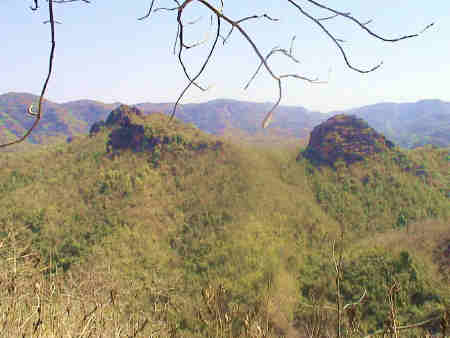
Satpura Tiger Reserve
22.4950° N · 78.2310° E · National Park
Photo: LRBurdak at English Wikipedia. Later version(s) were uploaded by Acather96, Manoij at Eng · CC BY-SA 3.0 · Wikimedia Commons
Satpura Tiger Reserve is a national park. It is near Narmadapuram district, India. Combines Satpura National Park with Bori and Pachmarhi sanctuaries. The free Lokali audio guide runs 8 minutes.
✓ Published October 2026 · how we write these guides
Visitor facts
| Lokali audio guide | 8 min · free |
|---|---|
| Type | National Park |
| Location | Narmadapuram district, India |
| Coordinates | 22.4950, 78.2310 |
| Languages | 50+, in the Lokali app |
The story
Listen first. Somewhere in the teak, a langur gives a sharp, barking cough. Then a chital deer answers with a high whistle. Dry leaves crackle underfoot, and the air smells of dust, wood smoke and crushed grass. The light comes down through the canopy in pale gold patches. This is Satpura Tiger Reserve, in the hills of Madhya Pradesh, in the heart of India. Before we talk about tigers, just stand still for a moment. The forest is already telling you who is nearby.
The reserve takes its name from the Satpura range. The name is often explained as "seven folds" or "seven mountains", a nod to the ridges that roll across this part of central India. These hills run roughly east to west, between the Narmada river to the north and the Tapti river to the south. Here they rise into steep sandstone cliffs, deep ravines and flat-topped plateaus. The ground is rough and broken. That roughness is one reason so much forest has survived here.
The protected area is really three places joined together. There is Satpura National Park at the centre. To one side lies Bori Wildlife Sanctuary. To the other lies Pachmarhi Wildlife Sanctuary, around the hill town of the same name. Together they form one of the larger stretches of continuous forest in central India. Tiger reserve status came around the turn of the twenty-first century. Today the core zone is surrounded by a buffer of villages, fields and managed woodland.
Here is the first thing most visitors miss. The Bori forest has a special place in Indian conservation history. In 1865, it was declared a reserved forest by the colonial government. It is widely described as the first reserved forest in India. At the time, the motive was timber, not wildlife. The British wanted the tall teak for ships and railways. Yet that early protection kept the trees standing, and the animals followed.
The man most linked to this landscape is a British officer named James Forsyth. In the 1860s, he travelled these hills, hunting, surveying and writing. He described the Pachmarhi plateau to the outside world, and his book on the highlands of central India became a classic of its kind. Read today, it is a strange mix. There is real wonder at the forest, and also a great deal of shooting. The tigers he hunted are the ancestors of the ones protected now.
Now, a surprise of a different kind. Look up into the tall trees, especially near streams. You may see a large squirrel with a long, bushy tail and a coat of deep rust and black. This is the Indian giant squirrel. It is mostly a creature of the forests of southern and western India. Scientists think the Satpura hills once acted as a green corridor, linking those southern forests with the forests of the northeast. Some species stayed behind here, far from their usual homes.
Of course, the tiger is the animal everyone hopes for. Be honest with yourself about the odds. Satpura has tigers, but the forest is thick and the terrain is broken. Sightings are less common here than in some better-known reserves nearby. Many regular visitors say that is part of the appeal. The reserve is quieter. There are fewer jeeps. You come for the whole forest, and if a tiger appears, it feels like a gift rather than a transaction.
And the whole forest is generous. Leopards move along the ridges. Sloth bears dig for termites, leaving torn-open mounds behind them. Herds of gaur, the massive Indian bison, graze in the clearings. They are heavy, dark animals with pale lower legs that look almost like white socks. Sambar deer stand in the shallows. Packs of wild dogs, called dhole, hunt in the open. Mugger crocodiles lie still on the riverbanks. Birdwatchers can spend whole days here and still keep adding names.
Satpura is also known for something unusual in Indian tiger country. In parts of the reserve, you can explore on foot with a trained guide, or glide across the water in a canoe or boat. Much of this happens around the Denwa river and the wide backwaters of the Tawa reservoir, near the Madhai area. On foot, the forest changes completely. You notice tracks in the sand, droppings, scratched bark and the sudden silence of birds. Your own heartbeat becomes louder.
The forest itself is a patchwork. Teak dominates large areas, with broad leaves that turn brittle and brown in the dry months. Sal trees grow in other pockets. Thick stands of bamboo creak and knock together when the wind moves through them. In the deeper, wetter gorges near Pachmarhi, you may find ferns and mosses that feel almost out of place in central India. The season changes everything. After the monsoon, the hills turn green. By early summer, the ground is bare and pale.
People have lived with this forest for a very long time. Around Pachmarhi, the sandstone cliffs hold many rock shelters with ancient paintings. Some show animals, hunters and scenes of daily life, drawn in red and white. Archaeologists believe some of these images are thousands of years old. Today, Gond and Korku communities live in and around the reserve. Some villages inside the core have been relocated over the years, a hard and debated part of how modern tiger reserves are made.
The wider landscape has also gained international attention. The Pachmarhi Biosphere Reserve, which includes Satpura, joined UNESCO's network of biosphere reserves in 2009. More recently, Satpura was placed on India's tentative list for World Heritage status. That does not change what you see on a morning drive. But it does show how much value experts place on these hills. They are one of the last large, connected forests linking the eastern and western parts of the country.
If you have a free hour, look beyond the safari tracks. On the edge of the reserve, villages wake early. Smoke rises from cooking fires. Cattle bells ring along dusty lanes. Up in Pachmarhi, the air is cooler and the views stretch across ridge after ridge. The highest point of the Satpura range, Dhupgarh, sits nearby, and people gather there to watch the sun go down. The forest looks completely different from above, like a dark green sea.
So before you leave, pause once more. Look at the ground near your feet. Perhaps there is a pugmark pressed into the dust, or a line of ants crossing the track. Listen for the langur again, or the whistle of a deer. Every sound here has a reason. You may not have seen a tiger today. But a tiger may very well have heard you. Carry that thought with you as the road takes you back out of the trees.
Key facts
What to look for
Practical tips
Common questions
Is there a free audio guide to Satpura Tiger Reserve?
Yes — the Lokali app narrates Satpura Tiger Reserve free of charge in 50+ languages. The guide runs about 8 minutes, covers the history, what to look for on site and practical tips, and works offline once downloaded.
Where is Satpura Tiger Reserve?
Satpura Tiger Reserve is near Narmadapuram district, India, at 22.4950, 78.2310. Tap the map link on this page for directions from where you are.
What is Satpura Tiger Reserve known for?
Combines Satpura National Park with Bori and Pachmarhi sanctuaries. Bori was declared a reserved forest in 1865.
What should you look for at Satpura Tiger Reserve?
Rust-and-black Indian giant squirrels high in streamside trees. Torn-open termite mounds left by feeding sloth bears. Gaur with pale lower legs that resemble white socks.
What should you know before visiting Satpura Tiger Reserve?
Book walking or canoe safaris in advance through authorised operators. Wear muted greens or browns for walking safaris.
When is the best time to visit Satpura Tiger Reserve?
Start at dawn, when animals are most active.
On the map
Opens directions to Satpura Tiger Reserve from your location.
Hear Satpura Tiger Reserve in your language
The full story, narrated, in 50+ languages. Download it before you go and it plays offline, at your own pace, with no ticket and no tour group.