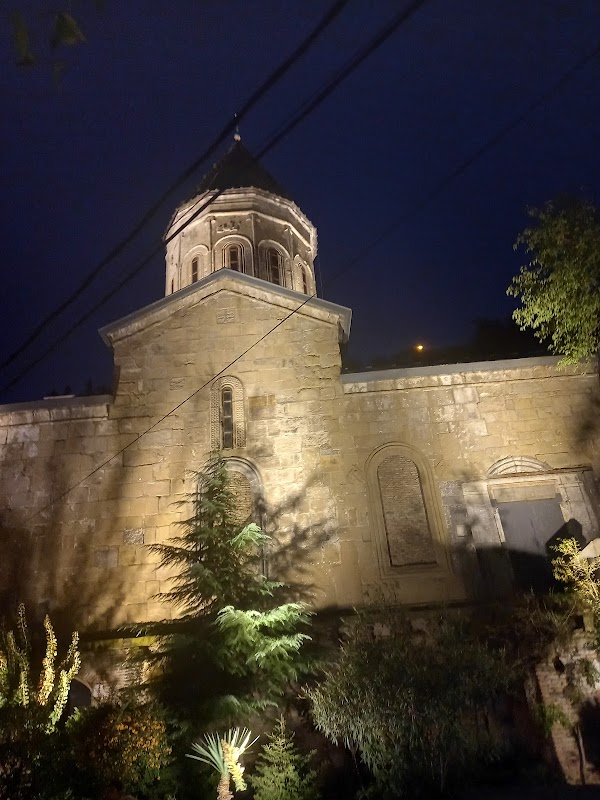
Old Town (Medina) is a neighborhood in Oran, Algeria. Oran founded around 903 by traders from Muslim Spain. Quarter named for saint Sidi El Houari, died 1439. Most visitors spend 1-2 hours here. The free Lokali audio guide runs 5 minutes.
✓ Verified October 2026 · how we write these guides
Visitor facts
| Time needed | 1-2 hours |
|---|---|
| Lokali audio guide | 5 min · free |
| Type | Neighborhood |
| Best for | Authentic finds |
| Location | Oran, Algeria |
| Coordinates | 35.738, -0.64 |
| Languages | 45, in the Lokali app |
The story
Salt in the air, bread in the air. Laundry crosses the lanes like flags, and stairways climb between houses the color of old bone. Down the slope, the port hums. Up the slope, a mountain holds a fort and a chapel against the sky. Between them lies the oldest piece of Oran, the quarter the city grew from.
Maps and guides call it the old town or the medina. Oranais call it Sidi El Houari, after the saint buried here. Eleven centuries of the city are stacked in these few streets: Andalusian foundations, Spanish walls, Ottoman mosques, French facades. Nothing in Oran is older, and nothing explains the city better.
Begin with the founding. Around the year 903, seafaring traders from Muslim Spain established a port here to serve the routes between Andalusia and North Africa. The site had what sailors need: a sheltered bay, fresh water from the ravine, and a mountain to watch from. The town they started has never since been empty.
The name came later. Sidi El Houari was a scholar and holy man of the fourteenth and fifteenth centuries, remembered for plain speech and care for the poor. He died in 1439, and his tomb became a place of blessing. The quarter took his name, and he remains the patron saint of Oran. His mosque and shrine still receive visitors and prayers.
Around the shrine grew the fabric of a Maghrebi town: mosques, Quran schools, baths, ovens, and markets. An old hammam known as the Turkish bath survives in the quarter, its domes patched by restorers. Daily life and holy life shared the same streets then, and largely still do.
Then came Spain. In 1509 a Spanish expedition took Oran, and for nearly three centuries the town lived as a fortress of Castile. The Spanish raised ramparts, gates, churches, and barracks. Look for the Porte d'Espagne, the Gate of Spain, cut through the old wall, and for Spanish stone in foundations all through the quarter.
Spanish Oran ended the way much of this quarter's story turns: with the ground itself. The earthquake of 1790 wrecked the city and killed thousands. Two years later Spain withdrew, and Bey Mohamed el-Kebir made Oran his capital. The Ottomans repaired, resettled, and built. Their proudest mark here is the Pasha Mosque of 1797, with its octagonal minaret sheathed in tiles.
The French century added its own layer after 1831. Straight streets and balconied houses pressed against the old lanes. Down by the water, the quarter of La Calere filled with fishing families, many of Spanish descent. Much of La Calere was demolished in the twentieth century, and open terraces remain where houses stood. The old town entered independence in 1962 worn, crowded, and proud.
Churches tell the Spanish and French chapters. The church of Saint-Louis stands high in the quarter on ground long used for worship, rebuilt and renamed across the centuries and now quiet. Its silhouette above the rooftops is one of the quarter's landmarks, and the ground near its steps gives a wide view of the harbor.
Walk it now with patient feet. The quarter rewards slowness: a carved lintel above a doorway, a horseshoe arch bricked half shut, a courtyard glimpsed when a gate swings, a fountain gone dry but still holding its tiles. Streets bend for reasons no one remembers. Follow them anyway.
Life here is lived outdoors and aloud. Bread ovens send smoke up the morning alleys. Men argue football under cafe awnings. Kids turn stairways into stadiums. This is a working neighborhood, not a museum set, and its people are its true monument. Greet before you photograph, and you will find doors and stories open.
The quarter is fragile. Earthquake, salt, rain, and poverty eat at old walls faster than restoration can heal them. Some houses stand empty behind wooden props. Some are lost each winter. Heritage groups and city programs work through lists of buildings, and progress moves at the speed of budgets. What you see is a rescue in slow motion.
A practical word, woven in: wear shoes made for cobbles and stairs, carry water, and keep your bearings by the slope. Downhill always finds the port. Uphill finds the mountain. Late afternoon is kindest, when the light turns the stone amber and the day's heat lets go.
End near the shrine of the saint, or simply on any stair with a view of the bay. Eleven centuries of arrivals made this quarter: sailors, soldiers, saints, refugees, and traders. Cities begin small, in places exactly like this. Stand still a moment, and you can feel Oran remembering where it started.
Key facts
What to look for
Practical tips
Common questions
How long do you need at Old Town (Medina)?
Plan 1-2 hours. That is the time most visitors spend at Old Town (Medina). The free Lokali audio guide runs 5 minutes and is made to listen to while you walk.
Is there a free audio guide to Old Town (Medina)?
Yes — the Lokali app narrates Old Town (Medina) free of charge in 50+ languages. No ticket, tour group or subscription, and it works offline once downloaded.
Where is Old Town (Medina)?
Old Town (Medina) is in Oran, Algeria, at 35.738, -0.64. Tap the map link on this page for directions.
What should you know before visiting Old Town (Medina)?
Wear sturdy shoes for cobbles, stairs, and slopes
What is Old Town (Medina) known for?
Oran founded around 903 by traders from Muslim Spain
What is the best time to visit Old Town (Medina)?
Visit in late afternoon for softer light and heat
On the map
Opens directions to Old Town (Medina) from your location.
More to see in Oran


Hear Old Town (Medina) in your language
The full story, narrated, in 50+ languages. Download it before you go and it plays offline, at your own pace, with no ticket and no tour group.