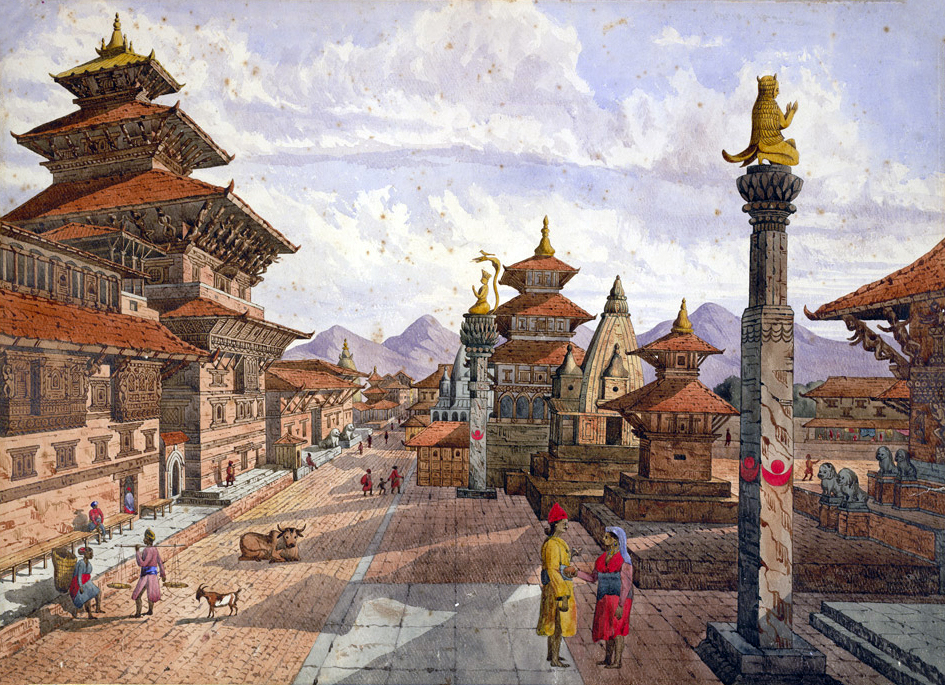
Patan Durbar Square is a former royal plaza in the city of Lalitpur, across the Bagmati River, with some of Nepal's finest medieval architecture. It is in Patan, Nepal. Most visitors spend 2–3 hours here. The free Lokali audio guide runs 5 minutes.
✓ Verified August 2026 · how we write these guides
Visitor facts
| Time needed | 2–3 hours |
|---|---|
| Lokali audio guide | 5 min · free |
| Type | Square |
| Best for | Local life |
| Location | Patan, Nepal |
| Coordinates | 27.6753, 85.3140 |
| Languages | 45, in the Lokali app |
The story
You step out of a narrow lane, and the space opens wide. Pink brick paving stretches in front of you. Carved wooden temples rise on every side. Pigeons lift and settle on the rooftops. You have arrived at Patan Durbar Square, the old royal heart of the city of Patan.
Patan lies just south of Kathmandu, across the Bagmati River. It is one of the three old royal cities of the valley. For hundreds of years, kings of the Malla line ruled here. This square was their palace ground. The temples and courtyards around you were built to show their power and their faith. Craftspeople and traders once filled the lanes around it.
The people of this valley are called the Newar. They are master builders and metalworkers. Look closely at the temples. Every wooden strut, door, and window is carved by hand. Gods, animals, and patterns cover the surfaces. Some carvings are bright with paint. Others are worn bare by the years. This square holds some of the finest Newar art anywhere.
Find the stone temple near the center. It is the Krishna Temple, built entirely of carved stone. A king raised it in 1637. Its shape is different from the wooden pagodas around it. It rises in tiers of small pavilions, with many slender pillars. Long carved bands tell stories from Hindu epics along its levels.
Look for a tall stone pillar topped by a golden statue. It shows King Yoganarendra Malla, seated and praying. A cobra rises behind his head. A small bird sits on the cobra. An old tale says that while the bird remains, the king may yet return. People still honor the figure today.
Look along the western side of the square. A line of temples faces the old palace. One is the Bhimsen Temple, with a golden front and three roofs. People pray there for good fortune in trade. Another is the Vishwanath Temple. Two carved stone elephants stand guard at its door. Between the temples are statues, water spouts, and low platforms. Pilgrims leave flowers and small lamps on the steps. Sit on one of the platforms for a while. This is where local people meet and talk through the day.
Walk to the old royal palace along the eastern side. Step through a doorway into a quiet courtyard. This is the Patan Museum. It fills several rooms of the former palace. Inside are bronze statues of gods, shown with great care and clear labels. Many people call it one of the best museums in the region.
Inside the palace, find the sunken royal bath called Tusha Hiti. It is a small stone basin set below floor level. Carved gods line its walls. A golden spout shaped like a creature pours into it. Kings once bathed here in private. The carving around it is fine and detailed. Take your time to look.
Back in the square, notice the great bell hanging between two pillars. It is the Taleju Bell. In the past, people rang it to call for justice or to warn of danger. Nearby stand temples to Taleju, the royal goddess of the Malla kings. Her shrines were the most guarded in the city.
In 2015, a strong earthquake struck the valley. Several temples in this square fell or were badly cracked. The loss was deep, for these buildings are centuries old. Since then, workers have rebuilt many of them. They use old methods, and, where they can, the original carved wood and brick.
Patan is also a center of craft. In the lanes around the square, metalworkers still shape statues of gods by hand. They use a method that is many centuries old. You can watch them tap and polish the bronze. The soft hammering carries through the lanes. Small workshops and shops sell their work. Look, and you may see a piece being made.
Find a rooftop cafe at the edge of the square. Order tea and sit where you can see the whole space. From above, the temple roofs line up in rows. People cross the brick paving below. The light moves over the carvings through the day. Morning and late afternoon are the best times to watch.
Before you go, stand still in the middle of the square. Turn slowly and take in the temples around you. Hands shaped every piece of this place, over many lifetimes. Some of it fell and was raised again. To stand here is to see patience and care, set in wood and stone. Let that stay with you.
Key facts
What to look for
Practical tips
Common questions
How long do you need at Patan Durbar Square?
Plan 2–3 hours. That is the time most visitors spend at Patan Durbar Square. The free Lokali audio guide adds about 5 minutes of narration you can listen to as you walk, so it fits inside your visit rather than adding to it.
Is there a free audio guide to Patan Durbar Square?
Yes — the Lokali app narrates Patan Durbar Square free of charge in 50+ languages. It covers the history, what to look for on site and practical tips, and it works offline once downloaded.
Where is Patan Durbar Square?
Patan Durbar Square is in Patan, Nepal, at 27.6753, 85.3140. Tap the map link on this page for directions from where you are.
What should you know before visiting Patan Durbar Square?
Visit the Patan Museum inside the old palace.
What is Patan Durbar Square known for?
One of three royal squares in Kathmandu Valley.
What is the best time to visit Patan Durbar Square?
The Krishna Mandir temple in the centre has four-tiered roofs and is surrounded by smaller shrines.
On the map
Opens directions to Patan Durbar Square from your location.
Reference
Hear Patan Durbar Square in your language
The full story, narrated, in 50+ languages. Download it before you go and it plays offline, at your own pace, with no ticket and no tour group.