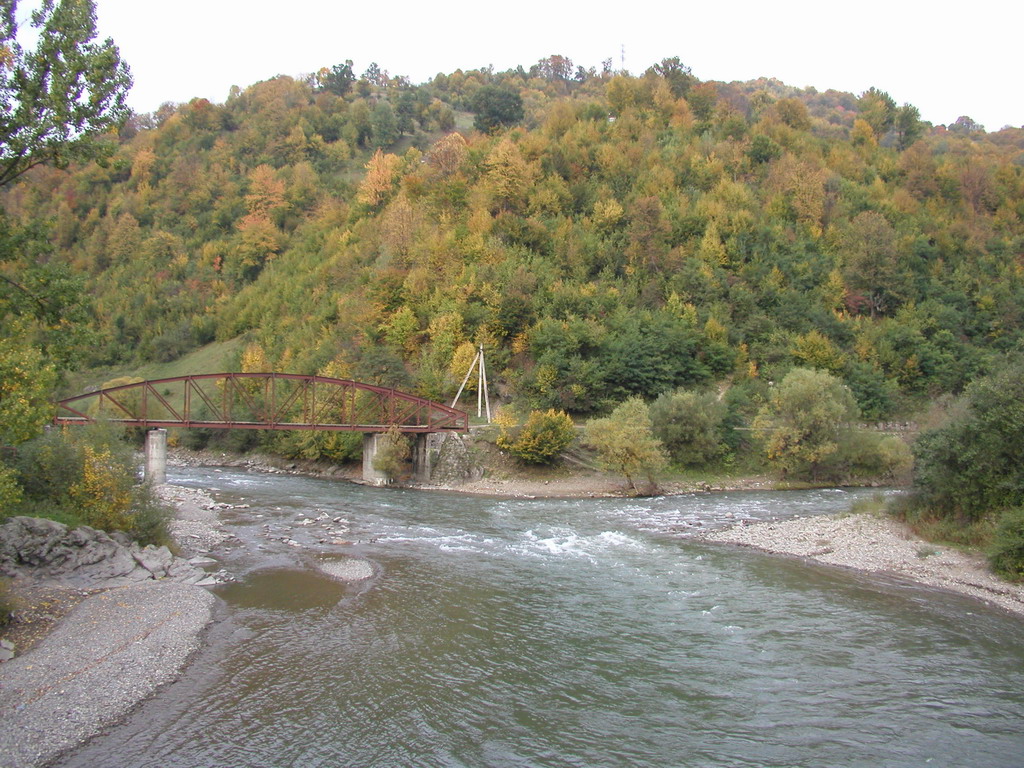
Ancient and Primeval Beech Forests of the Carpathians and Other Regions of Europe
49.0000° N · 15.0000° E · World Heritage Site
Photo: Varga Attila · Public domain · Wikimedia Commons
Ancient and Primeval Beech Forests of the Carpathians and Other Regions of Europe is a transnational UNESCO world heritage site. It is near Podkarpackie Voivodeship, Bosnia and Herzegovina. Transnational UNESCO World Heritage site spanning many European countries. The free Lokali audio guide runs 7 minutes.
✓ Published October 2026 · how we write these guides
Visitor facts
| Lokali audio guide | 7 min · free |
|---|---|
| Type | World Heritage Site |
| Location | Podkarpackie Voivodeship, Bosnia and Herzegovina |
| Coordinates | 49.0000, 15.0000 |
| Languages | 50+, in the Lokali app |
The story
Listen for a moment. Under your boots, a thick layer of old beech leaves gives a soft, dry crunch. Above you, smooth grey trunks rise like columns, and the light comes down green and broken through the canopy. There is a smell of damp earth, moss, and slowly rotting wood. This is what much of Europe looked like before farms, roads, and cities. You are standing in one of the places where that older forest still survives.
The forest around you is part of a single World Heritage site that crosses many borders. Its full name is long: the Ancient and Primeval Beech Forests of the Carpathians and Other Regions of Europe. UNESCO, the United Nations cultural and scientific body, first listed beech forests in the Carpathians of Slovakia and Ukraine. Over the following years, the site grew. Forests in Germany were added, then many more countries joined. Today it is one of the most widely spread World Heritage sites on the continent.
Here in the Podkarpackie region of southeastern Poland, the Polish part of this site lies in the Bieszczady Mountains, inside Bieszczady National Park. Poland joined the listing in a later extension, in 2021. The mountains sit in the far corner of the country, where Poland meets Slovakia and Ukraine. It is one of the least populated parts of Poland. That emptiness is a big reason why these forests survived the way they did.
So why would a whole continent protect one kind of tree? The answer goes back to the end of the last Ice Age. When the great ice sheets covered northern Europe, beech could only survive in a few warm refuges in the south. As the climate warmed, beech slowly moved north and east again, over thousands of years. Scientists see these forests as a record of that long journey. Each part of the site shows a different stage of how beech spread across Europe.
Now look closely at the trees themselves. European beech has a bark that stays thin and smooth, even on very old trunks. In this light it often looks silver or elephant grey. The leaves are oval, with a gentle wave along the edge. In autumn they turn copper and gold, and many stay on young trees through the winter. You may also notice silver fir and sycamore maple mixed in. In these mountains, beech rarely stands completely alone.
Here is something most visitors miss. The fallen trees around you are not a sign of neglect. In a primeval forest, nobody clears the dead wood away. A beech that falls may lie on the ground for decades, slowly breaking down. Fungi, mosses, and insects live inside it. New seedlings often grow straight out of a rotting log. Scientists say that dead wood is one of the richest habitats in the whole forest. A tidy forest is often a poor one.
One of the creatures that depends on this old wood is a beetle called the Rosalia longicorn. It is a striking insect, pale blue-grey with black patches and very long antennae. Its larvae live inside dead and dying beech wood for several years. Because it needs old, sunlit beech trunks, it has become rare across much of Europe. In forests like these it still finds a home. If you see a flash of soft blue on a fallen trunk in summer, look twice.
The larger animals of Bieszczady are also part of the story. Brown bears, wolves, and lynx all live in these mountains. Red deer move through the valleys at dawn and dusk. European bison, the heaviest land animals in Europe, were brought back to this region after disappearing from the wild. You are very unlikely to meet the shy predators on a marked trail. But their presence tells you something important. This forest is large and quiet enough for them.
As you climb higher, the forest changes. Near the upper edge, the beech trees become shorter, twisted, and bent by wind and heavy snow. Their trunks curve and their branches spread low. Above them open the poloniny, the high mountain meadows of the Bieszczady. These grassy ridges give long views over rolling, forested hills into Slovakia and Ukraine. From up there, you can see how much of the landscape is still covered by trees.
The human history of these valleys is quieter, but it is there if you look. Before the Second World War, villages of Boyko and Lemko people, Carpathian highland communities, lived in this area. After the war, forced resettlements emptied much of the region. Many villages disappeared. Today you may pass old orchard trees, stone foundations, or a lone wayside cross deep in the woods. These are traces of homes that once stood here. The forest has slowly grown back over them.
It is worth knowing that not every tree in Bieszczady is part of the World Heritage listing. Only selected areas of the oldest and least disturbed forest are inside the protected components. Around them lie buffer zones and younger woods. The wider landscape is also part of the East Carpathians Biosphere Reserve, which Poland shares with Slovakia and Ukraine. Protection here works across borders, the same way the forest itself does. The trees do not stop at a fence or a frontier.
If you walk here in different seasons, the forest feels like a different place each time. In spring, the floor fills with wildflowers before the canopy closes and shades them out. In summer, the light turns deep green and the air stays cool even on hot days. Autumn brings the copper colours that many people come especially to see. Winter is silent and white, with animal tracks across fresh snow. Each season shows another side of the same old forest.
Please remember that this is a strictly protected place. Stay on the marked trails, and take everything you bring back out with you. Do not pick plants, take wood, or disturb animals. Some areas are closed to visitors so the forest can follow its own course. That is part of the point. A primeval forest is not a garden. It is a place where people choose, on purpose, to step back and let nature work.
Before you move on, stand still for one more minute. Put a hand on the cool, smooth bark of the nearest beech. Listen for a woodpecker, the creak of branches, or water running somewhere below. The tree in front of you may be older than anyone you know. As you walk away, notice how the light changes when you leave the deep forest. Then remember that this same kind of forest once covered most of Europe.
Key facts
What to look for
Practical tips
Common questions
Is there a free audio guide to Ancient and Primeval Beech Forests of the Carpathians and Other Regions of Europe?
Yes — the Lokali app narrates Ancient and Primeval Beech Forests of the Carpathians and Other Regions of Europe free of charge in 50+ languages. The guide runs about 7 minutes, covers the history, what to look for on site and practical tips, and works offline once downloaded.
Where is Ancient and Primeval Beech Forests of the Carpathians and Other Regions of Europe?
Ancient and Primeval Beech Forests of the Carpathians and Other Regions of Europe is near Podkarpackie Voivodeship, Bosnia and Herzegovina, at 49.0000, 15.0000. Tap the map link on this page for directions from where you are.
What is Ancient and Primeval Beech Forests of the Carpathians and Other Regions of Europe known for?
Transnational UNESCO World Heritage site spanning many European countries. Polish component lies within Bieszczady National Park.
What should you look for at Ancient and Primeval Beech Forests of the Carpathians and Other Regions of Europe?
Smooth silver-grey bark on very old beech trunks. Fallen logs covered in moss, fungi, and seedlings. Twisted, wind-bent dwarf beeches near the treeline.
What should you know before visiting Ancient and Primeval Beech Forests of the Carpathians and Other Regions of Europe?
Stay strictly on marked trails inside the protected zones. Bring layers; forest air stays cool even in summer.
When is the best time to visit Ancient and Primeval Beech Forests of the Carpathians and Other Regions of Europe?
Walk early morning for the best chance of hearing wildlife.
On the map
Opens directions to Ancient and Primeval Beech Forests of the Carpathians and Other Regions of Europe from your location.
More to see near Ancient and Primeval Beech Forests of the Carpathians and Other Regions of Europe

Hear Ancient and Primeval Beech Forests of the Carpathians and Other Regions of Europe in your language
The full story, narrated, in 50+ languages. Download it before you go and it plays offline, at your own pace, with no ticket and no tour group.