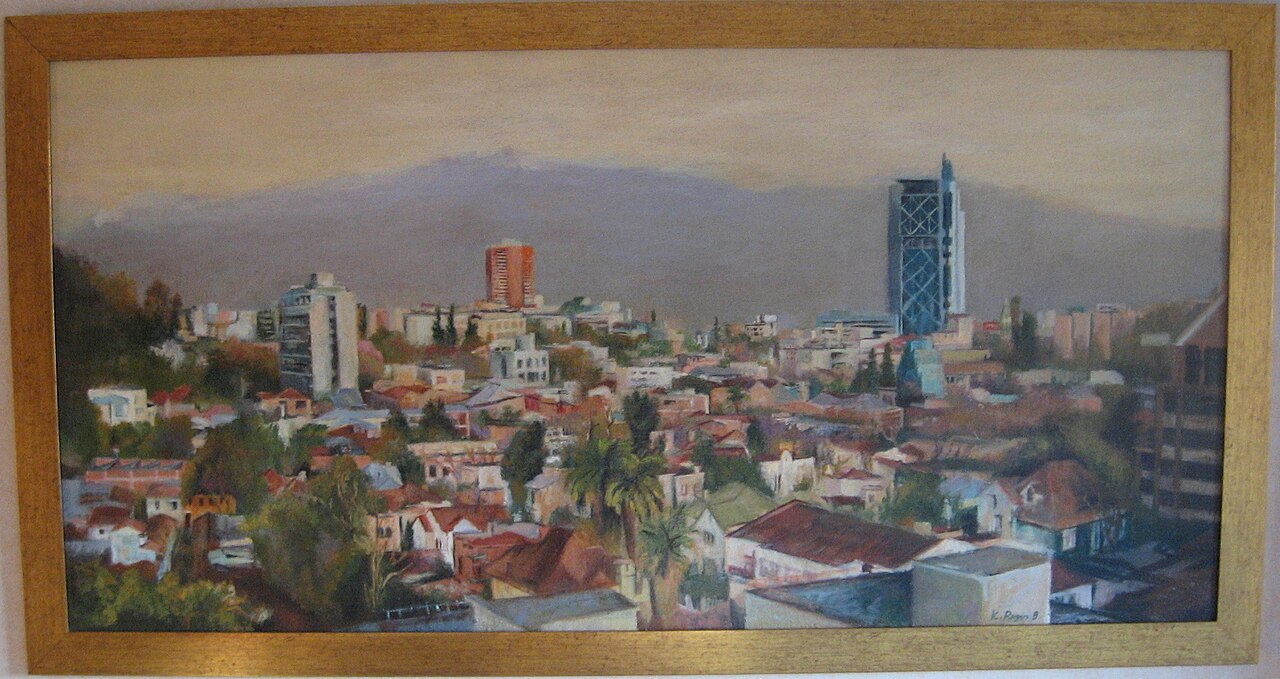
Bellavista Neighborhood
33.4368° S · 70.6352° W · Neighborhood
Bellavista Neighborhood is a neighborhood in Providencia, Chile. Historic bohemian quarter on the north bank of the Mapocho River, famous for street art, colonial architecture, and creative culture. Most visitors spend 2–3 hours here. The free Lokali audio guide runs 5 minutes.
✓ Verified August 2026 · how we write these guides
Visitor facts
| Time needed | 2–3 hours |
|---|---|
| Lokali audio guide | 5 min · free |
| Type | Neighborhood |
| Best for | Local life |
| Location | Providencia, Chile |
| Coordinates | -33.4368, -70.6352 |
| Languages | 45, in the Lokali app |
The story
Color is the first thing you notice here. Walls painted in deep blues and reds. Murals that cover whole house fronts from the ground to the roof. And above all the rooftops, a green hill rising against the sky. You are in Bellavista, the neighborhood that Santiago thinks of as the home of its artists and its night owls.
Bellavista sits between two natural edges. On one side runs the Mapocho River, the brown river that crosses the city down from the mountains. On the other side rises Cerro San Cristobal, the great green hill. The neighborhood fills the narrow band of streets caught between the moving water and the climbing slope. The name Bellavista means beautiful view, and the hill rising just above explains exactly why.
There is a quirk hidden in the map here. Though it feels like one place, Bellavista is split between two different communes, or districts, of the city. The main street, Pio Nono, forms the border between them. One side of the street is governed by one district, and the other side by its neighbor.
For generations, this has been a quarter of artists, writers, and students. Rents were once low here, and the houses were old and full of character. Poets and painters chose to settle in these streets. That history still shapes the mood of the place today, which feels creative, a little worn at the edges, and open to new ideas.
The clearest sign of that past is La Chascona, the Santiago house of the poet Pablo Neruda. He built it in the 1950s against the foot of the hill, for the woman he loved. Today it stands open as a museum. Many visitors begin their walk through Bellavista among its blue and clay-colored rooms, and then wander outward into the tangle of streets that surrounds the house.
Walk the side streets and look closely at the walls. Bellavista is covered in street art. Some pieces are large and carefully planned, painted by well-known artists. Others are quick, small, and rough. Faces, animals, words, and bright patterns spread across doors, fences, and entire buildings. The neighborhood works like an open gallery that keeps changing. What covers a wall today may be painted over and made new again within a single season.
The main artery is Pio Nono. It runs from the edge of the old city, beside a large square, straight up toward the hill, ending at the gateway to the park and its funicular. Along the way it is lined with bars, food stands, and crowds of people, loud and full especially on weekend nights.
Just off that street lies Patio Bellavista, a block of restored old houses built around open courtyards. There you can find restaurants, craft shops, and stalls selling lapis lazuli, the deep blue stone mined high in the Chilean mountains. It offers a calmer place to eat and to shop within the busy neighborhood.
Bellavista is known across all of Santiago for its nightlife. As evening falls, the restaurants fill up and the bars open their doors. Students, artists, and visitors gather together in the streets. The neighborhood that feels sleepy and relaxed by day turns into one of the liveliest corners of the city once the sun goes down. Tables spill out onto the pavement, and the sound of voices, glasses, and music carries far into the warm night.
Yet there are quiet pockets here too. Step away from the main street and you find narrow lanes of small houses, trees, and little gardens. Cats sit and watch from the tops of walls. Laundry hangs drying from the balconies. People live their ordinary daily lives here, among the bars and the galleries.
Above it all, the hill is always present. From many corners of the neighborhood you can look up and see the green slope of Cerro San Cristobal, with the small white statue at its distant summit. The hill gives Bellavista both its shelter and its horizon, a piece of wild nature held close against the streets. Wherever you lose your way among the lanes, you can look up, find the hill, and know at once which direction you face.
Before you move on, slow your pace and let the neighborhood show itself to you. Read a painted wall. Glance up an unexpected side street. Notice the mix of color, plants, music, and people all around. Bellavista does not ask to be rushed through. It rewards the visitor who is willing to wander slowly and simply look.
Key facts
What to look for
Practical tips
Common questions
How long do you need at Bellavista Neighborhood?
Plan 2–3 hours. That is the time most visitors spend at Bellavista Neighborhood. The free Lokali audio guide adds about 5 minutes of narration you can listen to as you walk, so it fits inside your visit rather than adding to it.
Is there a free audio guide to Bellavista Neighborhood?
Yes — the Lokali app narrates Bellavista Neighborhood free of charge in 50+ languages. It covers the history, what to look for on site and practical tips, and it works offline once downloaded.
Where is Bellavista Neighborhood?
Bellavista Neighborhood is in Providencia, Chile, at -33.4368, -70.6352. Tap the map link on this page for directions from where you are.
What should you know before visiting Bellavista Neighborhood?
Walk the side streets away from the main road.
What is Bellavista Neighborhood known for?
Lies between the Mapocho River and Cerro San Cristobal.
What is the best time to visit Bellavista Neighborhood?
Wander the narrow streets early morning before crowds arrive.
On the map
Opens directions to Bellavista Neighborhood from your location.
More to see in Providencia


Hear Bellavista Neighborhood in your language
The full story, narrated, in 50+ languages. Download it before you go and it plays offline, at your own pace, with no ticket and no tour group.