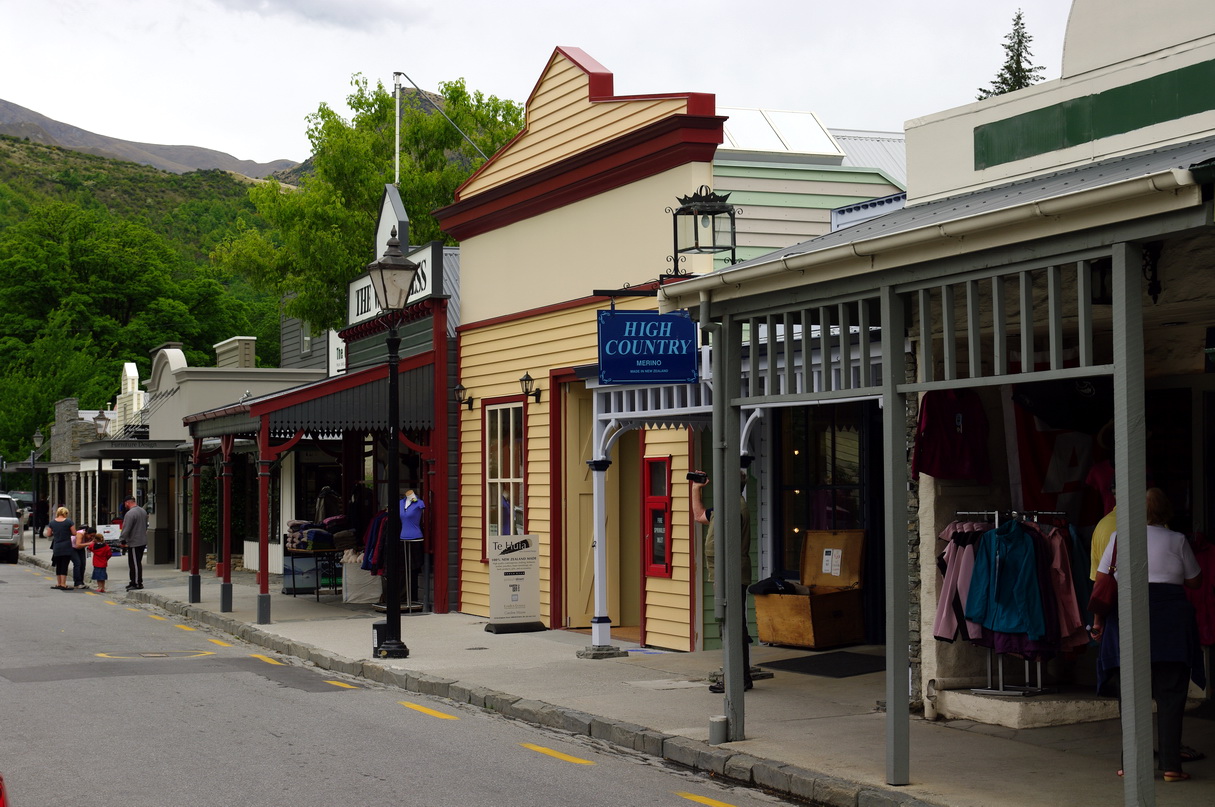
Arrowtown is a historic gold-rush village 21 km from Queenstown, set in a valley with preserved colonial buildings and tree-lined streets. It is in Queenstown, New Zealand. Most visitors spend 2–3 hours here. The free Lokali audio guide runs 5 minutes.
✓ Verified August 2026 · how we write these guides
Visitor facts
| Time needed | 2–3 hours |
|---|---|
| Lokali audio guide | 5 min · free |
| Type | Neighborhood |
| Best for | History |
| Location | Queenstown, New Zealand |
| Coordinates | -44.9306, 168.8394 |
| Languages | 45, in the Lokali app |
The story
Walk slowly down the main street, and let your eyes move along the old shopfronts. They are low and narrow, built of stone and timber. Big trees lean over the road from both sides. In autumn their leaves turn gold and red, and the light beneath them seems to glow. This small town is called Arrowtown, and it grew out of gold.
Arrowtown lies about twenty kilometres from Queenstown, on the banks of the Arrow River. It began with a single discovery. In 1862, miners found gold in the river gravels here. Word spread quickly across the region, and within a few months thousands of hopeful diggers had arrived to work the cold and rushing water.
The main street is called Buckingham Street. Many of its buildings date from those gold years in the nineteenth century. Look at the stone walls, the low iron roofs, and the small wooden shop fronts. People still use these buildings today, as shops and places to eat and drink. Yet their old shapes and proportions remain almost unchanged.
The trees along the street were planted by early settlers. They are mostly oaks, sycamores, and other species brought from the northern half of the world. In autumn, usually in April and May, the whole town turns gold. People travel a long way just to walk these streets, slowly, under the slow fall of the leaves.
Follow the path along Bush Creek to the edge of town. Here you will find low stone and earth huts, partly rebuilt and partly in ruins. This was the Chinese settlement. In the 1860s and 1870s, many miners came here from southern China. They worked the goldfields that other diggers had already searched and left behind.
Life was hard for them. They lived apart from the European town, often in small, simple shelters set against the cold. One building that still stands is Ah Lum's store. It served as a shop and a meeting place for the community. Standing among these low huts, you begin to feel how narrow and difficult those lives could be.
Down at the Arrow River, the water runs clear and cold over the stones. This is where the gold was first found. You can still try your luck for yourself. People crouch at the edge with a flat metal pan. They scoop up gravel, swirl it with water, and watch for a bright fleck to settle at the bottom.
Gold is heavy. That simple fact is the secret of panning. As you swirl the pan, the light sand and small stones wash over the edge. The heavy gold sinks down and stays behind. The early miners did this all day long, in freezing water, hoping for just enough to make their long journey here worth the effort.
On the main street stands the Lakes District Museum. It holds tools, photographs, and everyday objects from the gold era. Through them you can picture the town as it once was. There were miners, horses, dust, mud, and constant noise. The air smelled of woodsmoke and wet stone. It is a different world from the quiet street you walk along today.
Step away from the shops into the narrow side lanes. The town is small, and it is easy to walk from end to end. Old cottages sit behind low stone fences and gardens. Many are more than a hundred years old. They are still lived in and cared for, with smoke rising from their chimneys through the winter.
Spare a thought for how this town survived at all. When the gold ran out, many mining places were simply abandoned to the weather. Arrowtown held on. People stayed, and they kept the old buildings standing. Slowly, over many years, the town found new life as a place that people wanted to visit, and to call home.
The river has shaped life here from the very beginning. It brought the gold, and it brought the miners. It still runs along the edge of the town, clear and steady. Children play at its banks on warm summer days. The same water that once made men rich now simply moves through the stones, on its long way down the valley.
Stand under the trees on the main street before you go. Listen to the river in the distance, and the wind moving in the leaves. Miners once filled this street with noise and hope and hard work. Now it is quiet. The same water still runs nearby, carrying the last fine grains of gold down through the stones.
Key facts
What to look for
Practical tips
Common questions
How long do you need at Arrowtown?
Plan 2–3 hours. That is the time most visitors spend at Arrowtown. The free Lokali audio guide adds about 5 minutes of narration you can listen to as you walk, so it fits inside your visit rather than adding to it.
Is there a free audio guide to Arrowtown?
Yes — the Lokali app narrates Arrowtown free of charge in 50+ languages. It covers the history, what to look for on site and practical tips, and it works offline once downloaded.
Where is Arrowtown?
Arrowtown is in Queenstown, New Zealand, at -44.9306, 168.8394. Tap the map link on this page for directions from where you are.
What should you know before visiting Arrowtown?
Visit in April or May for autumn colour.
What is Arrowtown known for?
Gold was found in the Arrow River in 1862.
What is the best time to visit Arrowtown?
The town's name comes from the Arrow River, not a compass direction.
On the map
Opens directions to Arrowtown from your location.
Hear Arrowtown in your language
The full story, narrated, in 50+ languages. Download it before you go and it plays offline, at your own pace, with no ticket and no tour group.