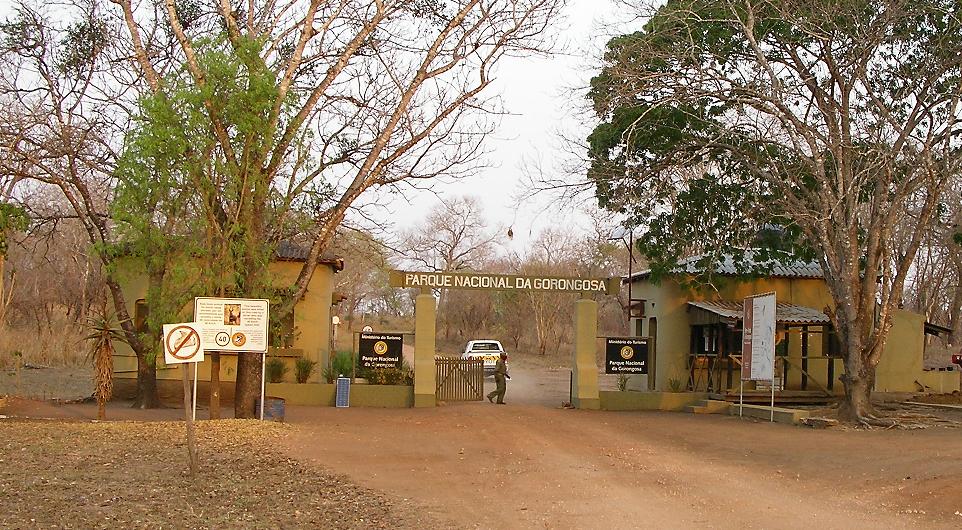
Gorongosa National Park
18.7660° S · 34.5000° E · National Park
Photo: Brian Dell · Public domain · Wikimedia Commons
Gorongosa National Park is a national park in Mozambique. Lies at the southern end of the Great Rift Valley. The free Lokali audio guide runs 6 minutes.
✓ Published October 2026 · how we write these guides
Visitor facts
| Lokali audio guide | 6 min · free |
|---|---|
| Type | National Park |
| Location | Sofala, Mozambique |
| Coordinates | -18.7660, 34.5000 |
| Official website | gorongosa.net |
| Languages | 50+, in the Lokali app |
The story
Listen for a moment. Somewhere out on the grass, a waterbuck snorts and stamps. Insects tick in the heat. The air smells of dust, dry grass and, if you are near the water, wet mud and reeds. Look up, and on a clear day you may see a long green mountain rising to the west. You are standing at the southern end of Africa's Great Rift Valley, in the heart of Mozambique's Sofala Province.
Gorongosa is a park with two stories. The first is a story of plenty. The second is a story of loss, and then of return. To understand what you are seeing today, the antelope on the plains, the fresh tracks in the sand, you need both. So let us begin with the land itself, because the land is why everything else happened here.
The Great Rift Valley is a long tear in the earth's crust. It runs from the Middle East down through East Africa. Here, near its southern end, the valley floor is low and flat. Rivers flow down from the surrounding hills and collect in the middle. During the rainy season, much of the valley floods. In the dry months, the water pulls back. It leaves rich green grassland behind, and the animals follow that green.
At the centre of this system lies Lake Urema. Its size changes a great deal with the seasons. In wet years, it spreads wide across the floodplain. In dry years, it shrinks to a smaller body of water ringed by mud. Hippos and crocodiles live here. Pelicans, storks and herons hunt in the shallows. If you visit in the dry season, the edge of the lake is often where you will see the most life.
Now look at the trees. The park holds several very different habitats close together. There is open grassland and wooded savanna. There are groves of tall palms. Near the water, look for fever trees. They have a smooth bark that is yellow-green, almost glowing in the late afternoon. And everywhere you will notice termite mounds. Some are taller than a person, and trees often grow right out of them.
Those mounds matter more than most visitors realise. Termites bring up fine soil and nutrients from deep underground. That soil stays dry during the floods. So the mounds become small islands, where trees and shrubs can survive the wet season. Scientists working here have studied how these little islands shape the whole landscape. Something you might drive past without a second look is, in fact, one of the engines of this ecosystem.
The area was first protected as a hunting reserve in the early twentieth century, when Mozambique was a Portuguese colony. It became a national park in 1960. In the decades that followed, Gorongosa earned a reputation as one of the finest wildlife areas in southern Africa. Visitors came to see large herds of buffalo, zebra and wildebeest, many elephants, and some of the highest numbers of lions on the continent.
Then came the darkest chapter. After independence in 1975, Mozambique fell into a long civil war. It lasted until 1992. Fighting reached this park directly, and the central camp was damaged. Soldiers on all sides hunted animals for food. Ivory and meat were traded to pay for weapons. By the end of the war, and the hard years after it, the numbers of large mammals here had fallen by more than ninety percent. Some species disappeared from the park entirely.
Here is a detail most visitors never hear. Many of the female elephants in Gorongosa have no tusks. During the war, hunters killed elephants with tusks for ivory. The females born without tusks were more likely to survive. They passed that trait on to their daughters. Researchers published a study on this in 2021. It is one of the clearest examples of how human violence can change the very body of a wild species.
The second story begins in the early 2000s. The government of Mozambique formed a long-term partnership with a foundation led by the American philanthropist Greg Carr. The goal was to restore the park. Teams rebuilt roads and camps. They trained rangers and removed thousands of snares. Animals were brought back from other places, including buffalo, wildebeest and zebra. African wild dogs, also called painted dogs, were reintroduced too, and they began to breed here.
The recovery has surprised many scientists. Today, waterbuck are the most common large mammal on the plains. Their numbers have grown so quickly that researchers now watch how they change the grassland. Lions have increased again. Leopards, rarely seen for many years, have returned. This is not a finished success story. It is a place still in the middle of healing, and you are seeing it at that moment.
The people of Sofala are part of this story as well. Many families live in the areas around the park. The restoration project has worked with these communities on schools, health clinics and farming. On the slopes of Mount Gorongosa, farmers grow coffee in the shade of native trees. This helps protect the mountain's rainforest. That forest feeds the rivers. The rivers feed Lake Urema. Everything you see on the plain is connected to that mountain.
So, before you move on, take one more slow look around you. Notice the colour of the grass, the shape of the nearest termite mound, the sound of birds in the trees. Thirty years ago, this view was almost empty. Today it is filling up again, one herd and one season at a time. As you drive or walk away, keep your eyes on the road edges and the waterline. The park is still writing its second story.
Key facts
What to look for
Practical tips
Common questions
Is there a free audio guide to Gorongosa National Park?
Yes — the Lokali app narrates Gorongosa National Park free of charge in 50+ languages. The guide runs about 6 minutes, covers the history, what to look for on site and practical tips, and works offline once downloaded.
Where is Gorongosa National Park?
Gorongosa National Park is near Sofala, Mozambique, at -18.7660, 34.5000. Tap the map link on this page for directions from where you are.
What is Gorongosa National Park known for?
Lies at the southern end of the Great Rift Valley. Declared a national park in 1960.
What should you look for at Gorongosa National Park?
Tuskless female elephants in the breeding herds. Yellow-green bark of fever trees near water. Tall termite mounds with trees growing from them.
What should you know before visiting Gorongosa National Park?
Visit in the dry season for easier wildlife viewing. Bring binoculars for birds around Lake Urema.
When is the best time to visit Gorongosa National Park?
Go out early morning or late afternoon for active animals.
On the map
Opens directions to Gorongosa National Park from your location.
Hear Gorongosa National Park in your language
The full story, narrated, in 50+ languages. Download it before you go and it plays offline, at your own pace, with no ticket and no tour group.