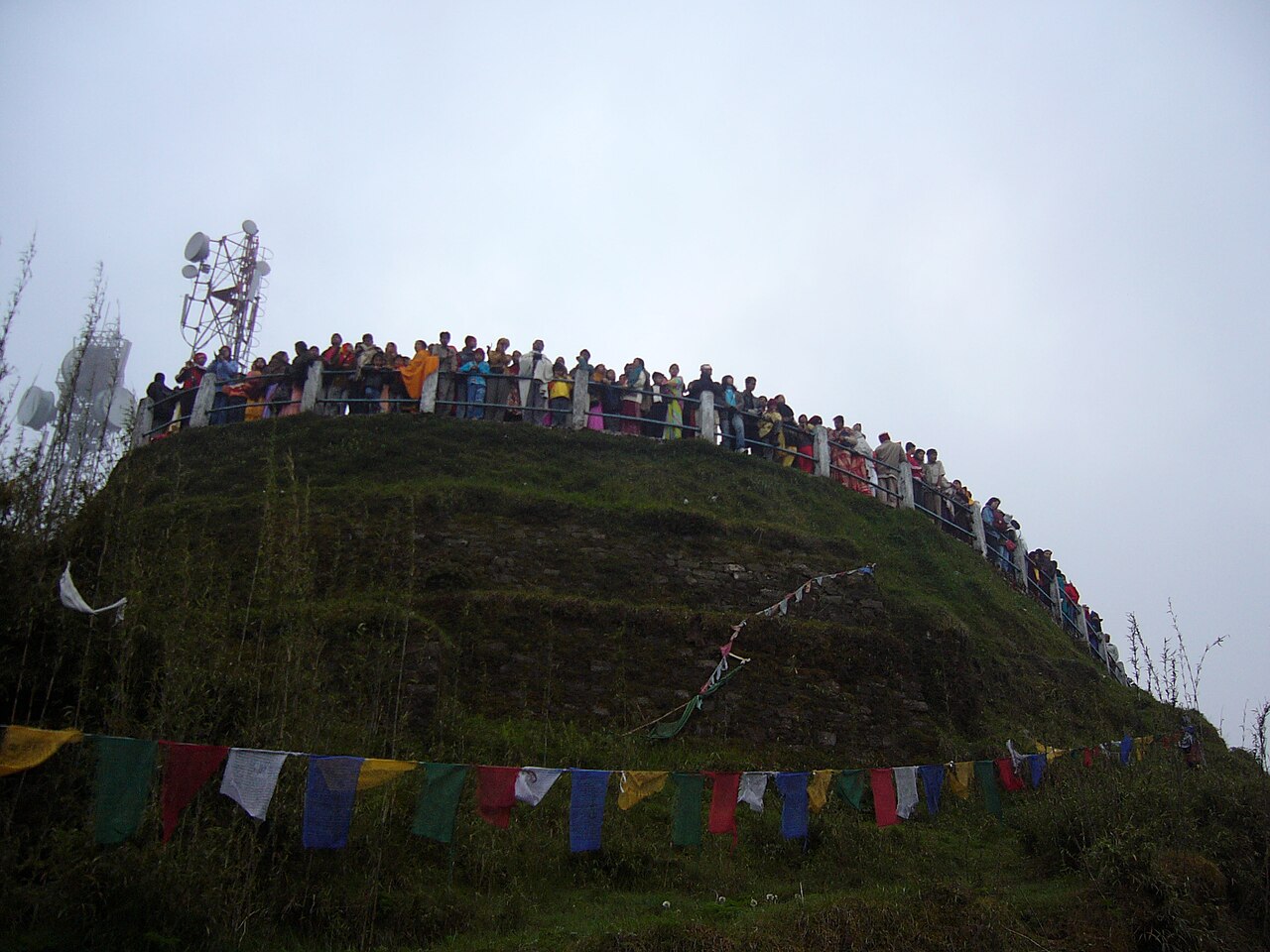
Tiger Hill is a hilltop landmark crowned by the leaning Tiger Hill Pagoda (Yunyan Pagoda), built in the 10th century. It is in Suzhou, China. Most visitors spend 1–1.5 hours here. The free Lokali audio guide runs 5 minutes.
✓ Verified August 2026 · how we write these guides
Visitor facts
| Time needed | 1–1.5 hours |
|---|---|
| Lokali audio guide | 5 min · free |
| Type | Pagoda |
| Best for | Editors' pick |
| Location | Suzhou, China |
| Coordinates | 31.3242, 120.5938 |
| Languages | 45, in the Lokali app |
The story
It is still dark when you arrive. The air is cold enough to see your breath. Around you, people stand quietly, wrapped in blankets and coats, all facing the same way. Everyone is waiting for the same thing. Light. In a few minutes the sun will rise, and the mountains will catch fire with color. For now, though, there is only the dark, the cold, and the quiet sound of people breathing and waiting.
Tiger Hill stands about 2,590 meters above the sea. That is its whole purpose for the crowd gathered here. From this high point, on a clear morning, you can see one of the tallest mountains on Earth. Its name is Kanchenjunga. It rises far to the north, white and sharp against the sky. It is so large that it seems closer than it truly is.
Kanchenjunga is the third highest mountain in the world. Its summit reaches 8,586 meters. From Tiger Hill it does not look small or distant. It fills the horizon. When the first light touches it, the snow turns gold, then pink, then a clean bright white as the sun climbs higher. For a few minutes the whole peak seems to burn with light. Then the fire cools, and the mountain settles into plain white day.
The hill sits about eleven kilometers from the town of Darjeeling. Most people leave very early, in the dark, by jeep or car. The road winds and climbs. Headlights crawl up the slope in a long line. Everyone is chasing the same short moment, the few minutes when the sun first appears.
While you wait in the dark, small vendors move quietly through the crowd. They carry kettles of hot tea and coffee, and trays of simple snacks. The warm cups pass from hand to hand between the rows of people. Steam rises from them into the cold air. The smell of ginger and spice drifts past. It is a small comfort in the long, chilly minutes before dawn, and the heat of the cup feels good against cold fingers. Children sip from steaming cups and bounce on their toes to stay warm.
Stand still and watch the eastern sky. At first there is only a faint gray glow. Then a thin orange line. The cold seems to deepen just before dawn. People grow quiet. Cameras lift. And then the sun breaks the edge of the world, and warmth touches your face for the first time. It is a strange and welcome warmth after the long cold wait.
Turn back to the mountains as the light spreads. The change happens fast. The high snow of Kanchenjunga glows first, because it stands so tall. The color slides down the peak as the sun rises. The valleys below stay dark and blue for a while longer, still holding the night.
On very clear days, look far to the left, to the west. Some mornings you can see another giant on the far horizon. It is Mount Everest, the highest mountain on Earth. It looks smaller from here, because it stands much farther away. But there it is, faint and pale in the distance. People point and pass the news along, and heads turn to find it.
Clouds do not always allow this view. The weather in these hills can change fast. Some mornings the peaks hide behind a gray wall, and the crowd sees only mist. This is part of the experience. The mountain reveals itself when it chooses. A clear morning here feels like a gift, not a promise. If the peaks stay hidden, the sky itself still rewards you, turning soft shades of orange and rose above the gray.
Below the open viewing area there is a building with levels of seats and large windows. For a small fee you can wait inside, out of the wind, with a hot cup of tea in your hands. Many people prefer the open air, where nothing stands between them and the sky. They stand at the railing in the dark, stamping their feet against the cold, unwilling to miss a single moment of the change to come.
When the sun is fully up, the moment ends quickly. The color fades from the snow. The mountains turn into ordinary daylight peaks. Engines start. Doors close. The long line of cars begins to wind back down the hill toward warm beds and breakfast.
But the memory stays. You stood in the cold dark and waited, with no certainty of what you would see. And the light came. The mountains answered. It is a simple thing, a sunrise. Yet from this hill, it can feel like watching the world wake up for the very first time. You carry that light with you down the hill, long after the cold has faded.
Key facts
What to look for
Practical tips
Common questions
How long do you need at Tiger Hill?
Plan 1–1.5 hours. That is the time most visitors spend at Tiger Hill. The free Lokali audio guide adds about 5 minutes of narration you can listen to as you walk, so it fits inside your visit rather than adding to it.
Is there a free audio guide to Tiger Hill?
Yes — the Lokali app narrates Tiger Hill free of charge in 50+ languages. It covers the history, what to look for on site and practical tips, and it works offline once downloaded.
Where is Tiger Hill?
Tiger Hill is in Suzhou, China, at 31.3242, 120.5938. Tap the map link on this page for directions from where you are.
What should you know before visiting Tiger Hill?
Leave very early in the dark by car.
What is Tiger Hill known for?
Tiger Hill stands about 2,590 meters above sea level.
What is the best time to visit Tiger Hill?
Climb to the top for a rare panoramic view of the garden district.
On the map
Opens directions to Tiger Hill from your location.
Reference
Hear Tiger Hill in your language
The full story, narrated, in 50+ languages. Download it before you go and it plays offline, at your own pace, with no ticket and no tour group.