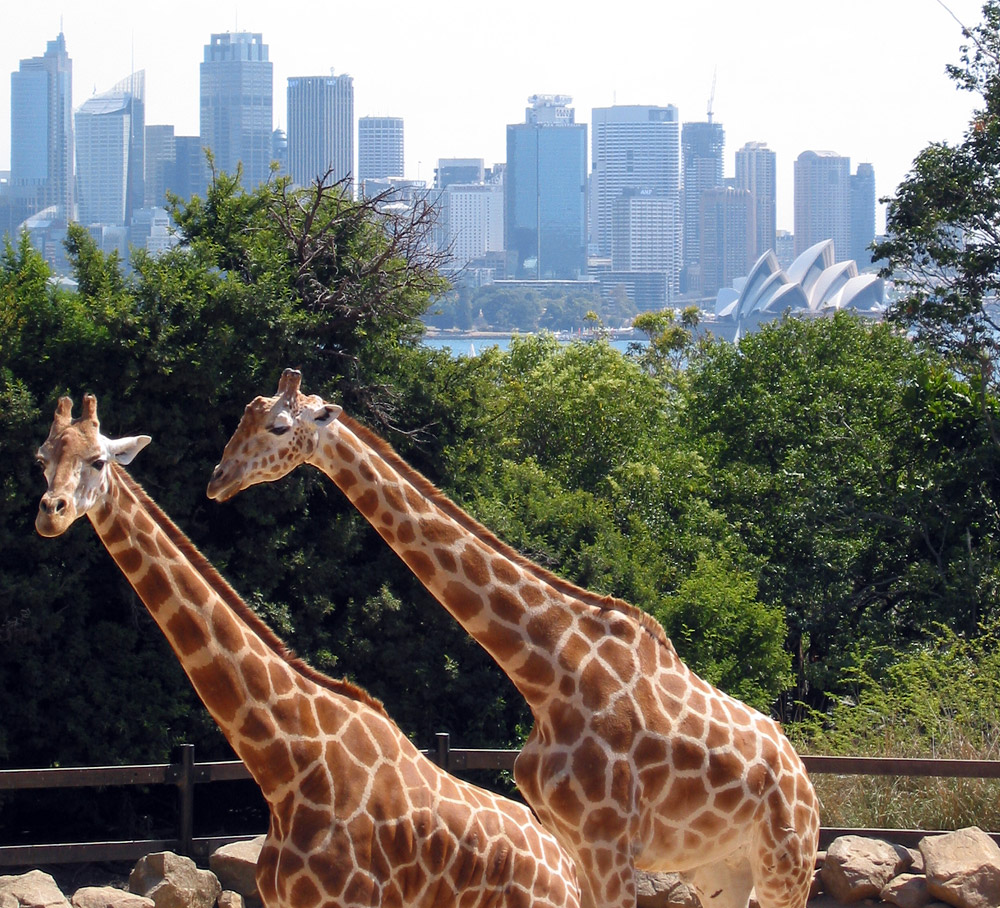
Photo: Jan Derk · Public domain · Wikimedia Commons
Taronga Zoo is a zoo in Australia. It is in Sydney, Australia. Taronga opened on Sydney Harbour's northern shore in 1916. The free Lokali audio guide runs 8 minutes.
✓ Published October 2026 · how we write these guides
Visitor facts
| Lokali audio guide | 8 min · free |
|---|---|
| Type | Zoo |
| Location | Sydney, Australia |
| Coordinates | -33.8433, 151.2411 |
| Official website | zoo.nsw.gov.au |
| Languages | 50+, in the Lokali app |
The story
Listen for a moment. Under the chatter of visitors you may hear the slap of harbour water against a ferry hull, the screech of a sulphur-crested cockatoo, and wind moving through eucalyptus leaves. The air smells of salt and warm gum trees. You are standing on a steep green hillside on the northern shore of Sydney Harbour. Across the water, the city skyline rises in glass and sandstone. Here, a zoo shares its view with one of the most photographed harbours in the world.
Most people first see Taronga from the water. The ferry from Circular Quay crosses the harbour, passes the white sails of the Opera House, and turns toward a small wharf at the foot of the hill. That approach is part of the experience. It also matches the zoo's own history, because Taronga began with a journey across this same stretch of water. Before you climb the path, picture this shoreline more than a century ago, when the bush came down almost to the waterline.
The zoo did not start here. Sydney's first public zoo stood south of the city centre at Moore Park, from the late nineteenth century. That site became cramped, and the city wanted something larger and more natural. The new harbourside site opened to the public in 1916. Moving an entire collection of animals across the city was a large and slightly chaotic project. Many animals travelled by road, but some of the most memorable crossed the harbour by boat.
The best-known passenger was an Asian elephant named Jessie. According to the story told at the zoo, she was carried across the harbour on a barge during the move from Moore Park. Imagine the scene. An elephant floats past sailing boats and early ferries while curious Sydneysiders watch from the shore. Jessie became one of the zoo's favourite residents for years. Many older Sydney families still remember stories of elephant rides in the early days, a practice the zoo ended long ago.
The name Taronga comes from an Aboriginal language of the Sydney region. It is usually translated as beautiful view or water view. Stand at almost any lookout here and the translation needs no explanation. This land sits within the traditional Country of the Cammeraygal people, who lived along this northern shore long before European settlement. Their connection to the harbour, its fish, its shells, and its sandstone headlands continues today. The zoo now acknowledges that history in its signage and in several of its programs.
Now think about the ground under your feet. The whole zoo is built on a slope that falls toward the water. Paths zigzag and stairs appear where you least expect them. Here is a tip that many first-time visitors miss. If you arrive by ferry, take the cable car or the bus up to the top entrance, then walk downhill through the zoo. Your legs will thank you. You finish near the wharf, ready for the ferry home.
The cable car is called the Sky Safari, and it is worth riding for the view alone. As the cabin lifts above the treetops, the harbour spreads out below you. You can see the arch of the Harbour Bridge, the Opera House, and yachts tacking across blue water. Look down too. Some enclosures are visible from above, and you may spot animals that are hidden from the paths. It is one of the few places where wildlife and a city skyline share one frame.
Taronga holds animals from many continents, but its Australian collection deserves slow attention. Koalas doze in the forks of eucalyptus trees, often for most of the day. Kangaroos and wallabies rest in the shade. Look for the nocturnal house, where the light is kept low so night-active animals stay awake during your visit. Your eyes need a minute to adjust. Then shapes appear — a quiet marsupial on a branch, or a platypus moving through dark water.
The platypus surprises almost everyone. It is smaller than most visitors expect, about the size of a house cat or smaller. It lays eggs, yet it feeds its young on milk. Males carry a venomous spur on their hind legs. When European scientists first saw a preserved specimen, some suspected a hoax made from parts of different animals. Watch how it swims with its eyes closed. It finds food using sensors in its bill that detect tiny electrical signals from prey.
Behind the public paths, much of Taronga's work is about conservation. The zoo runs breeding programs for threatened Australian species. One important example is the Tasmanian devil, which has suffered badly from a contagious facial tumour disease in the wild. Breeding healthy animals in zoos helps protect the species. Taronga also has a wildlife hospital. Injured native animals, including sea turtles, birds, and marine mammals, are treated there. Some recover and return to the wild along the New South Wales coast.
Here is a second fact many visitors miss. Taronga is part of a wider organisation that also runs a sister zoo far inland, near the country town of Dubbo. That site has wide open plains. Animals that need more space, such as rhinos and other large grazing species, can live and breed there. The two zoos work together and move animals between sites for breeding programs. So the animals you see on this harbour hillside belong to a much larger network.
The daily animal presentations give the zoo a rhythm. A free-flight bird show often uses the harbour as a backdrop, with birds of prey swooping over the audience. Seals and sea lions show their strength and speed in the water. Check the day's schedule when you arrive, because these talks shape the best route through the zoo. Arrive a few minutes early for good seats. Then simply listen. The keepers often share small personal stories about the animals they look after.
As you walk, notice how the zoo uses its landscape. Sandstone outcrops appear beside paths. Old fig trees spread their roots over rock. Native plants grow alongside the enclosures, and wild birds visit freely. Brush turkeys scratch through the leaf litter. Ibis and cockatoos treat the zoo as their own. Not every animal here lives in an enclosure. Some of the most entertaining residents simply arrived, liked the food and the view, and decided to stay.
Before you leave, find a quiet lookout and turn toward the water. Watch a ferry crossing the harbour, perhaps the same route an elephant once travelled on a barge. Listen again to the cockatoos and the wind in the gum trees. Behind you, a koala may still be asleep in its tree. In front of you, the city carries on with its noise and traffic. For a few minutes, you are standing between the two, on a hillside the Cammeraygal people knew long before any of it.
Key facts
What to look for
Practical tips
Common questions
Is there a free audio guide to Taronga Zoo?
Yes — the Lokali app narrates Taronga Zoo free of charge in 50+ languages. The guide runs about 8 minutes, covers the history, what to look for on site and practical tips, and works offline once downloaded.
Where is Taronga Zoo?
Taronga Zoo is in Sydney, Australia, at -33.8433, 151.2411. Tap the map link on this page for directions from where you are.
What is Taronga Zoo known for?
Taronga opened on Sydney Harbour's northern shore in 1916. The collection moved here from an earlier zoo at Moore Park.
What should you look for at Taronga Zoo?
The Opera House and Harbour Bridge framed from lookouts. Koalas sleeping in the forks of eucalyptus branches. The platypus diving with its eyes fully closed.
What should you know before visiting Taronga Zoo?
Take the ferry from Circular Quay for the harbour approach. Ride up to the top entrance, then walk downhill.
On the map
Opens directions to Taronga Zoo from your location.
More to see in Sydney


Hear Taronga Zoo in your language
The full story, narrated, in 50+ languages. Download it before you go and it plays offline, at your own pace, with no ticket and no tour group.