Gonur Tepe
37.2500° N · 62.1667° E · Archaeological Site
Gonur Tepe is a Bronze Age settlement (c. It is in Turkmenistan, TM. Most visitors spend 4–5 hours here. The free Lokali audio guide runs 5 minutes.
✓ Verified August 2026 · how we write these guides
Visitor facts
| Time needed | 4–5 hours |
|---|---|
| Lokali audio guide | 5 min · free |
| Type | Archaeological Site |
| Best for | History |
| Location | Turkmenistan, TM |
| Coordinates | 37.2500, 62.1667 |
| Languages | 45, in the Lokali app |
The story
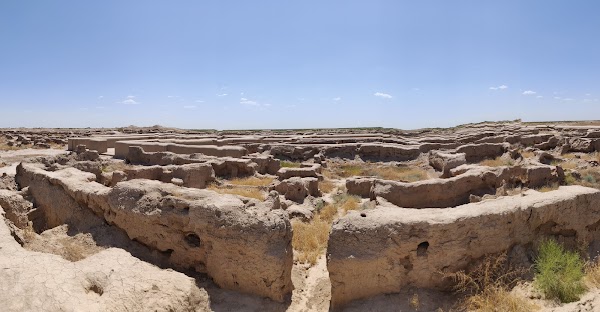
Low mounds of earth spread across the desert here. The ground is pale and cracked by the sun. At first it looks like empty land. But under your feet lie the walls of a town built four thousand years ago. This is Gonur Tepe, one of the oldest centers of life in Central Asia.
Gonur Tepe lies in the Karakum Desert, north of the town of Mary. Today the land around it is dry and bare. Long ago it was not. A branch of the Murghab River once flowed here. Its water spread into a green delta. People came, settled, and built. The change from green delta to dry desert took many centuries.
This was the heart of a culture that scholars call Margiana. It is also known by a longer name, the Bactria and Margiana complex. It rose in the Bronze Age, when people first worked metal in this region. Gonur was its main center, a place of power and craft. Its people traded with lands as far off as the Indus valley and the plains of Iran.
The site dates to roughly the centuries between 2300 and 1600 before our era. That makes it as old as the early cities of Egypt and Mesopotamia. Yet for a long time the world did not know it was here. It lay hidden under sand and silence. Few sites in this whole region reach so far back in time.
A large complex once stood at the center. People often call it a palace, though it served many roles. It had courtyards, store-rooms, and halls. Thick walls and towers ringed it for defense. Around this core spread houses, workshops, and shrines. The plan was careful and ordered, not thrown together by chance.
Water shaped everything. Channels carried river water through the settlement. There were pools and basins. In a land this dry, control of water meant survival. The whole town was planned around bringing water in and moving it where it was needed. Wells and clay pipes helped store and carry it.
The people here worked metal with skill. They made objects of bronze, silver, and gold. They cut stone seals with fine designs. They shaped pottery and small figures. Goods and ideas reached them from far away, traded across long desert routes. Some of their fine work now sits in museums in Mary and beyond.
Beyond the town lay a large cemetery. Many people were buried there over the years. Some graves were simple. Others held rich gifts for the dead, such as jewelry, vessels, and tools. The care taken with these burials tells us much about the beliefs of the people. A few graves even held the bones of animals, laid to rest with their owners.
Fire seems to have held deep meaning here. The diggers found rooms with hearths and altars that look made for ritual, not cooking. Some scholars link this to very early forms of fire worship. They even tie it to ideas that later shaped the faith of Zoroaster. This remains a matter of debate. What is sure is that this was a place of deep belief.
Much of what we know comes from one man. The archaeologist Viktor Sarianidi led the digging here for decades, from the 1970s onward. He cleared the walls, mapped the rooms, and recorded the finds. He believed he had found a lost civilization, equal to the great ones nearby. His long labor brought this lost world back into the light.
In the end, the river left. Its course slowly shifted away across the plain. Without water the town could not go on. People moved to follow the river. The walls were left to the sand, which covered them and kept them for the long centuries that followed. What the sand hid, it also saved.
Walk the site today with care. You can trace the lines of walls at your feet. You can see the plan of rooms and passages laid open to the sky. The bricks are the same earth as the ground around them. Heat shimmers over the mounds, and the silence is deep. Bring your own water, for there is none out here.
Four thousand years is hard to hold in the mind. Whole ways of life rose here, and passed, long before any history was written down. Stand among these quiet walls and feel that depth of time. The desert took the town back slowly, and kept it, until our own age came to ask who lived here. Their names are gone, but the shape of their world remains.
Key facts
What to look for
Practical tips
Common questions
How long do you need at Gonur Tepe?
Plan 4–5 hours. That is the time most visitors spend at Gonur Tepe. The free Lokali audio guide adds about 5 minutes of narration you can listen to as you walk, so it fits inside your visit rather than adding to it.
Is there a free audio guide to Gonur Tepe?
Yes — the Lokali app narrates Gonur Tepe free of charge in 50+ languages. It covers the history, what to look for on site and practical tips, and it works offline once downloaded.
Where is Gonur Tepe?
Gonur Tepe is in Turkmenistan, TM, at 37.2500, 62.1667. Tap the map link on this page for directions from where you are.
What should you know before visiting Gonur Tepe?
Go with a guide; the site is remote.
What is Gonur Tepe known for?
Bronze Age center of the Margiana culture.
What is the best time to visit Gonur Tepe?
The site is remote and requires a guide and vehicle.
On the map
Opens directions to Gonur Tepe from your location.
More to see in Turkmenistan

Hear Gonur Tepe in your language
The full story, narrated, in 50+ languages. Download it before you go and it plays offline, at your own pace, with no ticket and no tour group.