Prehistoric Rock Art Sites in the Côa Valley and Siega Verde
41.0333° N · 7.1167° W · Archaeological Site
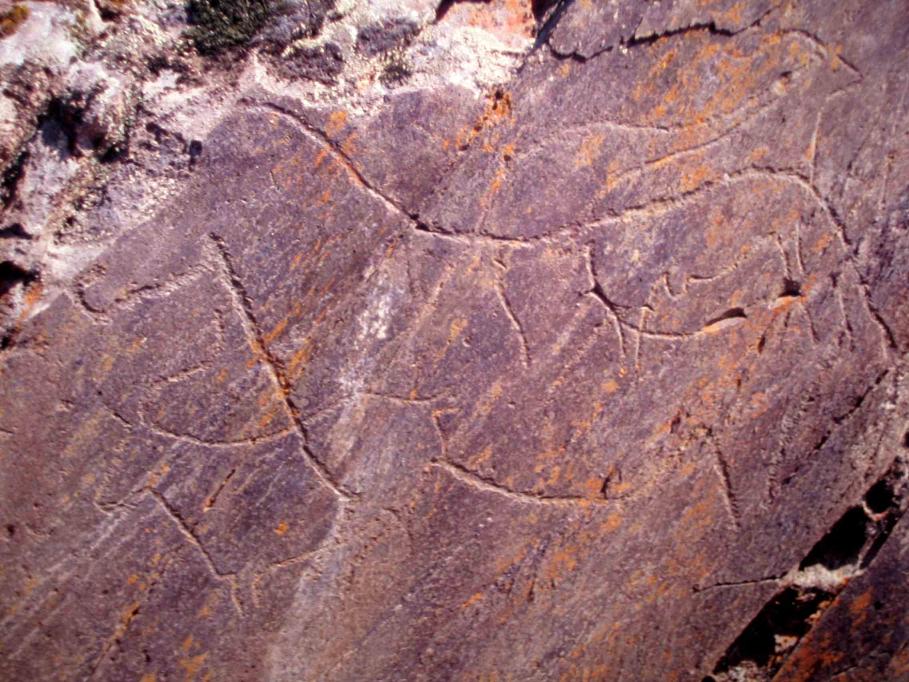
Photo: Henrique Matos · GFDL 1.2 · Wikimedia Commons
Prehistoric Rock Art Sites in the Côa Valley and Siega Verde is a paleolithic archaeological site in Portugal. Côa Valley joined the World Heritage list in 1998. The free Lokali audio guide runs 7 minutes.
✓ Published October 2026 · how we write these guides
Visitor facts
| Lokali audio guide | 7 min · free |
|---|---|
| Type | Archaeological Site |
| Location | Vila Nova de Foz Côa, Portugal |
| Coordinates | 41.0333, -7.1167 |
| Official website | arte-coa.pt |
| Languages | 50+, in the Lokali app |
The story
Listen first. Below you, the river moves slowly between steep slopes of grey schist. Dry grass rattles in the wind. In late winter, almond blossom spreads white and pink across the hills. In summer, the heat comes up off the rock like warmth from an oven door. This landscape does not look like a museum. And yet the stones on these slopes carry some of the oldest images ever made by human hands.
You are in the Côa Valley, in the far northeast of Portugal. The Côa is a small river. It runs north through this valley and joins the Douro near the town of Vila Nova de Foz Côa. Across the border in Spain, along the Águeda River, there is a second group of engravings called Siega Verde. Together, the two sites form one World Heritage property. They tell one story about the people who lived on this high, open land during the last Ice Age.
Here is the first surprise. Most people imagine Ice Age art inside deep caves, lit by torches, like Lascaux in France or Altamira in Spain. The Côa is different. Almost all of these images were made in the open air, on rock faces under the sky. For a long time, experts thought outdoor art this old could not survive rain, frost and sun. The Côa proved them wrong, and it did so on a very large scale.
The oldest engravings belong to the Upper Palaeolithic. That is the final stage of the Old Stone Age, when hunter-gatherers followed herds across a much colder Europe. Many of the images here are thought to be more than 20,000 years old. Some may be considerably older. The people who made them used stone tools. They had no metal and no farms. They had keen eyes, steady hands and a deep knowledge of animals.
And animals are what you will see. Horses appear again and again. So do aurochs — the huge wild cattle that are the ancestors of modern cows and are now extinct. There are ibex, the wild mountain goats, with long curved horns. There are deer as well. Humans are rare. The artists chose the creatures they hunted, watched and depended on. Each outline is drawn with real confidence, often in profile, often with the correct shape of the back, the belly and the legs.
Look at how the images were made. On these smooth vertical panels of schist, the artists used several methods. Sometimes they pecked the rock, striking it again and again with a hard stone to make a line of small dots. Sometimes they scratched fine lines with a sharp edge. Sometimes they scraped wider grooves. The schist here splits into flat, smooth faces. Those faces worked almost like a natural canvas, ready for an artist to use.
Now the second surprise, and it is a lovely one. On some panels, a single animal has two or three heads. This is not a mistake. Many researchers read it as a way to show movement — a horse lifting its head, then lowering it, frame by frame. Think of it as an Ice Age flip-book, carved into stone. When guides shine a lamp across these lines at night, the shadows shift. The heads seem to move. For a moment, the animal comes alive.
The modern story of this valley is almost as dramatic as the ancient one. In the early 1990s, work began on a large hydroelectric dam on the lower Côa. If the dam had been finished, the reservoir would have flooded these slopes. The engravings would have disappeared under deep water. Archaeologists working in the area raised the alarm. As more panels came to light, it became clear that this was not one site. It was a whole valley of art.
What followed was a national debate in Portugal. Students and local people joined archaeologists in the campaign. Their slogan became famous: "The engravings cannot swim." In the mid-1990s, the government stopped the dam project. That was a rare decision anywhere in the world — to place prehistoric art above a major engineering scheme. A few years later, in 1998, UNESCO listed the Côa Valley as a World Heritage Site. Siega Verde was added to the listing in 2010.
The art did not stop with the Ice Age. People kept returning to these rocks for thousands of years. Later panels include figures from the Iron Age, the period before the Romans, such as warriors and horsemen. Much more recent marks appear too, made by shepherds, millers and villagers in the last few centuries. So one panel can hold the work of many different peoples. You are looking at a single surface that humans kept using over a very long stretch of time.
Visiting here is an outdoor experience, not a gallery walk. The main rock art sites, such as Penascosa, Canada do Inferno and Ribeira de Piscos, are visited with a guide. Access is often by off-road vehicle on rough tracks, then on foot across uneven ground. Your guide will point out lines that you would almost certainly miss on your own. Many engravings are faint. Their visibility depends on the angle of the sun, which is why some tours run late in the day or after dark.
Before or after a site visit, the Côa Museum near Vila Nova de Foz Côa gives important context. The building is set into the hillside above the meeting of the two rivers. Inside, you can see replicas, lighting that makes faint lines easier to read, and explanations of how the art was found and dated. Then look out at the landscape. Terraced vineyards of the Douro wine region climb the slopes. Olive and almond trees line the paths. This is a working agricultural landscape that has grown up around the ancient art.
So pause here for a moment. Look at the rock nearest to you. Notice the grain of the schist, the orange lichen, the way the light catches on the edges. Somewhere on surfaces like these, a person stood more than 20,000 years ago, watching a horse lift its head. The wind was colder then. The river was here. And as you walk back along the slope, listen again — to the river, to the dry grass in the wind, and to the quiet that has stayed in this valley for a very long time.
Key facts
What to look for
Practical tips
Common questions
Is there a free audio guide to Prehistoric Rock Art Sites in the Côa Valley and Siega Verde?
Yes — the Lokali app narrates Prehistoric Rock Art Sites in the Côa Valley and Siega Verde free of charge in 50+ languages. The guide runs about 7 minutes, covers the history, what to look for on site and practical tips, and works offline once downloaded.
Where is Prehistoric Rock Art Sites in the Côa Valley and Siega Verde?
Prehistoric Rock Art Sites in the Côa Valley and Siega Verde is near Vila Nova de Foz Côa, Portugal, at 41.0333, -7.1167. Tap the map link on this page for directions from where you are.
What is Prehistoric Rock Art Sites in the Côa Valley and Siega Verde known for?
Côa Valley joined the World Heritage list in 1998. Siega Verde in Spain was added in 2010.
What should you look for at Prehistoric Rock Art Sites in the Côa Valley and Siega Verde?
Animals drawn with two or three heads. Rows of tiny pecked dots forming an outline. Fine scratched lines visible only at a low angle.
What should you know before visiting Prehistoric Rock Art Sites in the Côa Valley and Siega Verde?
Book a guided visit in advance for the main rock art sites. Wear sturdy shoes for rough tracks and uneven schist.
When is the best time to visit Prehistoric Rock Art Sites in the Côa Valley and Siega Verde?
Bring water and sun protection in summer heat.
On the map
Opens directions to Prehistoric Rock Art Sites in the Côa Valley and Siega Verde from your location.
Hear Prehistoric Rock Art Sites in the Côa Valley and Siega Verde in your language
The full story, narrated, in 50+ languages. Download it before you go and it plays offline, at your own pace, with no ticket and no tour group.