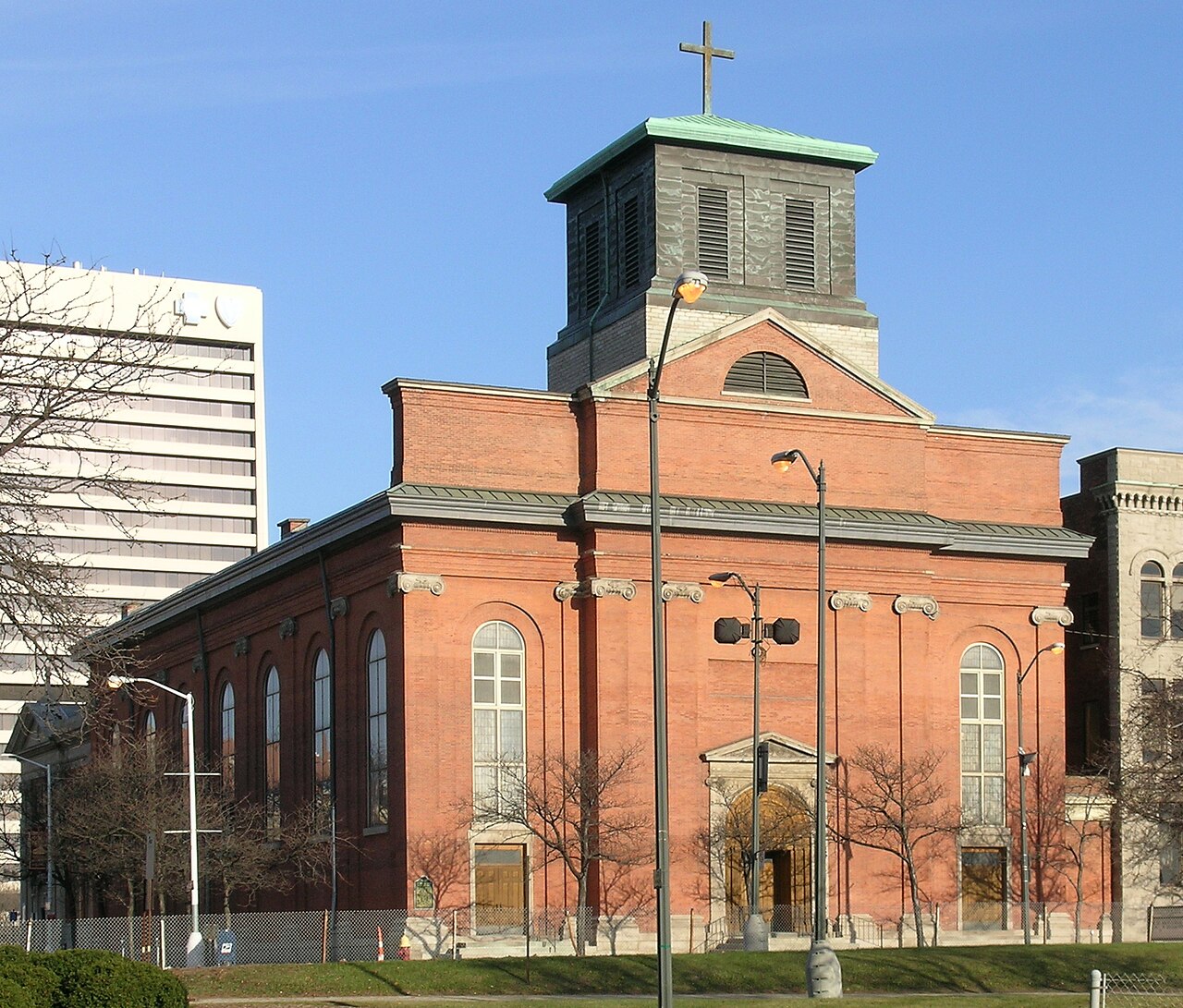
Jesuit Church is a 17th-century Baroque church with twin spires overlooking the Reuss River. It is in Zurzach, Switzerland. Most visitors spend 30–45 min here. The free Lokali audio guide runs 5 minutes.
✓ Verified August 2026 · how we write these guides
Visitor facts
| Time needed | 30–45 min |
|---|---|
| Lokali audio guide | 5 min · free |
| Type | Cathedral |
| Best for | History |
| Location | Zurzach, Switzerland |
| Coordinates | 47.5545, 8.3080 |
| Languages | 45, in the Lokali app |
The story
You stand on the riverbank and look across the water. Two slim towers rise above a long pink-and-white front. Their tops are round, like soft onions against the sky. The Reuss slides past below, fast and pale green. This is the Jesuit Church of Lucerne. From here it almost seems to float beside the river, its color warm against the gray roofs around it.
Cross the bridge to its doors and step inside. The light changes at once. The noise of the street drops away behind the heavy door. The smell of wax and old wood hangs in the air. Above you opens a long, bright hall, white and gold and soft pink. After the gray stone of the streets, the room feels warm and full of air. Give your eyes a moment to adjust.
This was the first large baroque church built in Switzerland. Work began in 1666. The building was largely finished by 1677. It was made by the Jesuits, a Catholic order known across Europe for teaching and for grand, open churches like this one. They came to Lucerne to run a school, and they built a church to match their ambition.
The Jesuits wanted a space that would lift the eyes and the heart. So the hall is wide and open, undivided down its length. Light pours in from tall windows along both sides. There are no heavy rows of columns to block the view. Everyone inside can see the high altar at the far end. The design gathers the whole room toward that one bright point.
Look up at the ceiling. It is covered with painted scenes inside frames of white and rose. The flat surface seems to open into sky and cloud. Painted figures float above you, lit as if by a sun you cannot see. This trick of paint and light is at the heart of the baroque style.
The soft colors and curling shapes came later, in the eighteenth century. Craftsmen added stucco, the molded plaster that frames the paintings. They worked it into shells, leaves, and scrolls. Run your eyes along the edges where the plaster meets the paint. Up close, the white walls are not plain at all. They ripple with carved detail, soft as cream and hard as stone.
The church is named for Saint Francis Xavier. He was one of the first members of the Jesuit order and a famous traveler and missionary. He carried his faith as far as India and Japan. His image holds the place of honor at the high altar. The whole room seems to lead you toward him, step by step down the nave.
The two towers you saw from the river were not part of the first plan. Their rounded domes were added much later, in 1893. That is why the front of the church seems to come from two different times. The body below is older and plain. The crowns above are newer and lighter.
Inside, near one of the side altars, the church keeps a quiet treasure. It is a worn robe that once belonged to Brother Klaus, a hermit and holy man who became the patron saint of Switzerland. The cloth is old, dark, and plain. For many Swiss visitors, this simple garment matters more than all the gold around it.
Find a seat in one of the wooden pews. Let your eyes move slowly upward, from the floor to the altar to the painted sky. There is no need to hurry in a room built for stillness. The baroque builders planned this journey for you. Each part of the room passes the eye gently on to the next.
If you are lucky, the organ may sound while you sit. The music fills the high hall and seems to come from the walls themselves. The sound rises into the painted ceiling and falls back down over you. Music was part of the design here, just as much as color and shape.
When you rise to leave, turn once at the door and look back. Candles flicker at the side chapels even on a bright day. From here the whole length of the church draws together. The pink, the white, and the gold settle into one calm whole. It is easy to see why people have prayed here for more than three hundred years.
Step out again to the river. The two domes stand bright above the water. Behind you, the warm room holds its quiet. The Jesuit Church was built to move people, and gently, without force, it still does.
Key facts
What to look for
Practical tips
Common questions
How long do you need at Jesuit Church?
Plan 30–45 min. That is the time most visitors spend at Jesuit Church. The free Lokali audio guide adds about 5 minutes of narration you can listen to as you walk, so it fits inside your visit rather than adding to it.
Is there a free audio guide to Jesuit Church?
Yes — the Lokali app narrates Jesuit Church free of charge in 50+ languages. It covers the history, what to look for on site and practical tips, and it works offline once downloaded.
Where is Jesuit Church?
Jesuit Church is in Zurzach, Switzerland, at 47.5545, 8.3080. Tap the map link on this page for directions from where you are.
What should you know before visiting Jesuit Church?
Step inside to escape the riverside crowds.
What is Jesuit Church known for?
Construction of the church began in 1666.
What is the best time to visit Jesuit Church?
Step inside for the smell of incense and the soft light through tall windows.
On the map
Opens directions to Jesuit Church from your location.
More to see in Zurzach


Hear Jesuit Church in your language
The full story, narrated, in 50+ languages. Download it before you go and it plays offline, at your own pace, with no ticket and no tour group.