Which Museum Guides Are Free? Find Them Before You Go
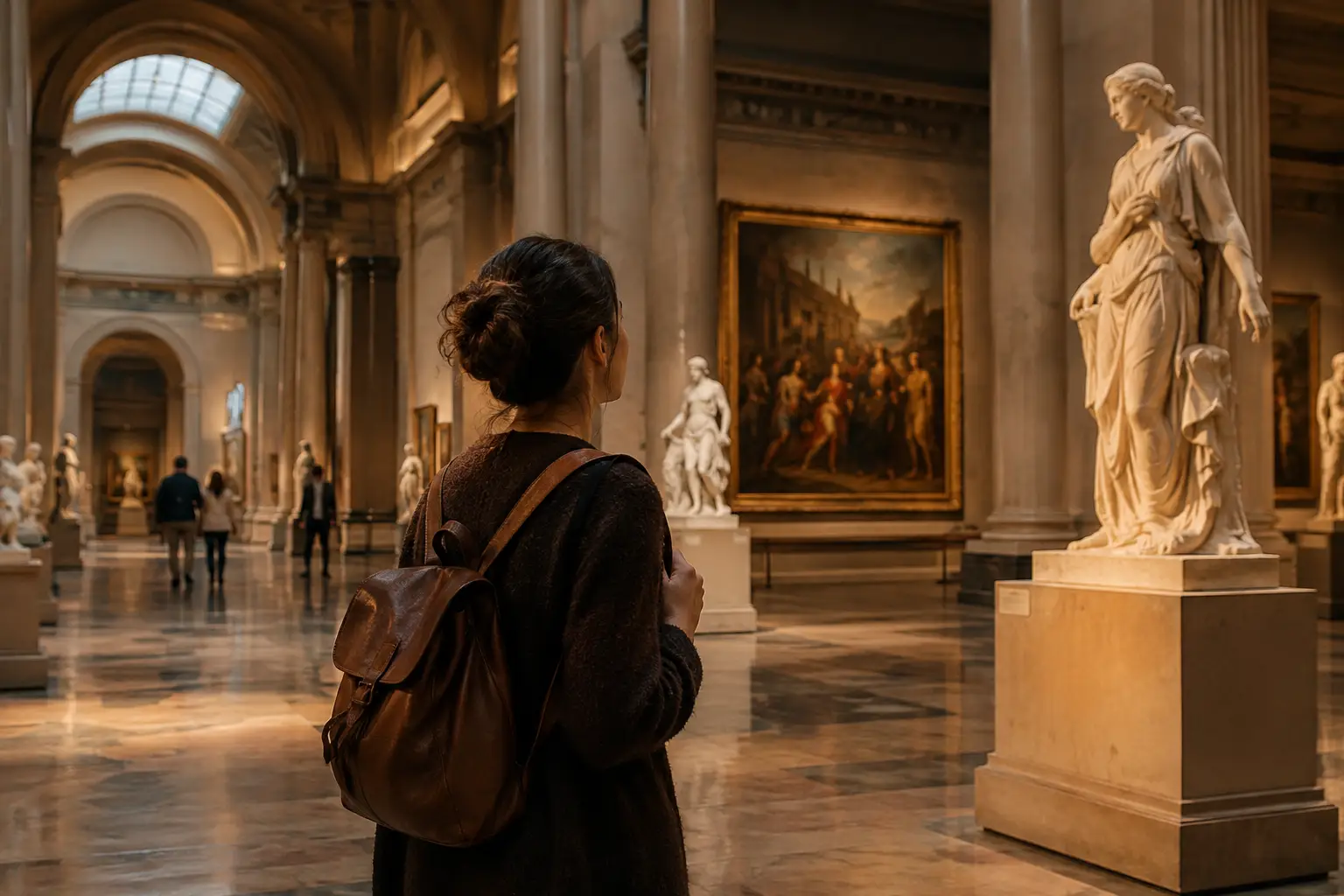
Wondering which museum guides are free? Find audio and written guides, avoid rental fees, and plan your museum visit at your own pace before you arrive.
A museum entrance can feel like the end of the planning. Then you reach the gallery map and face another choice: pay for an audio device, scan a code, or walk into a room full of objects with only their labels for company. If you are asking which museum guides are free, the short answer is: more than you may expect, but they are rarely presented in one clear place.
Free guides usually appear in four forms: an institution’s own web-based audio or written guide, a downloadable exhibition resource, a museum app, or an independent guide that covers the building and collection. They differ sharply in depth, language, and whether they work once your phone loses signal behind stone walls.
Which museum guides are free in practice?
Start with the museum itself. Many major institutions publish collection stories, gallery highlights, object essays, maps, and short audio pieces at no extra charge. These are often designed for a browser rather than a rented headset. You may find them under words such as “visit,” “digital guide,” “highlights,” “multimedia,” or “accessibility,” rather than under “audio guide.”
This route works particularly well when you want a focused hour. You can read about five paintings before entering, then stand in front of them without repeatedly looking down at a screen. It is less useful if you need a single chronological story that carries you from room to room.
Some museums make a phone guide available only after you are inside, often through their guest Wi-Fi or a QR code near the entrance. That can be free, but it is not always convenient. A crowded lobby is a poor place to download several large audio files, and a weak connection can turn a simple task into ten minutes of tapping at your screen.
A smaller local museum may offer no formal audio guide at all. Its labels can still be excellent, especially where the collection has one clear subject: a regional craft, a former factory, an archaeological site, or a writer’s house. Do not pay for a generic guide merely because a museum is small. First look at the first two rooms. If the labels give dates, context, and a reason an object matters, you may already have what you need.
Free does not always mean the same thing
A free guide can mean free access to a short selection, free written text but no narration, or free use on your own phone after you have entered. It can also mean that the guide is free while the museum still charges admission. Keep those costs separate in your mind.
The practical question is not only whether a guide costs nothing. Ask whether it speaks your language, whether it covers the rooms you actually plan to visit, and whether it works offline. A forty-minute guide in a language you understand is more valuable than a three-hour catalog you cannot follow while standing among school groups and tour umbrellas.
Language is where free options often become thin. The institution may offer excellent English material but only a brief translation elsewhere. A guide in your own language can change the visit completely. You spend less energy translating dates and art terms in your head, and more time looking at a carved hand, a cracked Roman cup, or a brushstroke that seems almost wet.
The Louvre shows the trade-off clearly
The Louvre’s own audio guide costs €6 and is offered in nine languages. For some visitors, that is sensible: it is made for the museum, follows its rooms, and helps turn a vast palace and collection into a manageable route.
But it is not automatically worth paying for. If you have two hours, want only Egyptian antiquities or French paintings, and prefer to stop when something catches your eye, a free written guide and a saved route can be enough. The paid device makes more sense when you want structured orientation, have little time, or do not want to prepare on your phone before entering.
That distinction applies elsewhere. An on-site guide rental usually has the advantage of matching the museum’s current layout and temporary displays. An independent guide can be wider in language choice, easier to save before arrival, and free to replay later. Neither is always the right answer.
Check for these free formats before leaving your hotel
You do not need to collect every available resource. Choose one that matches the visit you want. A good check takes a few minutes while you still have Wi-Fi and a quiet table.
- Official web guides are useful for accurate room information, specific objects, and current exhibitions. Save the pages or screenshots you need if the museum has unreliable signal.
- Official audio tours are useful when they can be downloaded before arrival. Check the length. A ninety-minute route can be too much for a visit with children, jet lag, or a late entry time.
- Written collection highlights are useful if you prefer to read. They are easier to skim, pause, and return to than audio in a busy gallery.
- Independent museum guides are useful when the official material is brief, unavailable in your language, or tied too closely to a device rental.
Read the description, not just the word “free.” Some guides cover only ten famous objects. That may be perfect for a first visit, but it will disappoint you if you came for the medieval galleries or a particular artist.
Build a small route instead of consuming everything
Museums are exhausting when treated as a test of endurance. Pick one starting point, one period or collection, and one final room. In a large art museum, that might mean early Italian painting, Dutch interiors, then a sculpture court before you leave. In an archaeology museum, it might mean the earliest settlements, the city at its height, and the objects found in daily homes.
A free guide is most useful when it gives shape to that route. Look for three kinds of information: what came before, what changed here, and what you should notice with your own eyes. Dates alone do not create a visit. A sentence about why a ruler moved a capital, why a pigment was costly, or why a broken statue was kept can do more.
Leave room for the unexpected. A guide may lead you to a celebrated canvas, but a small portrait in the next room can hold you longer. Pause it. Museums are one of the few places where stopping is the whole point.
When a paid or human guide is worth it
Free guides have limits. A paid museum audio guide can be worth the money when the building is confusing, the collection is enormous, or you need the museum’s own navigation. It can also be the simpler choice when you do not want to use your phone battery or headphones.
A live human guide is different again. Choose one when you want to ask questions, need help connecting several objects across rooms, or are visiting a place whose meaning depends on details that change with the group’s interests. A good person can notice that you keep returning to maps, armor, textiles, or portraits and adjust the conversation. Recorded audio cannot do that.
Scheduled group tours have a cost beyond money: they set your speed. If you dislike moving on after two minutes because the group has reached its next stop, a self-guided option suits you better. If you are anxious about finding your way through a complicated museum, that structure may be a relief.
Use your phone without letting it take over
Bring wired or wireless headphones, a charged battery, and enough storage for any downloads. Download before you arrive whenever possible. Thick walls, basement galleries, and crowded entrances are all places where a polished digital guide can become awkward.
Keep the screen dim and your phone in your pocket between stops. Listen for a minute, then look up. The guide should give the room a story, not place another rectangle between you and it.
Lokali is one free option for self-guided museum, landmark, and city context, with audio and written guides in more than 50 languages. Its offline downloads are useful when you want to prepare a route before entering, rather than depend on museum Wi-Fi. Still, use the museum’s own material alongside it when a temporary exhibition or a newly arranged gallery is central to your visit.
The guide you choose does not need to explain every object. It only needs to help you notice more than you would alone, then become quiet enough for the room to speak.