
Cairngorms National Park
57.0833° N · 3.6667° W · National Park
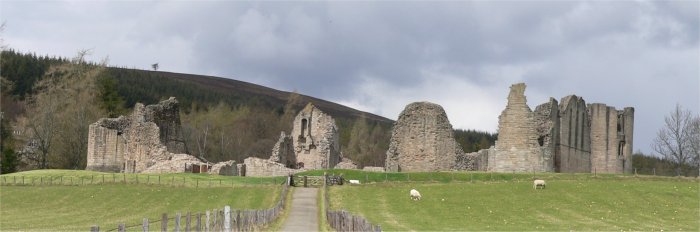
Photo: Deus Ex at English Wikipedia · Public domain · Wikimedia Commons
Cairngorms National Park is a national park in Scotland, United Kingdom. Established in 2003 as Scotland's second national park. The free Lokali audio guide runs 8 minutes.
✓ Published October 2026 · how we write these guides
Visitor facts
| Lokali audio guide | 8 min · free |
|---|---|
| Type | National Park |
| Location | Aberdeenshire, United Kingdom |
| Coordinates | 57.0833, -3.6667 |
| Official website | cairngorms.co.uk |
| Languages | 50+, in the Lokali app |
The story
Listen for a moment. Out here, the wind has a texture. It moves through heather and over granite, and somewhere below you a river runs fast and brown over stones. The air smells of pine resin and wet peat. Even in summer, a cold edge can come down from the high ground without warning. This is the Cairngorms, and you are standing in the largest national park in the United Kingdom. It is a place of distance and silence, where the land is older and wilder than almost anywhere else in Britain.
The park was created in 2003, a few years after Scotland's first national park at Loch Lomond. It covers roughly 4,500 square kilometres, an area larger than some small countries. Its boundary takes in parts of Aberdeenshire, Moray, Highland, Angus, and Perth and Kinross. That surprises many visitors. People often picture a single mountain range, but the park is a whole patchwork of villages, farms, forests, rivers and estates. Thousands of people live and work inside it. This is a lived-in landscape, not an empty wilderness behind a fence.
At its heart sit the Cairngorm mountains themselves. They are made of granite, a hard rock that formed deep underground hundreds of millions of years ago. Ice ages later scraped and rounded them. The result is not a line of sharp peaks, but broad, high plateaus cut by deep corries and glens. A corrie is a bowl-shaped hollow carved by a glacier. Look at the high slopes and you may see these curved scoops, often holding snow long after the valleys have turned green.
The numbers here are quietly remarkable. Five of the six highest mountains in the United Kingdom stand within this park. Ben Macdui is the tallest of them, and the second-highest summit in Britain after Ben Nevis. The high plateau has a climate closer to the Arctic than to the rest of Britain. Plants grow here that you would normally expect much further north, in Scandinavia or Iceland. Walk up high and you are, in a real sense, crossing into another climate zone.
The names carry their own history. In Scottish Gaelic, the old language of the Highlands, these mountains were called Am Monadh Ruadh, which means the red hills. The name comes from the pink tint of the granite in certain light. The word Cairngorm itself comes from a single peak, Càrn Gorm, meaning the blue cairn. A cairn is a pile of stones, and from far away the mountain can look blue in the haze. Over time, one hill's name spread to the whole range.
The granite also gave its name to a gemstone. Smoky quartz, a brown or golden crystal, was once found in these hills. It became so linked with the area that people simply called it cairngorm. For generations it was set into Scottish jewellery and into the hilts of traditional daggers worn with Highland dress. If you pass a jeweller or a craft shop in one of the park's villages, you may still see this warm, smoky stone in the window.
Now lower your eyes from the summits to the forests. The park protects some of the largest remaining fragments of the old Caledonian pine forest. Thousands of years ago, Scots pine woodland covered much of the Highlands. Most of it was cleared for timber, grazing and fuel. What survives here is precious. The old pines grow with twisted, wide crowns and bark that glows orange-red near the top. Beneath them, blaeberry, which is a wild relative of the blueberry, carpets the ground.
These woods shelter animals that are rare elsewhere in Britain. Red squirrels still live here in good numbers. The capercaillie, a large woodland grouse, survives in these forests, though it is now very scarce and easily disturbed. And here is a detail most visitors miss. The Scottish crossbill, a small finch with a crossed beak for prising open pine cones, is found nowhere else on Earth. It is the only bird species unique to the United Kingdom, and these pinewoods are among its strongholds.
Higher up, the wildlife changes with the seasons in a visible way. The mountain hare turns white in winter to match the snow. The ptarmigan, a mountain bird, does the same, shifting from mottled grey-brown to white. Golden eagles hunt over the high ground. And then there are the reindeer. Wild reindeer vanished from Scotland centuries ago. In 1952, a small herd was brought from Sweden by a Swedish herder named Mikel Utsi. Their descendants still roam the Cairngorm hills today, Britain's only free-ranging reindeer herd.
The high plateau has also produced one of Scotland's best-known ghost stories. Legend has it that a giant figure haunts the summit of Ben Macdui. In Gaelic he is called Am Fear Liath Mòr, the Big Grey Man. Climbers have told tales of heavy footsteps behind them in the mist, and a sudden, overwhelming fear. Some people explain it as a trick of light and fog, where a walker's own shadow is cast huge onto the cloud. Whatever the cause, the story has been told on these hills for generations.
The eastern side of the park, along the River Dee, has a different character. This is Royal Deeside. In 1852, Queen Victoria and Prince Albert bought the Balmoral estate here, and the royal family has spent summers in the valley ever since. Their presence shaped the local villages, from granite houses to neat shopfronts. Nearby, the village of Braemar hosts a famous Highland games each September. Crowds gather to watch caber tossing, hill running and pipe bands, often with members of the royal family in attendance.
Above Deeside rises Lochnagar, a dark, cliff-walled mountain. The poet Lord Byron spent part of his childhood in Aberdeen and wrote a poem about it, praising its steep and frowning beauty. Further west, the Dee narrows at the Linn of Dee, where the river forces itself through a tight rock channel. To the north, the River Spey flows through Strathspey, the broad valley around Aviemore, famous for its whisky distilleries. Two great rivers, two very different valleys, both born in these same mountains.
So pause, wherever you are standing right now. Notice the colour of the hillside. Is it the purple of flowering heather, the rust of dead bracken, or the white of early snow? Listen again for the river, the wind, perhaps a bird calling from the pines. This land has been shaped by ice, by people, and by long patience. As you walk on, look out for the small things too — a red squirrel on a branch, a pink fleck in a granite boulder, the slow shadow of a cloud crossing the plateau.
Key facts
What to look for
Practical tips
Common questions
Is there a free audio guide to Cairngorms National Park?
Yes — the Lokali app narrates Cairngorms National Park free of charge in 50+ languages. The guide runs about 8 minutes, covers the history, what to look for on site and practical tips, and works offline once downloaded.
Where is Cairngorms National Park?
Cairngorms National Park is near Aberdeenshire, United Kingdom, at 57.0833, -3.6667. Tap the map link on this page for directions from where you are.
What is Cairngorms National Park known for?
Established in 2003 as Scotland's second national park. Largest national park in the United Kingdom.
What should you look for at Cairngorms National Park?
Orange-red bark glowing near the tops of old pines. Curved glacial corries holding snow on high slopes. Pink flecks in the granite boulders along paths.
What should you know before visiting Cairngorms National Park?
Pack waterproofs and warm layers even on summer days. Check mountain weather forecasts before heading onto high ground.
When is the best time to visit Cairngorms National Park?
Visit pinewoods early morning for the best wildlife chances.
On the map
Opens directions to Cairngorms National Park from your location.
More to see in Aberdeenshire


Hear Cairngorms National Park in your language
The full story, narrated, in 50+ languages. Download it before you go and it plays offline, at your own pace, with no ticket and no tour group.