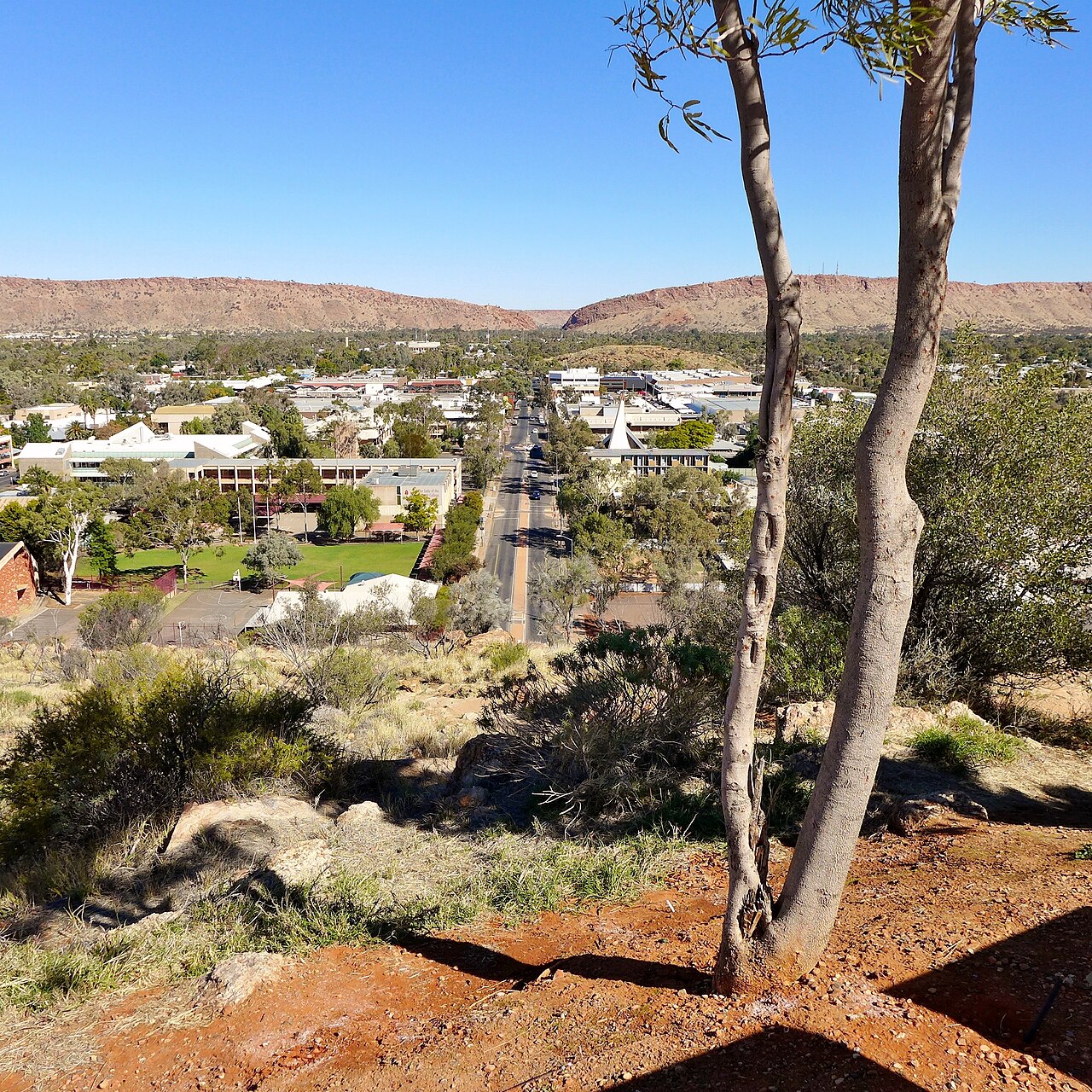
Royal Flying Doctor Service Visitor Centre
23.8034° S · 133.9043° E · Museum
Royal Flying Doctor Service Visitor Centre is an exhibition documenting the Royal Flying Doctor Service, which provides emergency medical care across remote Australia. It is in Alice Springs, Australia. Most visitors spend 1–1.5 hours here. The free Lokali audio guide runs 6 minutes.
✓ Verified August 2026 · how we write these guides
Visitor facts
| Time needed | 1–1.5 hours |
|---|---|
| Lokali audio guide | 6 min · free |
| Type | Museum |
| Best for | History |
| Location | Alice Springs, Australia |
| Coordinates | -23.8034, 133.9043 |
| Languages | 45, in the Lokali app |
The story
Step in from the heat of Stuart Terrace, and the noise of the street falls away behind you. The air inside is cool, and the light is soft and low. Somewhere nearby, a recorded voice is telling a story. You are standing in a place built to honor one simple idea. No one who lives in the outback should ever be too far from help. It is a promise made to a vast and lonely land.
The Royal Flying Doctor Service began with one man's worry. His name was John Flynn. He was a minister who traveled across the inland of Alice Springs in the early twentieth century. Everywhere he went, he saw how far people lived from any doctor. A sick child, a difficult birth, or an injured worker on a far station might be days away from care. Some of them died simply waiting. Flynn could not accept this.
In 1928 he started what he first called the Aerial Medical Service. The idea was simple and bold. If patients could not reach a doctor, then a doctor would fly out to reach them. The first flights used small, fragile planes hired from a young airline. A doctor would climb aboard and fly for hours over country with no roads below. Flynn spoke of spreading a mantle of safety over the outback. That phrase still describes the service today.
But a plane was only half the answer. A family on a remote cattle station had no way to call for help. The nearest town might be hundreds of kilometers away across open desert. The telephone lines did not reach them. A person could fall gravely ill, and no one beyond the homestead would ever know in time. So Flynn needed a way for these families to send a message across the great empty distance.
The answer came from a young engineer named Alfred Traeger. He built a radio that a person could power by pedaling with their feet, much like a bicycle. Now a woman alone on a distant station could sit down, work the pedals with her feet, and tap out a call for help in simple code. No mains electricity was needed at all. The pedal radio connected the scattered people of the outback to the doctors.
As you move through the centre, you can see these early radios up close. They look plain and simple now. But each one was a true lifeline. With a pedal radio, a remote family was no longer entirely alone. They could reach a doctor in an emergency. They could reach their distant neighbors. Children who lived too far from any school could even take their daily lessons over the very same radio network.
One of the displays brings John Flynn himself before you. A hologram tells his story in his own imagined words. It is a quiet and slightly strange moment. The founder seems to stand right there in the room, speaking of the country he loved and the people he wanted to protect from harm. Take a moment to stop and listen to him. His voice carries the patience of a man who thought in decades, not in days.
The work he started has grown far beyond anything he saw in his lifetime. Today the Royal Flying Doctor Service reaches across much of remote inland Alice Springs. Its aircraft carry doctors and nurses out to people in trouble. They bring sick and injured patients back to the hospitals in the towns. They hold regular clinics in small places that have no clinic of their own. The service never closes, by day or by night.
Inside the centre you can sit beside a model of an aircraft cabin. You can see exactly how a patient is carried, strapped in safely, with the medical equipment held close at hand. The space is very narrow. Every single item has its own fixed place. In the air, far from any hospital, there is no room for waste and no time at all to spare. Everything must work right the first time.
Alice Springs chose to remember John Flynn in a quiet, everyday way. Look closely at an Alice Springsn twenty dollar note, and you will find his face printed there. It is a small and fitting honor for a man who changed so many thousands of lives. Few people are remembered on the ordinary money of their own country. Most who hold the note in their hands never stop to think of the minister behind the picture.
Before you leave, you might sit a while in the cafe, or look once more at the photographs lining the wall. They show old planes resting on rough dirt airstrips. They show young pilots and nurses squinting into the hard sun. They show the long, flat, empty land that made this whole idea necessary in the first place. The faces are ordinary. The distances behind them are not.
Outside, the dry heat waits for you again. But you carry something with you now that you did not have before. In this open and difficult country, people found a way to reach each other across enormous distance. The planes still fly out every day. The old promise still holds. And it all began with one quiet man who simply could not bear the thought of leaving anyone behind.
Key facts
What to look for
Practical tips
Common questions
How long do you need at Royal Flying Doctor Service Visitor Centre?
Plan 1–1.5 hours. That is the time most visitors spend at Royal Flying Doctor Service Visitor Centre. The free Lokali audio guide adds about 6 minutes of narration you can listen to as you walk, so it fits inside your visit rather than adding to it.
Is there a free audio guide to Royal Flying Doctor Service Visitor Centre?
Yes — the Lokali app narrates Royal Flying Doctor Service Visitor Centre free of charge in 50+ languages. It covers the history, what to look for on site and practical tips, and it works offline once downloaded.
Where is Royal Flying Doctor Service Visitor Centre?
Royal Flying Doctor Service Visitor Centre is in Alice Springs, Australia, at -23.8034, 133.9043. Tap the map link on this page for directions from where you are.
What should you know before visiting Royal Flying Doctor Service Visitor Centre?
Allow about ninety minutes to see the whole centre.
What is Royal Flying Doctor Service Visitor Centre known for?
Royal Flying Doctor Service founded by John Flynn in 1928.
What is the best time to visit Royal Flying Doctor Service Visitor Centre?
See restored aircraft and learn how pilots and doctors respond to emergencies across thousands of square kilometres.
On the map
Opens directions to Royal Flying Doctor Service Visitor Centre from your location.
More to see in Alice Springs



Hear Royal Flying Doctor Service Visitor Centre in your language
The full story, narrated, in 50+ languages. Download it before you go and it plays offline, at your own pace, with no ticket and no tour group.