
Ethnography Museum of Ankara
39.9327° N · 32.8549° E · Museum
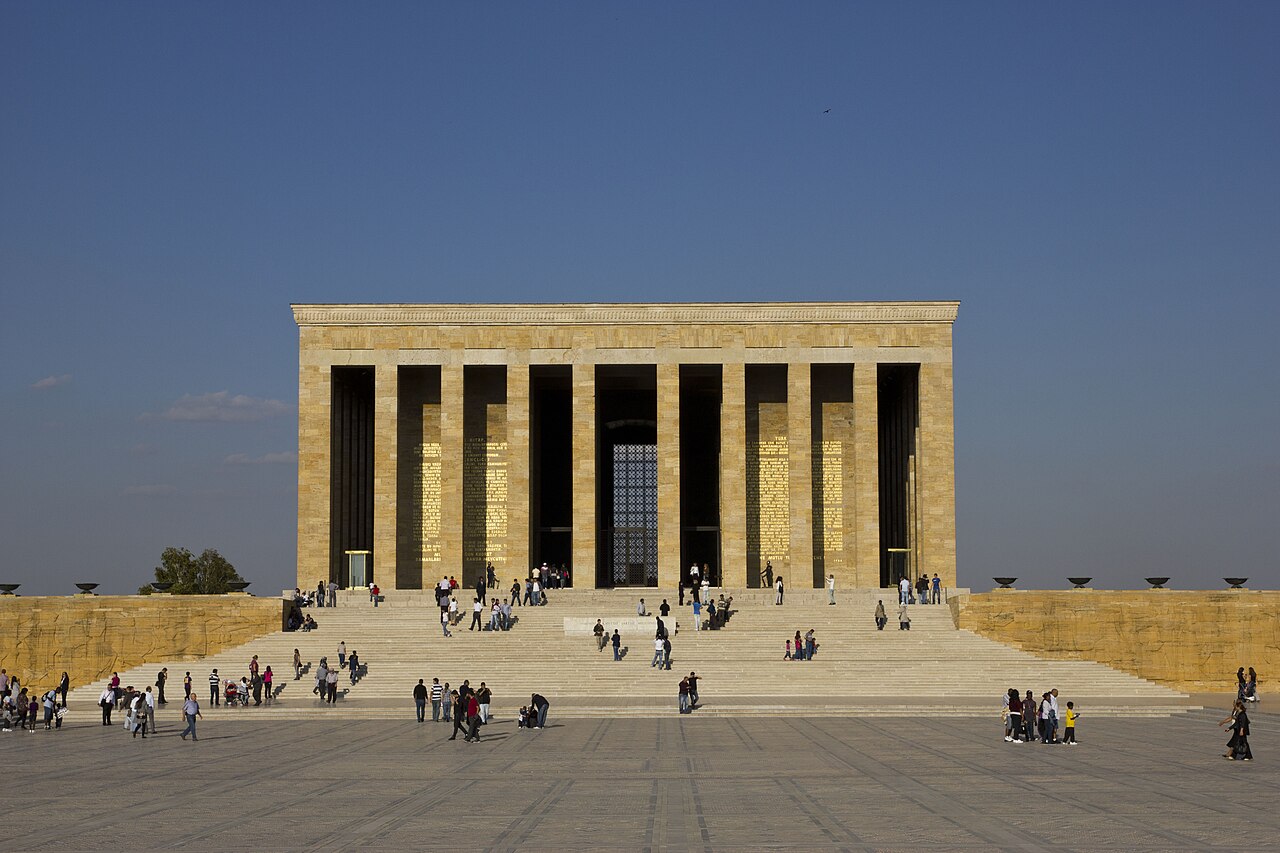
Photo: A.Savin · FAL · Wikimedia Commons
Ethnography Museum of Ankara is a museum in Ankara, Turkey. Designed by Turkish architect Arif Hikmet Koyunoğlu. The free Lokali audio guide runs 7 minutes.
✓ Published October 2026 · how we write these guides
Visitor facts
| Lokali audio guide | 7 min · free |
|---|---|
| Type | Museum |
| Location | Ankara, Türkiye |
| Coordinates | 39.9327, 32.8549 |
| Official website | etnografyamuzesi.gov.tr |
| Languages | 50+, in the Lokali app |
The story
Start with the light. On a clear Ankara day, the pale stone of this building almost glows against the sky. The air on the hilltop is dry, and sound carries a long way. You might hear traffic rising from the streets below, a gull or a pigeon, and footsteps on the wide stone steps. Before you go inside, stand still for a moment. Feel the slope of the hill under your feet. You are standing on one of the quiet high points of old Ankara, above the district of Altındağ.
This is the Ethnography Museum of Ankara. It is a museum of everyday life, not of kings or battles. Inside are the clothes people wore at weddings, the carpets they knelt on, the copper pots they cooked in, and the carved doors they walked through. Its subject is the people of Anatolia, the great peninsula that makes up most of modern Turkey. But the building also holds a second story, one that most visitors do not expect. We will come to that.
First, the building itself. It belongs to the early years of the Turkish Republic, which was founded in 1923. In those years, Ankara changed from a small Anatolian town into a new capital. Architects looked for a style that felt both modern and rooted in the past. The result is often called the First National Architectural style. It borrows arches, domes, and decorative stonework from Seljuk and Ottoman buildings, and uses them on clean, symmetrical structures.
The architect was Arif Hikmet Koyunoğlu, one of the leading Turkish architects of that period. Construction ran through the second half of the 1920s, and the museum opened its doors in 1930. It is often described as the first museum building constructed by the new Republic. Look at the facade. Notice the row of arches across the entrance, the carved stone panels, and the low dome that crowns the centre. Everything is balanced. Nothing shouts.
Now turn around and face the square. In front of the museum stands a bronze equestrian statue of Mustafa Kemal Atatürk, the founder of the Republic. The sculptor was Pietro Canonica, an Italian artist who made several monuments for the young state. Atatürk sits upright on his horse, looking out across the city he made his capital. It is a good place to pause, because the statue and the museum belong to the same moment in history.
Here is the second story. When Atatürk died in 1938, the country had no permanent tomb ready for him. For fifteen years, his body rested inside this building, in a temporary resting place in the central hall. Only in 1953, when the great mausoleum of Anıtkabir was finished on another hill across the city, was he moved there. So for a generation of Turkish citizens, this museum was a place of mourning as well as a place of learning.
When you step inside, look for the spot in the central hall where his coffin once lay. It is marked, and many Turkish visitors stop there quietly. The hall sits under the dome, and the light falls softly from above. It is a calm space. Then the galleries open out around it, and the museum returns to its main subject — the ordinary, extraordinary craft of Anatolian life.
The costume collection is one of the richest parts of the museum. You will see garments from many regions of Anatolia, each with its own cut, colour, and embroidery. Some are everyday clothes. Others were made for weddings and festivals, heavy with silver thread and coin ornaments. Look closely at the needlework. Every stitch was done by hand, often by women who learned the patterns from their mothers and grandmothers. A single headscarf could tell a neighbour where a woman came from.
Next, the carpets and kilims. A kilim is a flat-woven rug, made without the thick pile of a knotted carpet. Anatolian weavers used both techniques for centuries. The motifs repeat across the galleries — stars, hooks, diamond shapes, stylised plants. Some symbols are said to protect the home or bring fertility, though the meanings vary from village to village and are often passed down as tradition rather than written record. Notice the colours too. Deep reds, indigo blues, and warm yellows came from natural dyes.
The woodwork is a quiet surprise for many visitors. The museum holds carved wooden doors, panels, and pieces of religious furniture from Seljuk and Ottoman times. The Seljuks were a Turkic dynasty who ruled much of Anatolia before the Ottomans. Their carvers worked in dense geometric patterns and flowing plant forms, often without a single nail. Stand close to one of the old doors and look at the depth of the cuts. These pieces once stood in mosques and houses across the country.
Other rooms show the rituals of daily life. You may find displays of coffee culture, with small cups, copper pots, and the tools for roasting and grinding beans. There are scenes of weddings and of circumcision celebrations, an important family event in Turkish tradition. There are metalwork, ceramics, and pieces of Ottoman calligraphy, the art of beautiful writing. Together they build a picture of home life across many centuries. Take your time here. The small objects often say the most.
When you leave, look to the building right beside the museum. It shares the same hilltop and the same architectural language. Today it houses the State Art and Sculpture Museum, and it was also designed by Koyunoğlu. The two buildings sit side by side like siblings from the same decade. Walk a little way down the slope, and the streets of old Ulus and Altındağ begin, with their markets, older houses, and the castle rising in the distance.
Before you go, turn back once more. Look at the arches, the dome, and the horseman in front of them. This hill has held a nation's grief, and it still holds the patient work of weavers, carvers, and embroiderers whose names are mostly lost. Listen to the city below you. Notice the light on the stone. Then walk on slowly, and carry a little of that craft with you.
Key facts
What to look for
Practical tips
Common questions
Is there a free audio guide to Ethnography Museum of Ankara?
Yes — the Lokali app narrates Ethnography Museum of Ankara free of charge in 50+ languages. The guide runs about 7 minutes, covers the history, what to look for on site and practical tips, and works offline once downloaded.
Where is Ethnography Museum of Ankara?
Ethnography Museum of Ankara is in Ankara, Türkiye, at 39.9327, 32.8549. Tap the map link on this page for directions from where you are.
What is Ethnography Museum of Ankara known for?
Designed by Turkish architect Arif Hikmet Koyunoğlu. Museum opened its doors to visitors in 1930.
What should you look for at Ethnography Museum of Ankara?
The marked spot where Atatürk's coffin once lay. Deep geometric carving on old Seljuk wooden doors. Silver thread and coin ornaments on wedding costumes.
What should you know before visiting Ethnography Museum of Ankara?
Visit on a clear morning for soft light on facade. Pair your visit with the neighbouring art museum.
When is the best time to visit Ethnography Museum of Ankara?
Visit on a clear morning for soft light on facade.
On the map
Opens directions to Ethnography Museum of Ankara from your location.
More to see in Ankara



Hear Ethnography Museum of Ankara in your language
The full story, narrated, in 50+ languages. Download it before you go and it plays offline, at your own pace, with no ticket and no tour group.