Orla Bardot
22.7469° S · 41.8756° W · Waterfront Promenade
Orla Bardot is a scenic seaside walkway lined with restaurants, bars, and galleries, stretching along the main beach. It is in Armação dos Búzios, Brazil. Most visitors spend 45–90 min here. The free Lokali audio guide runs 5 minutes.
✓ Verified August 2026 · how we write these guides
Visitor facts
| Time needed | 45–90 min |
|---|---|
| Lokali audio guide | 5 min · free |
| Type | Waterfront Promenade |
| Best for | Romantic |
| Location | Armação dos Búzios, Brazil |
| Coordinates | -22.7469, -41.8756 |
| Languages | 45, in the Lokali app |
The story
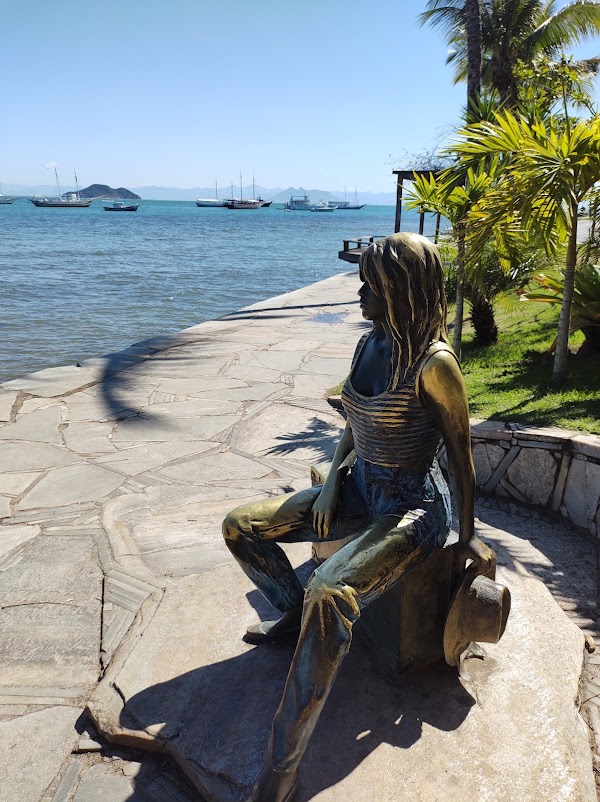
A woman sits on the seafront, looking out at the water. She does not move. She is made of bronze, dark and smooth, worn bright on the knee where thousands of hands have touched her. Behind her the boats rock in the bay. This is the statue of Brigitte Bardot, and the walkway she sits on carries her name.
The Orla Bardot is a promenade along the water's edge. It winds for a stretch through the oldest part of town, linking the beaches of Armacao and Ossos. On one side is the sea, full of anchored boats. On the other are restaurants, shops, and old houses. People walk it slowly in the evening, in no hurry to be anywhere.
To understand the name, you have to go back to 1964. In that year the French actress Brigitte Bardot, then among the most famous women in the world, came to this coast. She arrived with her Brazilian boyfriend, hoping to escape the cameras that followed her everywhere. Buzios was then a small and quiet fishing town, the kind of place no one would think to look.
She stayed for four months. That was enough to change everything. Word spread that Bardot had chosen this quiet peninsula, and the world turned to look. Visitors came. Then hotels, restaurants, and shops. The fishing town began its slow change into the resort it is today. One famous visitor, four months, and the course of a place was altered.
The statue remembers that moment. It was made by the artist Christina Motta and placed here in 1999, thirty-five years after the visit. Bardot sits on a suitcase, her bag beside her, gazing out to sea. The suitcase is the key detail. It marks her as a traveler, someone passing through who left a deep mark behind.
She is not alone on the promenade. Other bronze figures stand along the water. Among them are local fishermen, cast in the same dark metal, hauling a net. These statues matter. They balance the famous visitor with the people who were here long before her and long after, the families who made their living from this bay. The town remembers both.
Walk up close to the Bardot figure and you will see how the bronze has changed. In places it is dark and dull. In others it shines, polished by touch. People sit beside her on the bench, rest a hand on her arm, and pose for photographs. Over the years their hands have worn the metal bright. The statue records its own popularity in its surface.
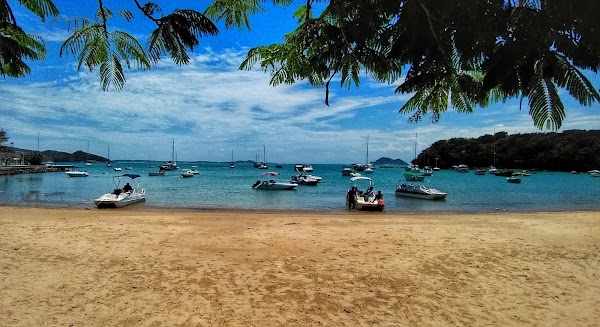
Turn from the statues to the water. The bay here is calm and crowded with boats. Sailing yachts and small launches sit at anchor, turning slowly on their lines. Beyond them the green hills curve around the bay and hold it close. In the evening, lights come on along the shore and lie in long lines across the dark water. It is an easy view to sit with for a while.
The promenade is the heart of the town's evening life. As the heat of the day fades, people come out to walk along the water. Restaurants set their tables near the edge of the path, almost at the sea. The smell of grilled fish and garlic drifts along the stones. Musicians sometimes play for the passing crowd. The pace is slow and easy here, made for strolling and stopping rather than rushing through.
Bardot's name is on more than the walkway. A cinema in town carries it too, and her presence lingers in the way the place talks about itself. The connection to the actress became part of how Buzios sees itself, woven into the names of its streets and corners. A short visit in 1964 turned into a lasting identity, one the town has chosen to keep and quietly celebrate.
Look back at the houses along the promenade. Some are old and low, left from the fishing village. Others are newer, built for visitors. Together they tell the story of the change that Bardot's visit set in motion. Between the two oldest beaches, this stretch of shore holds the memory of what the town was and the record of what it became.
Sit for a moment beside the bronze woman on her suitcase. Follow her gaze out to the water she has watched for years. She came here to disappear and instead made this place known to the world. There is something quiet in that, a person looking for stillness who left so much behind. The boats turn on the bay. The bronze keeps looking out to sea.
Key facts
What to look for
Practical tips
Common questions
How long do you need at Orla Bardot?
Plan 45–90 min. That is the time most visitors spend at Orla Bardot. The free Lokali audio guide adds about 5 minutes of narration you can listen to as you walk, so it fits inside your visit rather than adding to it.
Is there a free audio guide to Orla Bardot?
Yes — the Lokali app narrates Orla Bardot free of charge in 50+ languages. It covers the history, what to look for on site and practical tips, and it works offline once downloaded.
Where is Orla Bardot?
Orla Bardot is in Armação dos Búzios, Brazil, at -22.7469, -41.8756. Tap the map link on this page for directions from where you are.
What should you know before visiting Orla Bardot?
Walk the promenade in the evening when it comes alive.
What is Orla Bardot known for?
Brigitte Bardot visited Buzios in 1964 for four months.
What is the best time to visit Orla Bardot?
Walk it at sunset when the light turns golden and locals emerge for evening strolls.
On the map
Opens directions to Orla Bardot from your location.
Reference
More to see in Armação dos Búzios
Hear Orla Bardot in your language
The full story, narrated, in 50+ languages. Download it before you go and it plays offline, at your own pace, with no ticket and no tour group.