Praia dos Ossos
22.7469° S · 41.8744° W · Beach
Praia dos Ossos is a small, sheltered beach in the heart of Buzios town, named for whale bones once found here. It is in Armação dos Búzios, Brazil. Most visitors spend 45–60 min here. The free Lokali audio guide runs 5 minutes.
✓ Verified August 2026 · how we write these guides
Visitor facts
| Time needed | 45–60 min |
|---|---|
| Lokali audio guide | 5 min · free |
| Type | Beach |
| Best for | Local life |
| Location | Armação dos Búzios, Brazil |
| Coordinates | -22.7469, -41.8744 |
| Languages | 45, in the Lokali app |
The story
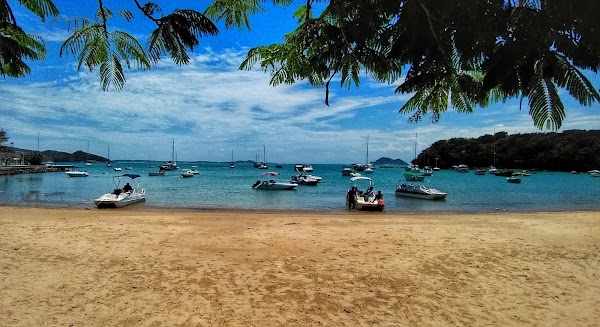
At the north end of the peninsula, where the town began, the water fills a small bay crowded with anchored boats. Their masts stand in rows against the green hills. The bay is calm and the sand is narrow. This is one of the oldest corners of Buzios, and it carries a hard name. They call it the Beach of Bones.
Ossos means bones in Portuguese. The name comes from a darker chapter of the coast's past. For a time, this was a center of whaling. Whales were hunted in these waters and brought ashore here. After the meat and oil were taken, the great bones were left on the sand. They gathered along the beach until the bones gave the place its name.
That era is long gone. No bones lie on the sand today. But the name remains, fixed to the beach like a scar that has healed over. It is worth pausing on. Many beautiful places carry names that hide hard histories. This one wears its past in plain sight, in a single blunt word that no one has chosen to soften.
This was where the town first took shape. Ossos and the neighboring beach of Armacao are the two oldest sections of Buzios. Before the visitors and the hotels, before the fame, there were fishing families here who lived by the sea. The narrow streets behind the beach still follow the old lines. This corner remembers the village that Buzios used to be.
Look out at the water and you will see why people anchor here. The bay is sheltered and calm, a safe place to leave a boat. Sailboats and motor launches sit in close rows, turning slowly on their lines. A yacht club stands along the shore. On a still morning the masts make a thin forest against the sky, and the only sound is rigging tapping in the breeze.
From this beach you can travel by water. Small boats work as taxis here, carrying people across the bay and around to other beaches on the peninsula. For a few coins you can step from the sand into a boat and let someone else handle the crossing. It is an old way to move along this coast, older than the roads.
A walking path leaves this beach and follows the shoreline. It is called the Orla Bardot, and it links Ossos to Armacao, the other old section of town. The path winds along the water past restaurants, art shops, and small wooden jetties. Walking it, you move slowly between the two oldest parts of Buzios, with the sea always at your side and boats always in view. It is one of the simple pleasures of the town.
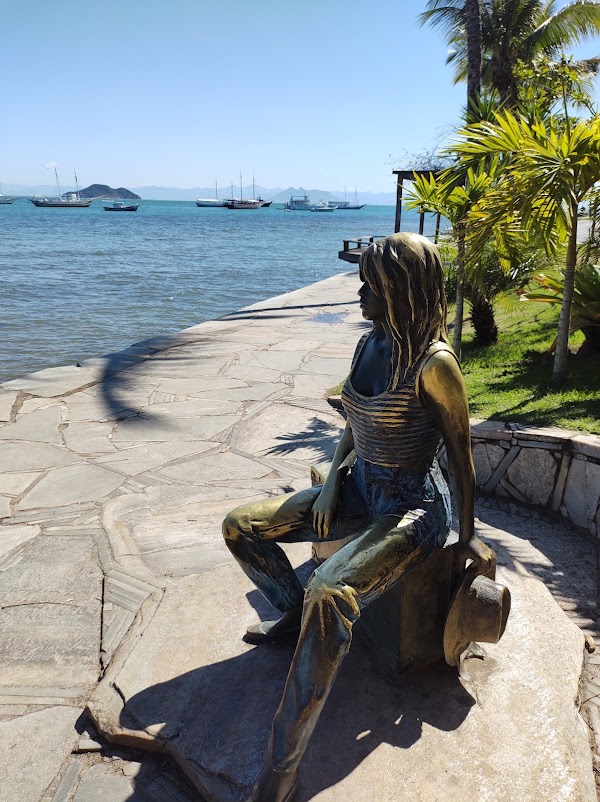
That path carries a famous name, and the reason sits a little further along it. In 1964 the French actress Brigitte Bardot came to this then-quiet fishing town. She stayed for four months. Word spread, and the peninsula that had been known only to fishermen became known to the world. The walkway and its statue remember the visit that changed everything.
But stand on the sand at Ossos and that fame feels far away. The bay is quiet. The boats rock at their moorings. Children play at the edge of the water while their parents watch from the shade of a tree. This beach is less about swimming and more about looking. It is about the slow movement of boats, the tap of rigging, and the old shape of the town rising behind you.
Look up at the green hills that frame the bay. White houses are built across them, facing the water. The land rises steeply, and the buildings climb it in uneven steps. Among them, here and there, an older roofline stands out from the newer ones, a trace of the smaller town that came before.
Come in the early day if you can. The morning light falls soft on the water and the boats are still. Fishermen and boat crews move about their work on the sand. This is a working bay as much as a beach, and watching that work is part of being here. Later the sun grows strong and the sand fills.
Find a place to sit and watch the boats turn on the water. The name of this beach asks you to hold two things at once. There is the calm bay in front of you, easy and bright. And there is the older, harder story underneath it, written in a single word. The sea has carried both. It carries them still, quietly, beneath the anchored boats.
Key facts
What to look for
Practical tips
Common questions
How long do you need at Praia dos Ossos?
Plan 45–60 min. That is the time most visitors spend at Praia dos Ossos. The free Lokali audio guide adds about 5 minutes of narration you can listen to as you walk, so it fits inside your visit rather than adding to it.
Is there a free audio guide to Praia dos Ossos?
Yes — the Lokali app narrates Praia dos Ossos free of charge in 50+ languages. It covers the history, what to look for on site and practical tips, and it works offline once downloaded.
Where is Praia dos Ossos?
Praia dos Ossos is in Armação dos Búzios, Brazil, at -22.7469, -41.8744. Tap the map link on this page for directions from where you are.
What should you know before visiting Praia dos Ossos?
Take a water taxi from here to other beaches.
What is Praia dos Ossos known for?
Ossos means bones, recalling the beach's whaling past.
What is the best time to visit Praia dos Ossos?
This is the closest beach to the main restaurant and bar district.
On the map
Opens directions to Praia dos Ossos from your location.
Reference
More to see in Armação dos Búzios
Hear Praia dos Ossos in your language
The full story, narrated, in 50+ languages. Download it before you go and it plays offline, at your own pace, with no ticket and no tour group.