
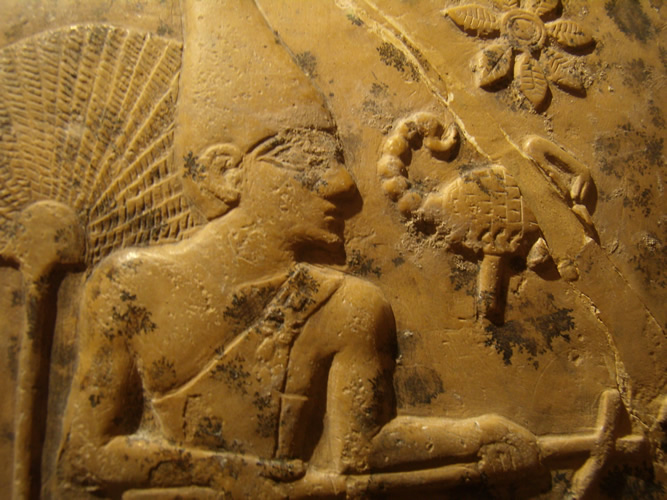
Photo: No machine-readable author provided. Bubuka assumed (based on copyright claims). · CC BY-SA 3.0 · Wikimedia Commons
Elkab is an archaeological site. It is near Aswan, Egypt. Ancient name was Nekheb, home of the vulture goddess. The free Lokali audio guide runs 7 minutes.
✓ Published October 2026 · how we write these guides
Visitor facts
| Lokali audio guide | 7 min · free |
|---|---|
| Type | Archaeological Site |
| Location | Aswan, Egypt |
| Coordinates | 25.1167, 32.8000 |
| Languages | 50+, in the Lokali app |
The story
Listen first. There is very little here to hear: a dry wind across the sand, the scrape of your shoes on loose stone, maybe a dog barking in a far village. The light is hard and white, and the hills are the colour of old bread. You are standing at Elkab, on the east bank of the Nile, between the towns of Esna and Edfu. Few travellers stop here. That quiet is part of what makes this place worth the journey.
In ancient times, this place was called Nekheb. It was the home of Nekhbet, the vulture goddess. She was the protector of Upper Egypt, the long southern valley of the Nile. Egyptian art often shows her with her wings spread wide over the king. She is a guardian, not a hunter. When you see a vulture carved above a pharaoh's head in any temple in Egypt, you are looking at the goddess of this town.
Nekhbet had a partner in the north. She was Wadjet, the cobra goddess of Lower Egypt, who was worshipped in the Nile Delta. Together, the vulture and the cobra stood for the two halves of the country under one crown. Look closely at the brow of a royal statue or a golden mask, and you will often find both creatures side by side. One half of that ancient royal symbol has its roots here, in this dusty corner of the valley.
Now turn your gaze towards the river. On the far bank, almost facing you, lies Nekhen. Archaeologists often call it by its Greek name, Hierakonpolis, which means city of the hawk. Nekhen was one of the most important settlements in Egypt before the first kings united the country. These two towns faced each other across the water for thousands of years. One was sacred to the vulture, and the other was sacred to the falcon god Horus.
The first thing most visitors notice is the great wall. It is a vast enclosure of mud brick, and it is far larger than you expect. Each side runs for more than half a kilometre. The walls are many metres thick, and long stretches still stand today, even after more than two thousand years of wind and flood. The builders laid the bricks in long curved sections that rise and dip like waves. This was a common way of building in the later periods of Egyptian history.
Inside the enclosure, the temples of Nekhbet once stood. Very little of them survives above the ground. Later generations took the stone for lime and for new buildings, which happened at many ancient sites along the Nile. What remains are low foundations, scattered blocks, and the shape of the sacred lake. You need a little imagination here. Picture painted columns, incense smoke, and priests moving through the courtyards. Then look again at the empty sand.
The real treasure of Elkab is in the hillside to the north. A row of tombs is cut into the sandstone cliff. Their doors look out over the valley and the river. Most of these tombs belong to local officials and their families from the early New Kingdom. That was the era when Egypt drove out foreign rulers and began to build an empire. The climb up is short but steep. The view from the top is one of the quiet rewards of the visit.
One tomb here is a key source for historians. It belongs to a man called Ahmose, son of Ebana. He was a soldier and a naval officer, and he served under several kings. On the walls of his tomb, he told the story of his own life. He describes the wars against the Hyksos, the foreign rulers who controlled the north of Egypt. His text is one of the few first-hand accounts of those campaigns. Much of what we know about that turning point comes from these few lines of hieroglyphs.
Here is a detail many visitors miss. Ahmose does not write like a king. He writes like a veteran. He lists the battles he fought and the rewards he received for bravery, including gold and the gift of servants. His voice is proud and personal. Standing in the cool shade of his tomb, you are as close as you will ever get to an ordinary fighting man of ancient Egypt speaking about his own career.
Nearby is the tomb of Paheri, and it is often the favourite of visitors. Paheri was a local official, and he was also a tutor to a royal prince. His walls are covered with scenes of daily life. People plough fields, harvest grain, and drive cattle. Boats move along the river, and workers weigh gold. The colours are faded but still clear in places. This is a second surprise: short lines of text sit above some of the workers. They record the things the workers say to each other, like captions in a comic strip.
These harvest scenes are not just decoration. For Paheri, they were a promise. The ancient Egyptians believed that images on a tomb wall could continue to work for the dead person forever. The fields would always produce grain, and the cattle would always be fat. So every reaper and every boat here had a job to do. They had to keep a family fed in the next life.
The wider landscape of Elkab holds even older layers. Behind the town, a dry valley leads into the desert. Along its rocky walls, travellers and priests left carvings and inscriptions across many centuries. There are also small shrines and chapels in this valley, built by later kings for the goddess. Long before any of these, prehistoric hunters camped in this area. Archaeologists have found their stone tools here, so this place was important long before the pharaohs.
Before you leave, stand still for a moment at the tomb doors. Look south along the river and across to the falcon city on the far bank. Look back down at the long brown line of the great wall. The fields are green near the water, and the desert begins right at your feet. As you walk back down the slope, listen again to the wind and the crunch of stone. You may find that you are the only person on this hillside, just as the vulture goddess once watched over it alone.
Key facts
What to look for
Practical tips
Common questions
Is there a free audio guide to Elkab?
Yes — the Lokali app narrates Elkab free of charge in 50+ languages. The guide runs about 7 minutes, covers the history, what to look for on site and practical tips, and works offline once downloaded.
Where is Elkab?
Elkab is near Aswan, Egypt, at 25.1167, 32.8000. Tap the map link on this page for directions from where you are.
What is Elkab known for?
Ancient name was Nekheb, home of the vulture goddess. Nekhbet was the protector goddess of Upper Egypt.
What should you look for at Elkab?
Wavy courses of mud brick in the great enclosure wall. Harvest scenes with worker speech captions in Paheri's tomb. Columns of hieroglyphs telling Ahmose's battle stories.
What should you know before visiting Elkab?
Come early in the morning before the cliff heats up. Bring plenty of water because shade is very limited.
When is the best time to visit Elkab?
Come early in the morning before the cliff heats up.
On the map
Opens directions to Elkab from your location.
More to see in Aswan

Hear Elkab in your language
The full story, narrated, in 50+ languages. Download it before you go and it plays offline, at your own pace, with no ticket and no tour group.