
Wat Chaloem Phra Kiat Worawihan
13.7086° N · 100.4768° E · Temple
Wat Chaloem Phra Kiat Worawihan is a modern temple in Thonburi with striking architecture and a towering chedi. It is in Bangkok, Thailand. Most visitors spend 40–60 min here. The free Lokali audio guide runs 5 minutes.
✓ Verified August 2026 · how we write these guides
Visitor facts
| Time needed | 40–60 min |
|---|---|
| Lokali audio guide | 5 min · free |
| Type | Temple |
| Best for | Photography |
| Location | Bangkok, Thailand |
| Coordinates | 13.7086, 100.4768 |
| Languages | 45, in the Lokali app |
The story
On the bank of the river toward the northern edge of the city, a graceful old temple stands among trees, its halls decorated with delicate coloured tilework and its white chedi rising above the water. This is Wat Chaloem Phra Kiat Worawihan, a royal riverside temple away from the crowds, known for its fine ornament and its peaceful setting.
The temple dates from the first half of the nineteenth century, built under a king of that era, and it carries the dignity of a royal foundation, with carefully made halls and a quiet, well-tended compound by the water.
Its decoration is its great distinction. The buildings are ornamented with delicate ceramic tilework in the Chinese-influenced style fashionable in its day, when trade with China shaped Thai art, giving the halls a refined, colourful surface unlike the plainer local temples.
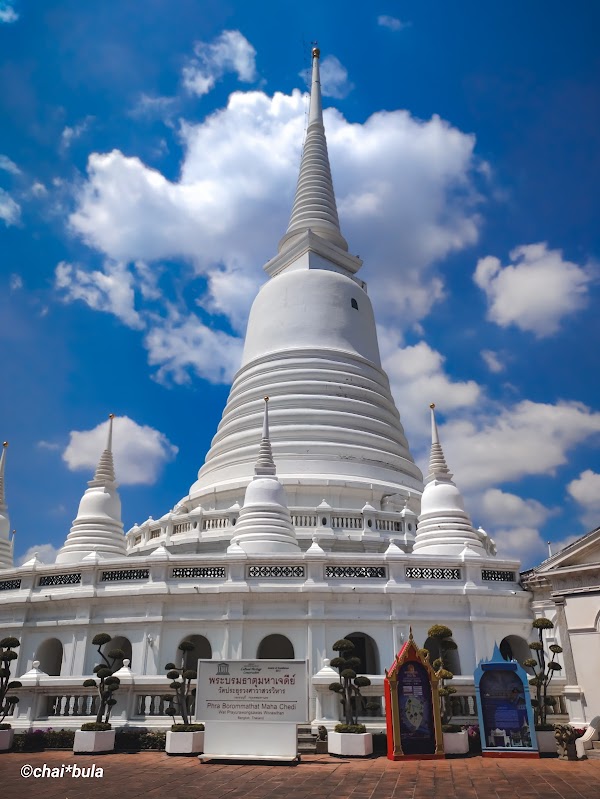
A white chedi, a bell-shaped relic tower, rises within the compound, pale and elegant against the sky and the river, the temple's landmark from the water and a focus for the calm of the grounds.
The riverside setting is part of the appeal. The temple sits right by the water, so it was traditionally approached by boat, and arriving across the river still gives the finest first sight of its halls and chedi among the trees.
Because it lies away from the central sights, toward the city's northern edge, it sees few foreign visitors, so it offers a calm, local experience of a fine old temple rather than a crowded tourist stop.
The halls hold Buddha images and quiet shrines, and the compound, with its trees and riverside air, is a restful place to walk, a world away from the heat and bustle of the central temples.
As a working temple, it serves its surrounding community, with monks and the steady rhythm of merit-making and prayer, so a visit is also a glimpse of everyday religious life beyond the tourist trail.
The surrounding district, on the quieter reaches of the river, has its own old neighbourhoods, markets, and temples, so the temple can be part of a gentle exploration of a less-visited stretch of the waterway.
Reaching it is part of the experience: a trip up the river by boat, away from the busy central stretch, passing temples, houses, and gardens along the banks, is the natural and most pleasant way to come.
A few practical notes. Entry is generally free or a small donation; dress modestly, with shoulders and knees covered, and remove your shoes in the halls. Come in the cooler hours, ideally by river, and combine it with the quieter northern waterway.
Walk the calm riverside compound, admire the delicate tilework and the white chedi, and take in a fine old temple that few visitors reach. Wat Chaloem Phra Kiat rewards the trip up the river with quiet and craft. When you take the boat back toward the centre, the busy heart of the city feels far away.
Key facts
What to look for
Practical tips
Common questions
How long do you need at Wat Chaloem Phra Kiat Worawihan?
Plan 40–60 min. That is the time most visitors spend at Wat Chaloem Phra Kiat Worawihan. The free Lokali audio guide adds about 5 minutes of narration you can listen to as you walk, so it fits inside your visit rather than adding to it.
Is there a free audio guide to Wat Chaloem Phra Kiat Worawihan?
Yes — the Lokali app narrates Wat Chaloem Phra Kiat Worawihan free of charge in 50+ languages. It covers the history, what to look for on site and practical tips, and it works offline once downloaded.
Where is Wat Chaloem Phra Kiat Worawihan?
Wat Chaloem Phra Kiat Worawihan is in Bangkok, Thailand, at 13.7086, 100.4768. Tap the map link on this page for directions from where you are.
What should you know before visiting Wat Chaloem Phra Kiat Worawihan?
Come by boat up the river.
What is Wat Chaloem Phra Kiat Worawihan known for?
A royal riverside temple toward the city's north.
What is the best time to visit Wat Chaloem Phra Kiat Worawihan?
Climb to the upper terrace for a sweeping river view few tourists reach.
On the map
Opens directions to Wat Chaloem Phra Kiat Worawihan from your location.
More to see in Bangkok


Hear Wat Chaloem Phra Kiat Worawihan in your language
The full story, narrated, in 50+ languages. Download it before you go and it plays offline, at your own pace, with no ticket and no tour group.