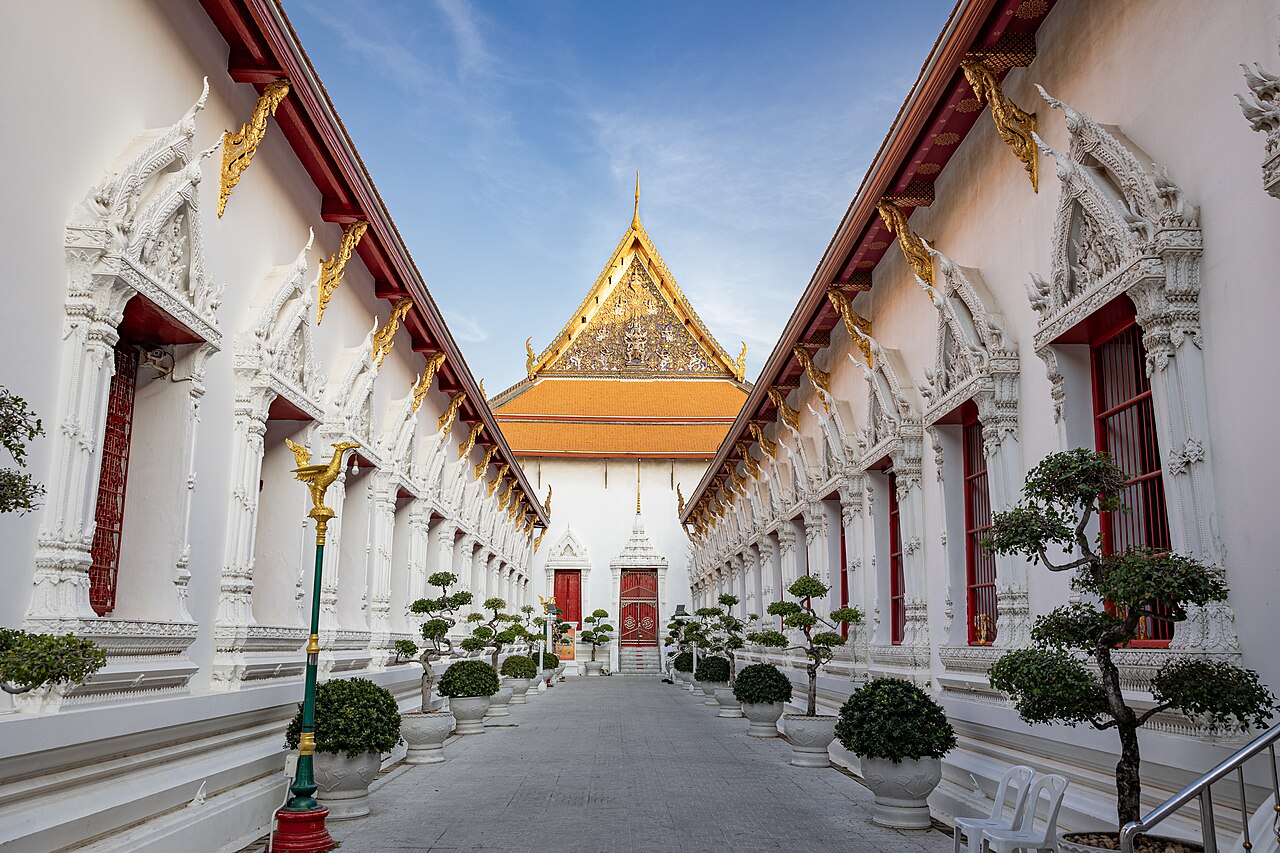
Wat Mahathat is a temple in Bangkok, Thailand. Sprawling 14th-century royal temple at Ayutthaya's heart, famous for the Buddha head entwined in tree roots. Most visitors spend 1–2 hours here. The free Lokali audio guide runs 5 minutes.
✓ Verified August 2026 · how we write these guides
Visitor facts
| Time needed | 1–2 hours |
|---|---|
| Lokali audio guide | 5 min · free |
| Type | Temple |
| Best for | History |
| Location | Bangkok, Thailand |
| Coordinates | 14.3520, 100.5673 |
| Languages | 45, in the Lokali app |
The story
Near the grand palace and the royal field stands an old, important temple that draws fewer sightseers than its neighbours but holds a special place in the religious life of the country. This is Wat Mahathat, a centre of Buddhist learning and meditation rather than a glittering tourist showpiece.
The temple is one of the oldest in the city, predating much of the surrounding royal quarter, and it is among the most senior in the country, closely tied to the organisation and teaching of Buddhism in Thailand.
It is best known as a centre of study and meditation. A major monastic university is based here, training monks from across the country and beyond, and the temple offers instruction in meditation, including sessions open to foreign visitors.
That role gives the temple a different feel from the show temples by the river: it is a working, scholarly, devotional place, often quiet, where the business of monastic life and learning goes on rather than a parade of visitors.
The temple buildings are dignified rather than dazzling, with assembly halls, a large community of monks, and shaded courtyards, and the appeal is the atmosphere of a living religious institution more than any single spectacular object.
For visitors curious about Buddhism as a practice rather than a sight, the meditation instruction offered here is a rare chance to learn directly, in a serious setting, from those who live by it.
Just outside the temple, a famous amulet market spreads along the lanes and the riverside, where dealers and buyers pore over tiny sacred amulets believed to bring protection and luck, a fascinating world of its own.
The amulet trade is serious business, with collectors examining pieces through eyeglasses and prices ranging from a few coins to small fortunes, and watching it is a glimpse into a deep vein of popular belief.
The temple's position between the grand palace and the university and the river makes it easy to fold into a day in the old royal city, a quieter, deeper stop among the grander sights.
Because it is a place of study and worship rather than a tourist attraction, it rewards a respectful, low-key visit, and visitors should be mindful that they are guests in a working religious community.
A few practical notes. Entry is generally free or a small donation; dress modestly and behave quietly, and ask before photographing monks. Enquire ahead about meditation sessions if you wish to take part, and allow time for the amulet market outside.
Step into the calm courtyards among the monks and students, then out into the bustle of the amulet market, and you see two sides of Thai Buddhism, the scholarly and the popular, side by side. Wat Mahathat is the faith at work rather than on display. When you move on toward the palace, its quiet seriousness lingers.
Key facts
What to look for
Practical tips
Common questions
How long do you need at Wat Mahathat?
Plan 1–2 hours. That is the time most visitors spend at Wat Mahathat. The free Lokali audio guide adds about 5 minutes of narration you can listen to as you walk, so it fits inside your visit rather than adding to it.
Is there a free audio guide to Wat Mahathat?
Yes — the Lokali app narrates Wat Mahathat free of charge in 50+ languages. It covers the history, what to look for on site and practical tips, and it works offline once downloaded.
Where is Wat Mahathat?
Wat Mahathat is in Bangkok, Thailand, at 14.3520, 100.5673. Tap the map link on this page for directions from where you are.
What should you know before visiting Wat Mahathat?
Ask ahead about open meditation sessions.
What is Wat Mahathat known for?
An old and senior temple near the grand palace.
What is the best time to visit Wat Mahathat?
Visit early morning when mist clings to the stones and few tourists are present.
On the map
Opens directions to Wat Mahathat from your location.
Reference
More to see in Bangkok


Hear Wat Mahathat in your language
The full story, narrated, in 50+ languages. Download it before you go and it plays offline, at your own pace, with no ticket and no tour group.