
Museum of the History of Barcelona
41.3839° N · 2.1777° E · Museum
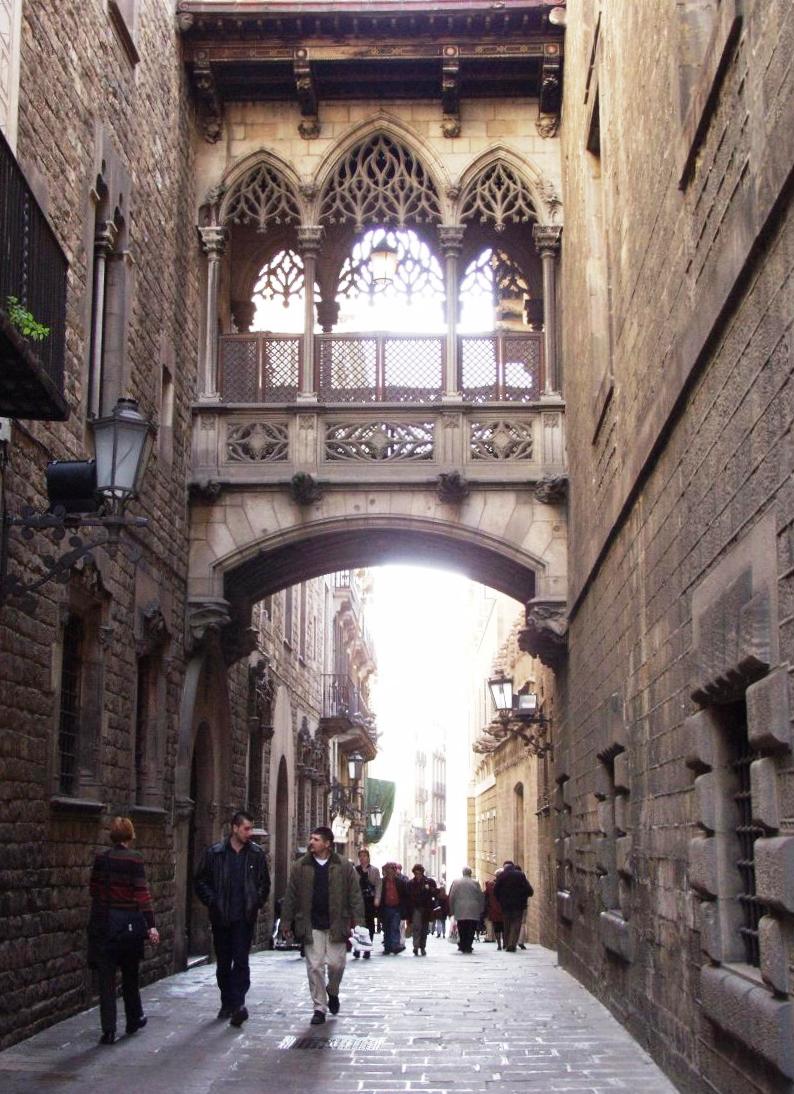
Photo: Kippelboy · CC BY-SA 3.0 · Wikimedia Commons
Museum of the History of Barcelona is a history museum in Barcelona, Spain. Barcino was founded under Emperor Augustus. The free Lokali audio guide runs 7 minutes.
✓ Published October 2026 · how we write these guides
Visitor facts
| Lokali audio guide | 7 min · free |
|---|---|
| Type | Museum |
| Location | Barcelona, Spain |
| Coordinates | 41.3839, 2.1777 |
| Official website | barcelona.cat |
| Languages | 50+, in the Lokali app |
The story
Listen for a moment. The noise of the Gothic Quarter fades as you enter the Plaça del Rei, the King's Square. Your footsteps echo off honey-coloured stone walls that rise on almost every side. Pigeons settle on the old steps. The square stays shaded for much of the day, and the air feels cooler here than in the open streets nearby. You are standing at the centre of medieval royal Barcelona... and, as you will soon find, directly above the Roman city.
This is the main site of the Museum of the History of Barcelona. Locals often call it MUHBA, from its Catalan initials. The museum is not one building but a network of sites across the city. These include Roman remains, medieval palaces, and even an air-raid shelter from the Spanish Civil War. The Plaça del Rei site is the heart of that network. Here, two thousand years of the city sit stacked on top of each other.
The entrance is through a building called Casa Padellàs. It is a late Gothic mansion with a graceful inner courtyard and an open staircase. It looks as if it has always stood here — but it has not. Its original home was a few streets away. In the early twentieth century, the city cut a wide new avenue, the Via Laietana, through the old town. The mansion stood in the path of the road. So the builders took it apart, stone by stone, and rebuilt it here in the 1930s.
That move created the first surprise. When workers dug new foundations for the mansion on this spot, they found Roman walls and floors under the ground. The excavation grew and grew. What began as a construction site became one of the largest underground archaeological areas in any European city centre. The museum opened to the public in 1943, built around those discoveries. The past here was found almost by accident.
So the visit begins by going down. A lift and walkways take you below the square, into the Roman town of Barcino. The Romans founded it in the late first century before Christ, during the rule of the emperor Augustus. Barcino was a small colony, much smaller than the city you walked through this morning. But its street plan still shapes the Gothic Quarter above. Some of the lanes outside follow lines that Roman surveyors first marked out.
Underground, you walk on raised glass and metal paths over the ruins. Below your feet are the low walls of houses, shops, and workshops. The light is soft and the air is still. This is not the Rome of temples and emperors. It is the Rome of daily work. You can see where people washed and dyed cloth, in a workshop known as a fullonica. You can see vats where they salted fish and made garum, a strong fish sauce that Romans loved.
Look closely at the round and rectangular tanks along the route. Some were used to make wine. Workers pressed grapes, and the juice ran into storage containers set into the floor. Barcino was a working town, and its people traded wine across the Mediterranean. Walking these paths, you begin to feel the size of a Roman street — narrow, close, with doors opening straight onto the pavement. Many visitors are surprised by how human the scale is.
Further on, the remains change in character. In late Roman times, Christianity became the main faith of the city. Here, archaeologists uncovered part of an early episcopal complex — the buildings around a bishop's church. Among them is a baptismal pool, where new believers were baptised. It is one of the quiet high points of the visit. This is the deep root of the cathedral that still stands only a short walk from this square.
When you come back up into daylight, you enter the medieval layer. The great stone hall on the square is the Saló del Tinell. It was the main hall of the palace of the Counts of Barcelona, who were also Kings of Aragon. It was rebuilt in the fourteenth century. Look up. Huge semicircular stone arches span the room with no columns in between. For their time, these arches were a bold piece of engineering, and they still give the hall a calm, open feeling.
There is a famous story about this hall. According to a popular tale, Christopher Columbus came here in 1493, after his first voyage across the Atlantic. The story says that King Ferdinand and Queen Isabella received him on the steps of the square. Historians have long debated whether this meeting happened here at all. So treat it as legend rather than record. But it shows how strongly the city connects this square with its moments of power.
Next to the hall stands the royal Chapel of Saint Agatha. It is a narrow Gothic chapel built against the old Roman wall. Inside, look for the painted altarpiece known as the Constable's Altarpiece. It is the work of Jaume Huguet, one of the leading Catalan painters of the fifteenth century. The gold backgrounds and the calm faces of the figures catch the light from the tall windows. The chapel is quiet, and many visitors stay here longer than they plan.
Above the square rises the Mirador del Rei Martí, the Lookout of King Martin. It is a stacked tower of open stone galleries, floor upon floor. Despite its name, it was built well after King Martin's time, in the sixteenth century. From the square, its arched openings frame the sky like a set of windows. It is a reminder that the royal palace was once a place to watch the city, not only to rule it.
The museum also tells the story of the people who lived between these great moments. Displays cover the medieval city, its guilds and walls, and its growth over the centuries. If this visit gives you a taste for more, the other MUHBA sites take the story forward. They reach into the industrial age, the Civil War, and modern Barcelona. Each one adds a different chapter to the same long book.
When you step back into the Plaça del Rei, pause on the steps for a moment. Look at the stone around you — Gothic arches, a Renaissance tower, a chapel resting on Roman walls. Now remember what lies beneath your feet: workshops, wine vats, and a bishop's baptismal pool. The city you see is only the top layer. As you walk out through the narrow streets, notice how they bend and turn. Some of those lines are two thousand years old.
Key facts
What to look for
Practical tips
Common questions
Is there a free audio guide to Museum of the History of Barcelona?
Yes — the Lokali app narrates Museum of the History of Barcelona free of charge in 50+ languages. The guide runs about 7 minutes, covers the history, what to look for on site and practical tips, and works offline once downloaded.
Where is Museum of the History of Barcelona?
Museum of the History of Barcelona is in Barcelona, Spain, at 41.3839, 2.1777. Tap the map link on this page for directions from where you are.
What is Museum of the History of Barcelona known for?
Barcino was founded under Emperor Augustus. Casa Padellàs was moved here stone by stone.
What should you look for at Museum of the History of Barcelona?
Fish-salting vats used to make Roman garum sauce. The early Christian baptismal pool below the square. Wide stone arches spanning the Saló del Tinell.
What should you know before visiting Museum of the History of Barcelona?
Start underground, then finish in the medieval halls. Wear comfortable shoes for the long underground walkways.
When is the best time to visit Museum of the History of Barcelona?
Visit early to enjoy the square before crowds arrive.
On the map
Opens directions to Museum of the History of Barcelona from your location.
More to see in Barcelona


Hear Museum of the History of Barcelona in your language
The full story, narrated, in 50+ languages. Download it before you go and it plays offline, at your own pace, with no ticket and no tour group.