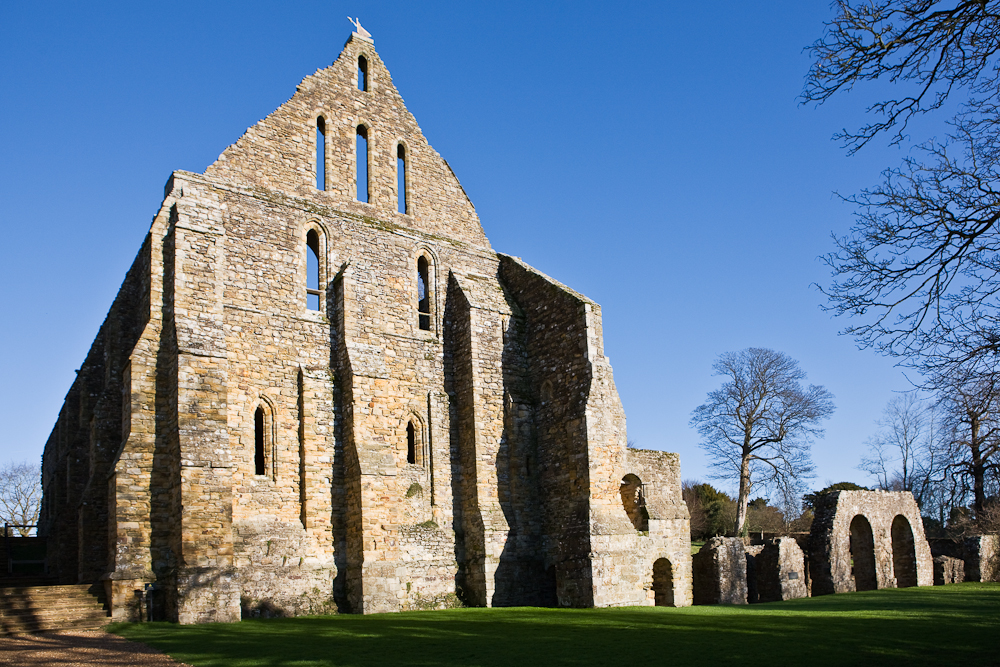
Battle Abbey
50.9150° N · 0.4858° E · Archaeological Site
Photo: Antony McCallum · CC BY-SA 3.0 · Wikimedia Commons
Battle Abbey is a Benedictine abbey in Battle, East Sussex, England, UK. The Battle of Hastings was fought here on 14 October 1066. The free Lokali audio guide runs 7 minutes.
✓ Published October 2026 · how we write these guides
Visitor facts
| Lokali audio guide | 7 min · free |
|---|---|
| Type | Archaeological Site |
| Location | Battle, United Kingdom |
| Coordinates | 50.9150, 0.4858 |
| Official website | english-heritage.org.uk |
| Languages | 50+, in the Lokali app |
The story
Stand still for a moment and feel the ground beneath your feet. It slopes. Gently at first, then more steeply, down towards the south. On a quiet morning you can hear rooks in the trees and the soft hum of the small town behind you. This slope is the whole story of this place. Almost a thousand years ago, the shape of this hill decided who would rule England.
On the fourteenth of October, 1066, two armies met here. On the ridge stood Harold Godwinson, King of England, with his housecarls and levies. They formed a shield wall, a tight line of overlapping wooden shields along the crest. Below them, coming up from the south, was William, Duke of Normandy. He brought archers, foot soldiers and mounted knights. The English held the high ground. The Normans had to fight uphill.
The battle lasted most of the day. That alone surprises many visitors. Medieval battles were often short and brutal. This one ground on for hours. The Norman cavalry charged up the slope and fell back again and again. Chroniclers of the time describe moments when the Normans retreated, and some English soldiers broke ranks to chase them downhill. Once off the ridge, those men were exposed. Slowly, the English line thinned.
By evening, Harold was dead. How he died is still debated. The Bayeux Tapestry, the long embroidered record of the Conquest, shows a figure with an arrow near the eye. But historians argue about which figure is Harold, and whether the arrow was added or changed during later repairs. What is certain is simpler. The king fell somewhere on this ridge, and with him fell Anglo-Saxon England.
After his victory, William founded an abbey on the battlefield. The reasons were partly religious. The Church required penance from soldiers who had killed in battle, even in a victorious one. An abbey of Benedictine monks, who would pray here for the dead, was a powerful act of atonement. It was also a statement. The new king was building his monument on the very ground he had won.
Here is a detail most people miss. According to the abbey's own later chronicle, the first monks came from Marmoutier, a monastery in the Loire Valley of France. They did not like this site. It sat on a steep ridge with little water. They wanted to build lower down, on easier ground. William, the story goes, insisted. The high altar had to stand where Harold fell. Treat the conversation as tradition rather than a transcript... but the result is clear in the stones around you.
Walk to the site of the abbey church and look for a simple stone slab set in the grass. This marks the traditional place of the high altar, and the spot where Harold is said to have died. The church itself is gone. Only its outline and footings remain. It is a quiet, almost plain marker for such a large moment. Many visitors pause here longer than they expected to.
The abbey church was consecrated in the late eleventh century, after William's death, in the reign of his son. For more than four hundred years, Benedictine monks lived, worked and prayed here. The abbey grew rich. It held land across the region, and the town of Battle grew up outside its gates to serve it. The long main street you walked along today exists because of this monastery.
Now turn to the great gatehouse that faces the town. It was built in the fourteenth century, at a time when French raids threatened the south coast of England. It is tall, solid and decorated with battlements and arrow slits. Some of that is real defence. Some of it is display — a rich abbey showing its power to everyone who arrived. It is one of the finest surviving medieval monastic gatehouses in England, and it still frames the view of the town square.
In 1538, the abbey came to an end. Henry the Eighth was closing England's monasteries, taking their land and wealth for the crown. Battle Abbey was given to one of his courtiers, Sir Anthony Browne. He pulled down the great church and turned other buildings into a private house. Stone from the church was carried away. This is why the most sacred part of the site is now the emptiest.
Some buildings survived because they were useful. The best example is the dormitory range, where the monks slept. It stands on the eastern side, built into the falling slope, so it rises several storeys high at one end. Below the sleeping hall are vaulted rooms with ribbed stone ceilings. Walk inside and notice how cool the air feels, and how the sound of your steps comes back from the stone. Part of the old abbot's house became a grand home and later a school, which still uses it today.
There is also a story you may hear from locals. Legend has it that after heavy rain the soil here runs red, as if the ground still holds the blood of the battle. Some writers linked this to an old name for the battlefield. It is folklore, not history. The colour more likely comes from iron in the local soil. But it shows how deeply people here have felt the weight of that single day.
Before you leave, follow the battlefield path down the slope towards the bottom of the valley. Then turn around and look back up. Imagine the shield wall along the crest, where the abbey ruins now stand. Feel how tired your legs are after a short walk. Now imagine climbing that same hill in mail armour, again and again, under a rain of spears and arrows.
Take a last look at the quiet grass, the grey stone, the gatehouse towers above the rooftops. Sheep may be grazing. A train may sound in the distance. It is an ordinary English hillside on most days. And yet everything that followed — the castles, the language, the shape of the English kingdom — began on this slope, on one autumn day, with the light fading over the ridge.
Key facts
What to look for
Practical tips
Common questions
Is there a free audio guide to Battle Abbey?
Yes — the Lokali app narrates Battle Abbey free of charge in 50+ languages. The guide runs about 7 minutes, covers the history, what to look for on site and practical tips, and works offline once downloaded.
Where is Battle Abbey?
Battle Abbey is in Battle, United Kingdom, at 50.9150, 0.4858. Tap the map link on this page for directions from where you are.
What is Battle Abbey known for?
The Battle of Hastings was fought here on 14 October 1066. William the Conqueror founded the abbey as an act of penance.
What should you look for at Battle Abbey?
Stone slab marking where Harold traditionally fell. Arrow slits and battlements on the great gatehouse. Ribbed stone vaults beneath the monks' dormitory range.
What should you know before visiting Battle Abbey?
Walk the battlefield trail downhill, then look back up the ridge. Wear sturdy shoes for the sloping, often muddy battlefield paths.
When is the best time to visit Battle Abbey?
Visit the high altar marker first, before the crowds arrive.
On the map
Opens directions to Battle Abbey from your location.
More to see near Battle Abbey


Hear Battle Abbey in your language
The full story, narrated, in 50+ languages. Download it before you go and it plays offline, at your own pace, with no ticket and no tour group.