
Photo: Wikimedia Commons contributor · Public domain · Wikimedia Commons
Naucratis is a city of Ancient Egypt, on the Canopic branch of the Nile river. Greek trading town founded in the seventh century before Christ. The free Lokali audio guide runs 7 minutes.
✓ Published October 2026 · how we write these guides
Visitor facts
| Lokali audio guide | 7 min · free |
|---|---|
| Type | Archaeological Site |
| Location | Beheira, Egypt |
| Coordinates | 30.9000, 30.6167 |
| Languages | 50+, in the Lokali app |
The story
Listen first. A water pump hums somewhere across the fields. A donkey cart creaks along a dirt track, and egrets lift off from the green rows of crops. The ground here is soft, dark Nile mud, the same soil that has fed Egypt for thousands of years. Look at the low mounds and the still pools of water around you. They do not look like much at first. But you are standing on the remains of one of the most unusual towns of the ancient Mediterranean world.
This is Naucratis, an ancient Greek trading town in the heart of Egypt. Its name in Greek means something close to "ruler of ships" or "mistress of ships". That name tells you its purpose. This was a place of cargo, contracts and harbours. In the seventh and sixth centuries before Christ, Greek merchants lived and worked here, side by side with Egyptians. For a long period, this was the main door between the Greek world and the land of the pharaohs.
Why here, in the flat fields of the western Delta? The answer is water. In ancient times, the Canopic branch of the Nile flowed close to this spot. That branch was the westernmost arm of the river, and it ran out to the Mediterranean Sea. Ships could sail upriver from the coast and reach this town. Goods could move between the open sea and the inland Egyptian cities. The river has since shifted its course, and that change helps explain the quiet you hear today.
The Greek historian Herodotus, writing in the fifth century before Christ, describes Naucratis in his famous Histories. He says the pharaoh Amasis, who ruled in the sixth century before Christ, gave the town to the Greeks as a place to live and trade. Here is the first surprise. Archaeologists have found Greek pottery at the site that seems older than the reign of Amasis. So the Greeks were probably here before the date Herodotus gives. Perhaps the pharaoh organised a community that already existed.
Who were these Greeks? They did not come from one city. According to Herodotus, traders from many places took part. They came from Ionian cities on the coast of modern Turkey, such as Miletus, and from islands like Samos and Aegina. Together, several of these cities shared a large sanctuary called the Hellenion, which means "the Greek place". Some cities also built their own temples. Herodotus mentions a temple of Hera for the Samians and a temple of Apollo for the Milesians.
So imagine the town at its height. Greek temples stood near Egyptian buildings. Greek words mixed with Egyptian words in the lanes. Ships unloaded olive oil, wine and silver from the Aegean. They loaded grain, linen and papyrus from Egypt. Craftsmen worked here too. Excavators found evidence of a workshop that made small scarabs and amulets from faience, a glazed ceramic material popular in Egypt. These little charms then travelled across the Greek world, carrying Egyptian designs far from the Nile.
Now for a story that belongs to the ancient tales rather than firm history. Herodotus tells of a famous courtesan named Rhodopis who lived in Naucratis. According to his account, the brother of the poet Sappho, from the island of Lesbos, paid a great sum to free her from slavery. Sappho, the story goes, mocked her brother in a poem for this. We cannot verify every detail. But the tale shows how Naucratis lived in the Greek imagination as a rich and worldly place.
For many centuries, the exact location of the town was lost. Then, in the 1880s, the British archaeologist Flinders Petrie came to this area. He identified the ancient town in the mounds near the modern villages, and his excavations began the modern study of the site. Other British scholars continued the work in the following years. They recovered huge quantities of painted Greek pottery, inscriptions and offerings. Many of these finds travelled to museums abroad, including the British Museum in London.
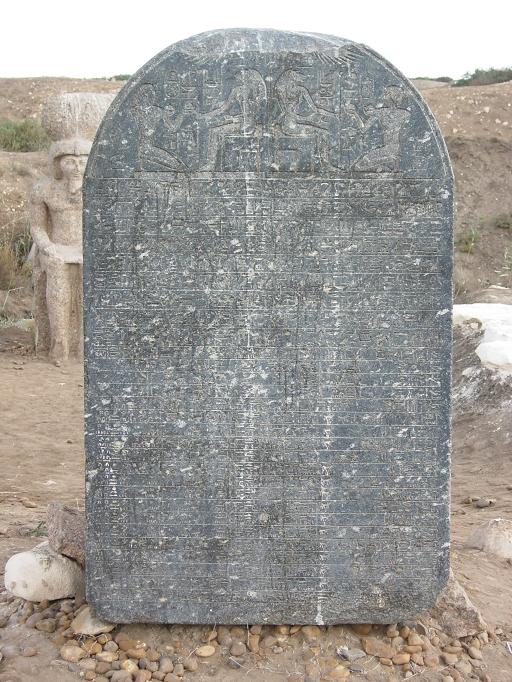
Here is the second surprise. One of the most important objects from this site is an Egyptian stone, not a Greek one. It is a carved royal decree from the reign of the pharaoh Nectanebo the First, in the fourth century before Christ. The decree gave a share of taxes on trade at Naucratis to the temple of the goddess Neith at nearby Sais. This stela, found here in 1899, now stands in the Egyptian Museum in Cairo. Much later, divers found a near twin of it underwater at the sunken port of Thonis-Heracleion.
Why does the site look so modest today? Part of the reason is time and water. The water table in the Delta is high, so many ancient layers now lie under the pools you see. Another reason is farming. For generations, local people dug ancient mud brick from mounds like these to use as fertiliser, a material known as sebakh. Over time, much of the ancient town was removed this way. What remains is mostly below your feet, or in museum cases far away.
In the twenty-first century, researchers returned. A British Museum project studied the old finds again and carried out new fieldwork here. They used modern survey methods to map what still lies under the fields and the water. Their work suggests the harbour area and the town were larger and more complex than earlier scholars thought. So this quiet place is still producing new knowledge. The story of Naucratis is not finished. It is still being written by careful people with trowels and maps.
As you stand here, think about the meaning of this place. Before Alexander the Great founded Alexandria, before Greek kings ruled Egypt, Naucratis was where the two worlds met in daily life. Merchants bargained here. Families raised children here. People prayed to Greek gods within reach of Egyptian temples. Ideas, crafts and images passed in both directions. Much of what later generations admired in Greek art and thought had early contact with Egypt through ordinary trading places like this one.
Before you go, look around once more. Notice the line where the dark soil meets the water. Notice the farmers working the same fertile ground that drew ships here long ago. The river has moved, the temples have gone, and the harbour lies hidden. But the land still does the work it always did, feeding people and carrying life forward... As you walk back to the road, listen again to the pumps and the birds. That steady, working sound is the oldest voice of the Delta.
Key facts
What to look for
Practical tips
Common questions
Is there a free audio guide to Naucratis?
Yes — the Lokali app narrates Naucratis free of charge in 50+ languages. The guide runs about 7 minutes, covers the history, what to look for on site and practical tips, and works offline once downloaded.
Where is Naucratis?
Naucratis is near Beheira, Egypt, at 30.9000, 30.6167. Tap the map link on this page for directions from where you are.
What is Naucratis known for?
Greek trading town founded in the seventh century before Christ. Herodotus credits pharaoh Amasis with granting the town.
What should you look for at Naucratis?
Still pools covering ancient layers of the town. Low mounds rising slightly above the flat fields. Dark Nile mud underfoot, once dug as fertiliser.
What should you know before visiting Naucratis?
Wear sturdy waterproof shoes for muddy, waterlogged ground. Arrange local transport in advance; the site is rural.
On the map
Opens directions to Naucratis from your location.
More to see in Beheira
Hear Naucratis in your language
The full story, narrated, in 50+ languages. Download it before you go and it plays offline, at your own pace, with no ticket and no tour group.