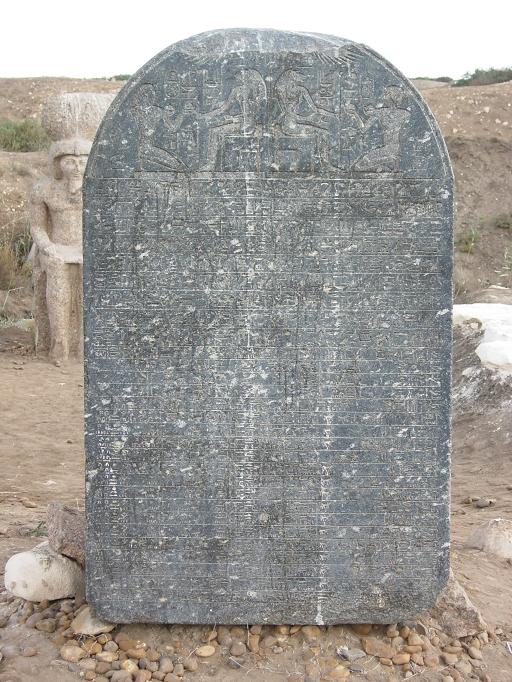
Buto (Tell el-Fara'in)
31.1964° N · 30.7447° E · Archaeological Site
Photo: Faris knight · CC0 · Wikimedia Commons
Buto (Tell el-Fara'in) is an archaeological site in Egypt. Ancient name Per-Wadjet means House of Wadjet. The free Lokali audio guide runs 8 minutes.
✓ Published October 2026 · how we write these guides
Visitor facts
| Lokali audio guide | 8 min · free |
|---|---|
| Type | Archaeological Site |
| Location | Kafr el-Sheikh, Egypt |
| Coordinates | 31.1964, 30.7447 |
| Languages | 50+, in the Lokali app |
The story
Listen for a moment. You may hear wind moving across dry earth, a donkey cart on a farm track, maybe water running in a nearby canal. Underfoot, the ground is uneven and crumbly. Look closely and you will see small fragments of red and brown pottery scattered across the surface. Each of these broken pieces was handled by someone who lived here, long before the pyramids were built. Welcome to Buto, a quiet mound in the northern Nile Delta with one of the deepest memories in Egypt.
Today, local people call this place Tell el-Fara'in, which means the Mound of the Pharaohs. A tell is an artificial hill. It rises slowly over centuries as people build, collapse, and rebuild on the same spot. What you are standing on is not a natural hill at all. It is layer upon layer of human life — mudbrick houses, workshops, temples, and rubbish — pressed together into the earth. The site is made up of several large mounds spread across the flat farmland around you.
The ancient Egyptians knew this place as Per-Wadjet, the House of Wadjet. Wadjet was a cobra goddess. She was the protector of Lower Egypt, which is the name for the northern part of the country, around the Delta. The Greeks later heard the name Per-Wadjet and turned it into Buto. If you picture the rearing cobra on the front of a pharaoh's crown, you are picturing Wadjet. Her image guarded kings for thousands of years, and her home was here.
Wadjet had a partner in the south. Her name was Nekhbet, a vulture goddess, whose home lay far up the Nile. Together the two were called the Two Ladies. They stood for the two halves of the country, north and south, joined under one ruler. So this quiet mound in the Delta was once one half of a national symbol. When a pharaoh wore the cobra and the vulture on his brow, he was carrying Buto with him.
Egyptian texts describe the town as a pair of settlements, called Pe and Dep. Religious writings also mention the Souls of Pe. These were mythical ancestors, often shown with the heads of falcons, who honoured the king. Scholars still discuss how real the early kings of Buto were, and how much of this was later religious storytelling. It is safest to say that, for the ancient Egyptians, this place carried enormous weight as a sacred origin point of the north.
Now for something that surprises many visitors. Archaeologists working here found some of the oldest settlement layers in the Delta. These levels belong to what experts call the Buto culture, from the late prehistoric period, before Egypt was united under one king. Excavators had to dig down below the modern water table to reach them. Imagine digging through wet mud to find floors that people walked on more than five thousand years ago. That is part of what happened here.
In those early layers, researchers found objects that point to contact with the wider world. Among them were clay cones, a type of decoration used to make patterned walls. Very similar cones are known from ancient Mesopotamia, the land between the Tigris and Euphrates rivers in what is now Iraq. Experts still debate exactly what this connection means. But it suggests that even in prehistoric times, this marshy corner of the Delta was not isolated. Ideas and goods were moving across long distances.
The site also shows a change over time. In the oldest levels, the pottery and buildings follow local northern traditions. In later levels, they look more like the styles of southern Egypt. Many archaeologists read this as evidence of the slow cultural joining of north and south, around the time that Egypt became one state. So beneath your feet, in mud and broken pots, lies a physical record of one of history's first nations taking shape.
Buto stayed important long after those early days. Writers in the Greek world knew it well. The historian Herodotus, writing in the fifth century before Christ, described an oracle here. The Greeks linked Wadjet with their own goddess Leto, and people came to ask questions of the divine. Herodotus also wrote about a floating island nearby. You do not need to believe the island floated. It is a reminder that this place sat in a world of reeds, water, and shifting land.
That watery landscape also shaped a famous myth. According to Egyptian legend, the goddess Isis hid her infant son Horus in the marshes near Buto. She was protecting him from his uncle Seth, who had murdered his father Osiris. Wadjet, the cobra, was said to help guard the child. This is a myth, not recorded history, but it was one of the most loved stories in Egypt. The young Horus, hidden in the reeds, would one day grow up to claim the throne.
Look around now at the surface of the mounds. Much of what remains is mudbrick, made from Nile mud mixed with straw and dried in the sun. Over time, rain and wind wear it down into soft, rounded shapes. In places you may see the lines of walls, and areas where excavation teams have opened the ground. Remains from much later centuries have also been found here, including Greek and Roman periods, so the town lived on for a very long time.
The farmland around the site is part of the story too. The Delta is flat and green, cut by canals and dotted with villages. Fields of crops reach almost to the edge of the mounds. This is a working landscape, not a museum. Farmers, children, and animals move along the tracks. The same rich soil that feeds this region today is what drew people here in prehistoric times. The fertile mud that grows the crops is also the mud of the ancient walls.
It is worth remembering that much of Buto is still unexcavated. Rising groundwater, farming, and the sheer depth of the layers make work here slow and difficult. Some of the most important discoveries happened in deep, narrow trenches rather than in grand open spaces. So do not expect towering columns or painted tombs. The power of this place lies in its age, and in the quiet idea that very little here has been fully read yet.
Before you leave, stand still once more. Feel the loose earth under your shoes. Look at the small sherds of pottery at your feet, and leave them where they are. Watch the light move across the fields toward the horizon. Somewhere below you, the floors of the House of Wadjet are still waiting in the dark mud. As you walk back toward the road, you are walking out of one of the oldest stories in Egypt — and back into the living Delta.
Key facts
What to look for
Practical tips
Common questions
Is there a free audio guide to Buto (Tell el-Fara'in)?
Yes — the Lokali app narrates Buto (Tell el-Fara'in) free of charge in 50+ languages. The guide runs about 8 minutes, covers the history, what to look for on site and practical tips, and works offline once downloaded.
Where is Buto (Tell el-Fara'in)?
Buto (Tell el-Fara'in) is near Kafr el-Sheikh, Egypt, at 31.1964, 30.7447. Tap the map link on this page for directions from where you are.
What is Buto (Tell el-Fara'in) known for?
Ancient name Per-Wadjet means House of Wadjet. Wadjet was the cobra goddess of Lower Egypt.
What should you look for at Buto (Tell el-Fara'in)?
Scattered pottery sherds on the mound surface. Worn mudbrick walls rounded by wind and rain. Separate mounds rising above the flat farmland.
What should you know before visiting Buto (Tell el-Fara'in)?
Confirm site access in advance with local antiquities authorities. Wear sturdy shoes for loose, uneven mound surfaces.
When is the best time to visit Buto (Tell el-Fara'in)?
Visit early morning for softer light and cooler air.
On the map
Opens directions to Buto (Tell el-Fara'in) from your location.
More to see near Buto (Tell el-Fara'in)


Hear Buto (Tell el-Fara'in) in your language
The full story, narrated, in 50+ languages. Download it before you go and it plays offline, at your own pace, with no ticket and no tour group.