
Photo: Hossametsh20 · CC BY-SA 4.0 · Wikimedia Commons
Fort Julien is a fort in Egypt on the Nile. The Rosetta Stone was found here in 1799. The free Lokali audio guide runs 7 minutes.
✓ Published October 2026 · how we write these guides
Visitor facts
| Lokali audio guide | 7 min · free |
|---|---|
| Type | Fortification |
| Location | Rosetta, Egypt |
| Coordinates | 31.4397, 30.3894 |
| Languages | 50+, in the Lokali app |
The story
Listen first. A steady wind comes off the water, and the river moves slowly past, broad and brown and patient. The air carries salt from the nearby sea, mixed with the green smell of the riverbank. Underfoot, the ground is dusty and warm. Ahead of you rise thick walls of weathered brick and stone. They are low and heavy, built to take a blow rather than to impress. This is Fort Julien, on the edge of Rosetta, which Egyptians call Rashid.
The river beside you is the Rosetta branch of the Nile. This is one of the two great arms the river splits into before it reaches the Mediterranean. For centuries, whoever held this stretch of water held a door into Egypt. Boats came upriver from the sea. Goods and armies moved downriver toward it. A fort here was not decoration. It was a guard post at the mouth of a country, and you can still feel that purpose in how close the walls sit to the water.
The story of this place begins long before the name it carries today. A fortress here is generally credited to Qaitbay, a Mamluk sultan of the late fifteenth century. The Mamluks were a military ruling class who governed Egypt for roughly two and a half centuries. Qaitbay is remembered as a great builder. He also raised a better-known citadel in Alexandria, along this same coast. He clearly understood that the Mediterranean shore needed watching, and that Rosetta was a point worth defending.
Then, at the very end of the eighteenth century, a new army arrived. In 1798, Napoleon Bonaparte landed in Egypt with French troops, and also with a large group of scholars, engineers, and artists. The French took control of the delta towns, Rosetta among them. They found this old fortress in poor condition. So they set about repairing it and strengthening it against a likely British or Ottoman attack from the sea.
The French gave the fort a new name. They called it Fort Julien, after one of Napoleon's officers who had been killed earlier in the campaign. It was common practice. Armies far from home renamed places to honour their dead and to mark the ground as their own. The name stayed, even though the French did not. Today it is a small, lasting trace of a French presence that lasted only about three years.
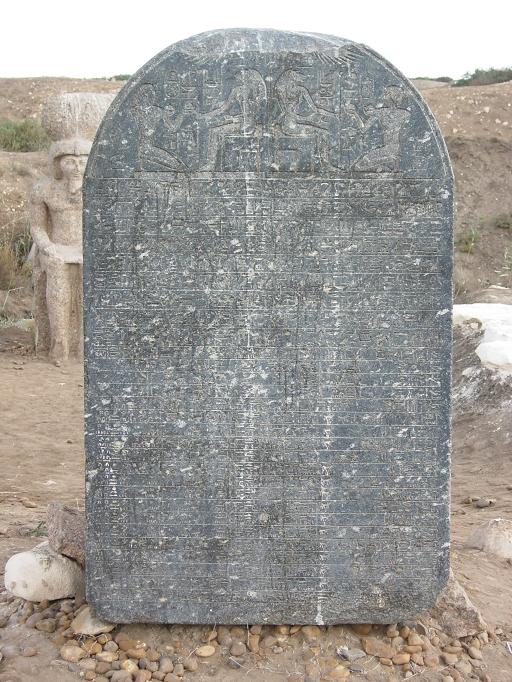
Now comes the moment that made this quiet riverbank famous. In the summer of 1799, French soldiers were digging into the old walls here as part of the repairs. Among the building stones, they found a dark slab covered in carved writing. The officer in charge, Pierre-François Bouchard, saw at once that it was unusual. The writing was not in one script but three. That slab became known by the name of this town — the Rosetta Stone.
Here is the detail many visitors miss. The stone was not found in a temple or a tomb. It was found reused as ordinary building material. Someone, centuries earlier, had taken a broken piece of an ancient monument and set it into a wall, simply because it was a solid block of stone. Its words meant nothing to the builders. One of the most important objects in the study of the ancient world spent generations as part of a fortification, just another block holding up the defences.
What was written on it? The stone carries a decree issued by Egyptian priests in 196 BCE, in the reign of Ptolemy the Fifth. The Ptolemies were a Greek-speaking dynasty who ruled Egypt after Alexander the Great. The same text appears three times. First in hieroglyphs, the sacred picture-writing of temples. Then in Demotic, an everyday Egyptian script. And finally in Ancient Greek, which scholars of Napoleon's time could still read.
That Greek section was the key. Because the three texts said the same thing, scholars could compare the known language with the unknown ones. It still took more than twenty years of hard work by many people. In 1822, the French scholar Jean-François Champollion announced that he had cracked the system of hieroglyphs. After more than a thousand years of silence, the inscriptions of ancient Egypt could be read again. That long chain of discovery began here, in a wall beside this river.
And here is a second surprise. The stone did not stay with the people who found it. The British defeated the French in Egypt, and under the terms of surrender in 1801, the stone passed into British hands. It went to London and has been in the British Museum since 1802. So the object that carries this town's name around the world is not here. What you have instead is the place itself — the setting, the river, and the ground where it came back into the light.
Look now at the fort as a building. Notice how thick the walls are compared with their height. Notice the rounded and angled forms of the bastions, shaped to deflect cannon fire. You may see different textures and colours in the masonry, where older work meets later repair. That patchwork is honest history. Each layer belongs to someone who stood here worried about an enemy on the horizon.
Turn toward the water and think about the view a sentry once had. Boats would have been the main traffic on this river, carrying grain, cloth, and people between the delta and the sea. Rosetta itself grew wealthy as a trading town. If you have time, the old centre has Ottoman-era merchant houses built in dark brick with patterned details and wooden window screens. They are a useful companion to this fort, showing the trade the walls were built to protect.
Before you leave, take a slow walk around the outer walls if access allows. Run your eyes along the joints between the stones. Somewhere in walls like these, a single slab once sat among thousands of others, with nobody aware of what it carried. It is a good reminder that ordinary places can hold extraordinary things. As you walk away, listen again for the wind and the slow river, the same sounds the soldiers heard in that summer of 1799.
Key facts
What to look for
Practical tips
Common questions
Is there a free audio guide to Fort Julien?
Yes — the Lokali app narrates Fort Julien free of charge in 50+ languages. The guide runs about 7 minutes, covers the history, what to look for on site and practical tips, and works offline once downloaded.
Where is Fort Julien?
Fort Julien is near Rosetta, Egypt, at 31.4397, 30.3894. Tap the map link on this page for directions from where you are.
What is Fort Julien known for?
The Rosetta Stone was found here in 1799. French officer Pierre-François Bouchard identified the stone.
What should you look for at Fort Julien?
Rounded, angled bastions shaped to deflect cannon fire. Mixed masonry colours where old work meets later repair. Very thick walls set low against the riverbank.
What should you know before visiting Fort Julien?
Combine your visit with Rosetta's old Ottoman merchant houses. Bring a hat and water; the riverbank offers little shade.
When is the best time to visit Fort Julien?
Come in the late afternoon for softer light on the walls.
On the map
Opens directions to Fort Julien from your location.
More to see near Fort Julien

Hear Fort Julien in your language
The full story, narrated, in 50+ languages. Download it before you go and it plays offline, at your own pace, with no ticket and no tour group.