
Bannerghatta National Park
12.8008° N · 77.5756° E · National Park
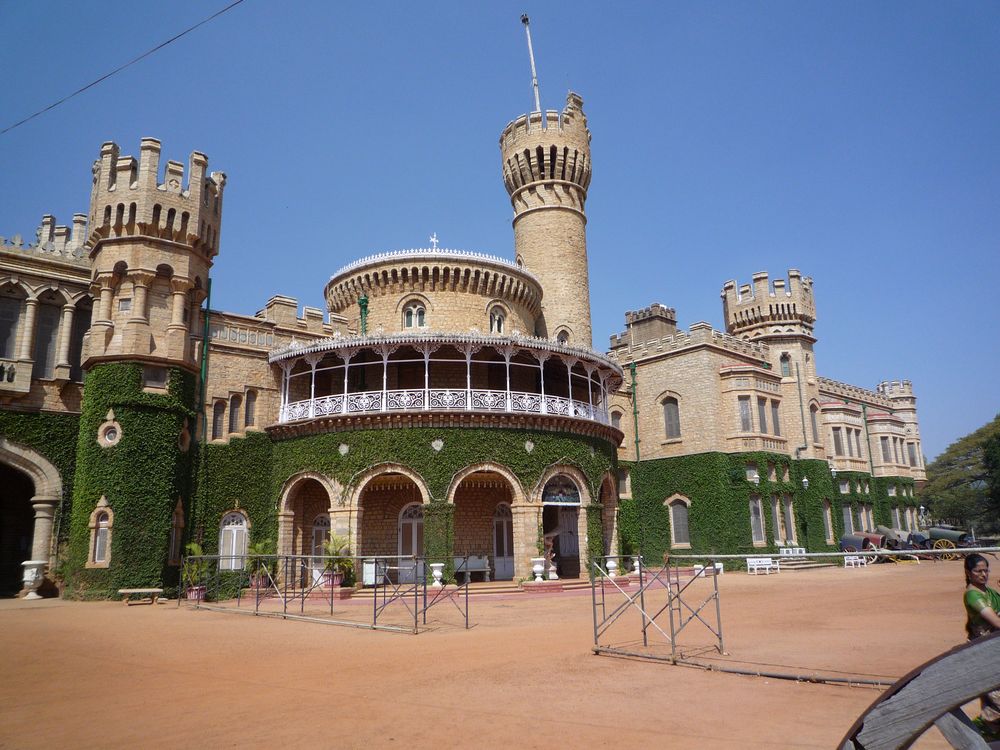
Photo: Muhammad Mahdi Karim · GFDL 1.2 · Wikimedia Commons
Bannerghatta National Park is a National Park near Bengaluru. Declared a protected national park in the 1970s. The free Lokali audio guide runs 6 minutes.
✓ Published October 2026 · how we write these guides
Visitor facts
| Lokali audio guide | 6 min · free |
|---|---|
| Type | National Park |
| Location | Bengaluru North district, India |
| Coordinates | 12.8008, 77.5756 |
| Languages | 50+, in the Lokali app |
The story
Listen for a moment. Beyond the hum of traffic, there is a dry rustle of leaves underfoot, and somewhere a bird call cuts through the warm air. The earth here is red and dusty. Boulders of grey granite sit on the low hills like stones left out to dry. This is Bannerghatta National Park, a wild place on the edge of one of India's fastest-growing cities.
It is easy to forget how close you still are to Bengaluru. The city's glass towers and technology parks lie only a short drive away. That closeness is the first surprise of this place. Very few large cities in the world have a forest like this at their doorstep, a forest where wild elephants still walk. The boundary between the city and the wild is thin here, and you can feel it.
The landscape is not lush rainforest. It is mostly dry deciduous forest and scrub. Deciduous means the trees drop their leaves in the dry season to save water. So the colours change through the year. After the monsoon rains, the hills turn green and soft. In the hot months before the rains, the forest becomes brown and gold, and the light falls through bare branches onto the rocky ground.
This area became a protected national park in the 1970s. For a long time before that, it was simply forest on the rocky uplands south of the city, used by nearby villages for grazing and firewood. Protection changed that relationship. Today the park is managed by the forest department of Karnataka, the state in which Bengaluru sits. And it carries a heavy role, because the city around it keeps growing.
Here is a detail most visitors miss. Bannerghatta is not an island. It forms part of a longer chain of forests that stretches south toward the hills near the border with Tamil Nadu, the neighbouring state. Elephants use these forest links as corridors. They move between feeding grounds over many kilometres, following old routes they have used for generations. When you stand here, you are standing at the northern end of a much larger elephant journey.
Most visitors, however, come for the part of the park that is easiest to reach. This is the Bannerghatta Biological Park, which includes a zoo, a safari area, and a butterfly park. It sits within the wider protected landscape, but it is managed as a separate space for the public. The true wilderness, where wild animals roam freely, lies beyond, in areas that are closed to casual visitors.
The safari is the experience many people remember. You board a vehicle with barred or meshed windows, and it carries you through large fenced enclosures. Inside, animals such as lions, tigers, and bears live in spaces far bigger than a typical zoo cage. The vehicle moves slowly. Then, suddenly, a tiger may be lying in the grass only a few metres away, completely calm, while everyone inside holds their breath.
Many of the animals here have difficult stories. The park works as a rescue and rehabilitation centre. Some animals arrived after being rescued from circuses, from illegal trade, or from conflict with people in villages. Some cannot return to the wild, because they never learned to hunt or because they were injured. So when you look at them, you are often looking at survivors, not only at exhibits.
Now, the second surprise. The butterfly park here is often described as the first of its kind in India, opened in the mid-2000s. Walk inside the domed enclosure and the air becomes warm and humid. Plants grow thick and green. And then you notice movement everywhere — butterflies in orange, black, blue, and white, landing on flowers and sometimes on visitors' shoulders. Stand still, and one may land on you too.
The butterfly park is not only for show. It also includes a small museum and space for studying butterflies, how they breed and which plants they need. Butterflies are sensitive to changes in their environment. When their numbers fall, it often means something is wrong with the wider landscape. In that sense, these small insects help scientists understand the health of the whole forest around you.
The forest also has a sacred side. On the nearby hills sits the Champakadhama Swamy Temple, a place of worship for the local community. Hilltop temples like this are common across southern India. People climb to them to pray, to make offerings, and to look out over the land. It is a reminder that this forest is not empty wilderness. It has long been part of the lives and beliefs of the people who live around it.
Of course, life at the edge of a growing city is not simple. New roads, buildings, and quarries press against the park's boundaries. When elephants leave the forest and enter farms, crops are lost and lives can be at risk, both human and animal. Conservation groups and the forest department work to protect the corridors and reduce this conflict. The future of this forest depends on how the city chooses to grow.
So take a moment before you leave. Look at the granite boulders, warm in the sun. Listen to the birds in the scrub, and to the faint sound of the city behind you. Somewhere out there, beyond the fences and the safari roads, elephants are moving quietly between the trees. As you walk back toward the car park, notice the red dust on your shoes. You are carrying a little of the forest with you.
Key facts
What to look for
Practical tips
Common questions
Is there a free audio guide to Bannerghatta National Park?
Yes — the Lokali app narrates Bannerghatta National Park free of charge in 50+ languages. The guide runs about 6 minutes, covers the history, what to look for on site and practical tips, and works offline once downloaded.
Where is Bannerghatta National Park?
Bannerghatta National Park is near Bengaluru North district, India, at 12.8008, 77.5756. Tap the map link on this page for directions from where you are.
What is Bannerghatta National Park known for?
Declared a protected national park in the 1970s. Part of a forest corridor used by wild elephants.
What should you look for at Bannerghatta National Park?
Grey granite boulders resting on the low hills. Red dusty soil along the paths and roads. Butterflies landing on flowers inside the humid dome.
What should you know before visiting Bannerghatta National Park?
Arrive early to beat crowds and the midday heat. Book the safari soon after arriving, as queues build.
When is the best time to visit Bannerghatta National Park?
Arrive early to beat crowds and the midday heat.
On the map
Opens directions to Bannerghatta National Park from your location.
More to see near Bannerghatta National Park


Hear Bannerghatta National Park in your language
The full story, narrated, in 50+ languages. Download it before you go and it plays offline, at your own pace, with no ticket and no tour group.