
Photo: Jerzucha62 · CC BY-SA 4.0 · Wikimedia Commons
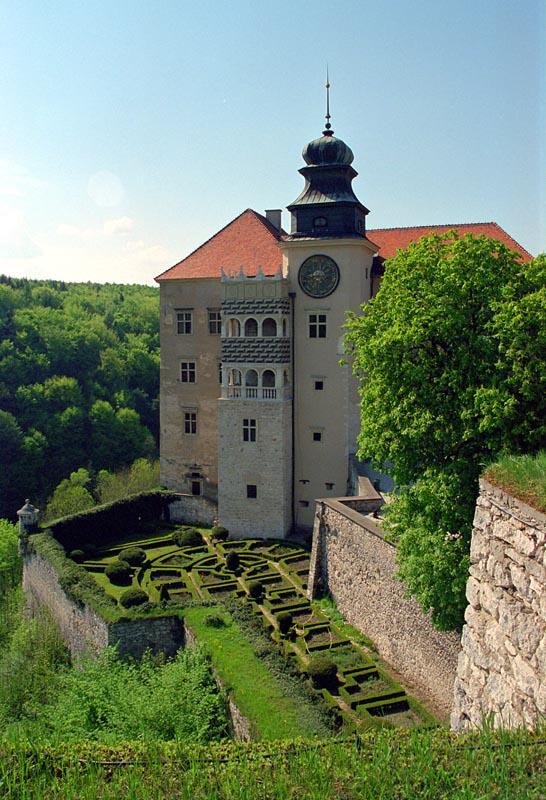
Bobolice Castle is a castle in the Lesser Poland part of the Silesian Voivodeship, Poland. Tradition links the castle to King Casimir the Great. The free Lokali audio guide runs 7 minutes.
✓ Published October 2026 · how we write these guides
Visitor facts
| Lokali audio guide | 7 min · free |
|---|---|
| Type | Castle |
| Location | Bobolice, Silesian Voivodeship, Poland |
| Coordinates | 50.6133, 19.4931 |
| Languages | 50+, in the Lokali app |
The story
Listen first. Wind moves across the open grass, and somewhere below you a dog barks in the village. Underfoot, pale limestone pushes up through the soil like old bone. Ahead of you, a white stone castle sits on a rocky outcrop, its walls catching the light. This is Bobolice Castle, on a quiet ridge in southern Poland. It looks almost too complete, too clean. That impression is part of the story here, and we will come back to it.
First, the ground itself. You are standing on the Kraków-Częstochowa Upland, a long belt of Jurassic limestone. Jurassic simply means the rock formed in warm, shallow seas many millions of years ago, long before any castle builder arrived. Over time, wind and water carved this stone into cliffs, towers and caves. When you see the castle rising straight out of the rock, remember that the rock came first. The builders used what nature had already shaped.
That choice was strategic. In the fourteenth century, this region sat close to the border between the Kingdom of Poland and Silesia. Tradition links the castle to King Casimir the Great, a Polish ruler remembered for building and strengthening many fortresses. A popular saying claims he found a Poland made of wood and left one made of stone. Bobolice was one link in that stone chain, watching over the routes that crossed these hills.
Today that chain has a name. Visitors call it the Trail of the Eagles' Nests. It is a route of castles and watchtowers built along the limestone crags between Kraków and Częstochowa. The name fits. Like eagles, these fortresses perch high on rock, where they could see far and be reached only with difficulty. Some still stand. Many are ruins. Bobolice is one of the few that you can see roofed and whole again.
Now look across the valley, toward the east. On a clear day you can pick out another castle on the next rocky hill, not far away. That is Mirów. The two castles face each other across the fields, and it is easy to walk between them. This pairing is unusual. Most fortresses on the trail stand alone. Here, two of them seem to keep watch over each other, almost like neighbours across a garden fence.
That closeness gave birth to a legend. Locals say a secret tunnel once ran underground between Bobolice and Mirów. According to one popular tale, the two castles belonged to twin brothers who shared everything, including a treasure hidden in the passage. Then both brothers fell in love with the same woman. The story ends badly. In the most common version, one brother kills the other, and the treasure is never found. No tunnel has ever been confirmed. The tale, however, is still told.
There is a second legend, quieter and darker. Some versions say the woman herself was walled up inside the castle. Visitors sometimes hear that a pale figure appears on the walls at night. Treat this as folklore, not history. Almost every old castle in Central Europe has its lady in white. Still, stand near the stone at dusk, when the shadows stretch and the wind picks up, and you may understand why people kept telling these stories.
Back to the documented past. Castles like this one passed through many hands over the centuries, as kings, nobles and regional dukes competed for land and loyalty. Then, in the seventeenth century, Poland suffered a devastating Swedish invasion that Poles call the Deluge. Many fortresses in this region were damaged during those years. After that, Bobolice slowly lost its purpose. Cannons and new ways of fighting had made small hilltop castles far less useful.
So the castle fell into ruin. For a long time, what stood here was a broken shell of stone. Local people took blocks from the walls to build houses and barns, as people did across Europe. Grass grew in the empty rooms. Old photographs and drawings of Bobolice show jagged walls against the sky, much like the ruin of Mirów that you can still see across the valley today. For generations, this was simply another romantic ruin on the hills.
Here is the surprise many visitors miss. The castle in front of you is largely a modern reconstruction. Around the turn of the twenty-first century, the site passed into private ownership. The new owners, the Lasecki family, began a long project to rebuild it. Builders worked on the old foundations, guided by historical research and surviving remains. The work took years. When it opened to visitors, Bobolice looked again like a living fortress, not a ruin.
The rebuilding divides opinion, and that debate is worth hearing. Some historians and conservation experts argue that ruins should stay ruins, and that new walls blur the line between old and new. Others say reconstruction lets people imagine how these castles once felt. Look closely at the stonework. You may notice where older, rougher masonry meets newer, more even blocks. That seam is a quiet record of two very different centuries working on the same hill.
As you walk, notice how the castle follows the rock. Walls bend where the limestone bends. Windows open toward the valley, where defenders once watched the roads. The courtyard is compact, because the outcrop leaves little flat ground. Inside, the castle now holds exhibitions, and there is accommodation and dining on the site. Consider spending time on the path outside, too. From below, you see how stone of the earth and stone of the builders become one shape.
Before you leave, turn once more toward Mirów. One castle stands rebuilt and white. The other stands broken and grey. Between them lie fields, a village, and centuries of weather. Feel the wind again, and the limestone under your shoes. Listen for the same dog, the same distant road. Whatever you think of the reconstruction, this ridge still does what it always did. It lets you stand high, look far, and wonder who stood here before you.
Key facts
What to look for
Practical tips
Common questions
Is there a free audio guide to Bobolice Castle?
Yes — the Lokali app narrates Bobolice Castle free of charge in 50+ languages. The guide runs about 7 minutes, covers the history, what to look for on site and practical tips, and works offline once downloaded.
Where is Bobolice Castle?
Bobolice Castle is near Bobolice, Silesian Voivodeship, Poland, at 50.6133, 19.4931. Tap the map link on this page for directions from where you are.
What is Bobolice Castle known for?
Tradition links the castle to King Casimir the Great. Part of the Trail of the Eagles' Nests castle route.
What should you look for at Bobolice Castle?
Seams where rough old masonry meets newer even stone. Mirów castle ruin on the next hill to the east. Castle walls bending to follow the natural rock.
What should you know before visiting Bobolice Castle?
Walk the field path between Bobolice and Mirów castles. Come near sunset for warm light on the limestone.
When is the best time to visit Bobolice Castle?
Come near sunset for warm light on the limestone.
On the map
Opens directions to Bobolice Castle from your location.
More to see near Bobolice Castle


Hear Bobolice Castle in your language
The full story, narrated, in 50+ languages. Download it before you go and it plays offline, at your own pace, with no ticket and no tour group.