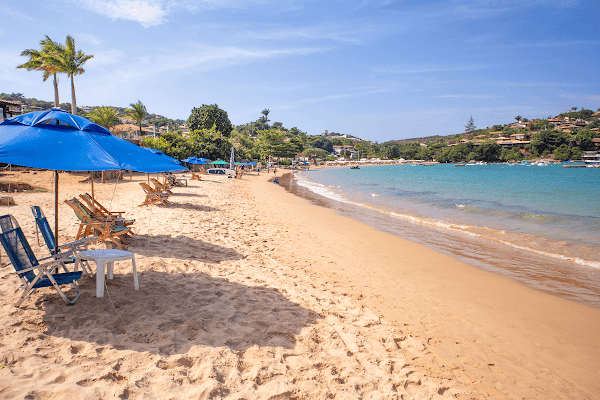
Praia da Ferradura is a sheltered horseshoe-shaped cove with calm turquoise water, soft sand, and surrounding cliffs. It is in Búzios, Brazil. Most visitors spend 1–2 hours here. The free Lokali audio guide runs 5 minutes.
✓ Verified August 2026 · how we write these guides
Visitor facts
| Time needed | 1–2 hours |
|---|---|
| Lokali audio guide | 5 min · free |
| Type | Beach |
| Best for | Photography |
| Location | Búzios, Brazil |
| Coordinates | -22.7506, -41.8833 |
| Languages | 45, in the Lokali app |
The story
The water here barely moves. It rests in a wide curve of sand, pale green near the shore and deeper blue further out. Two arms of dark rock reach into the sea, one on each side. They hold the bay the way cupped hands hold water. Stand at the edge and the first thing you notice is the quiet. The sea makes almost no sound.
This shape gives the beach its name. Ferradura means horseshoe in Portuguese. Walk to the center of the sand and look out toward the open water, and the name explains itself. The land bends around the bay in a smooth half circle. The two rocky points reach so far that they almost touch at the mouth. What is left is a pool of sea, nearly closed off from the ocean beyond.
Those rocky points do quiet, important work. They block the swell that rolls in from the Atlantic. The waves that reach the sand are small and slow, often no more than a ripple. On calm days the surface looks more like a lake than a sea. This is the main reason families with young children choose this beach over the wilder ones nearby.
The slope of the sand is gentle. You can wade a long way out and the water stays at your waist. There are no stairs to climb down to reach the beach and no steep hill to manage on the way back. You park, you cross the sand, and you are in the sea. For grandparents and for parents loaded with bags and toys, that ease is worth a great deal.
The still water invites slow movement. People paddle out standing on long boards, balancing as they go. Others slide along the base of the cliffs in kayaks. Small pedal boats cross the bay, leaving thin trails behind them. Because there is little current here, you can drift and rest and look back at the shore without drifting out to sea.
Turn your eyes to the cliffs at either end. Low green plants cling to the rock. In places the stone falls straight down into the water. The sea there is darker, a sign of greater depth. People with masks and snorkels swim out to these edges to look for small fish moving among the submerged rocks. The water is usually clear enough to see them.
The sand itself is soft and pale. Early in the day it is cool under bare feet. By midday the sun has warmed it through. Kiosks sit back from the water and serve cold drinks and simple plates of food. The smell of grilled cheese and salt air drifts down to the shoreline. Umbrellas open one by one as the morning goes on.
To understand this beach, picture the land it sits on. Buzios fills a narrow peninsula that points out into the Atlantic. Because of that shape, the town holds many separate beaches, each facing a different direction. Ferradura faces inward and stays sheltered. Other beaches close by meet the wind and the surf straight on. Here, behind its rocky gate, the mood stays calm.
This was once a coast of fishing families. For generations these bays were known only to the people who lived and worked along them, who read the water and the weather for a living. That changed in the second half of the twentieth century, when visitors found the peninsula and its many beaches. Ferradura, with its safe and shallow water, slowly became a place for rest rather than labor.
Let the sun guide your visit. In the first hours of the day the light comes low across the water and the bay lies calm and nearly empty. By afternoon more people arrive and the kiosks fill with voices. If you want the still version of this place, the one that feels almost private, come early and claim a spot near the water.
Watch the boats anchored near the mouth of the bay. They turn slowly on their lines as the water shifts beneath them. Their pale hulls catch the light and rock in a slow rhythm. Beyond them, past the protecting points, the open sea looks darker and rougher. That contrast is the whole story of this beach, held in a single view.
Find a place near the waterline and sit a while. The waves are too gentle to make much noise. Mostly you hear voices carrying over the sand, a paddle dipping, the soft slide of water onto the shore. The bay holds you the way it holds the sea, calm and in no hurry. There is little to do here but be still. On this beach, that is enough.
Key facts
What to look for
Practical tips
Common questions
How long do you need at Praia da Ferradura?
Plan 1–2 hours. That is the time most visitors spend at Praia da Ferradura. The free Lokali audio guide adds about 5 minutes of narration you can listen to as you walk, so it fits inside your visit rather than adding to it.
Is there a free audio guide to Praia da Ferradura?
Yes — the Lokali app narrates Praia da Ferradura free of charge in 50+ languages. It covers the history, what to look for on site and practical tips, and it works offline once downloaded.
Where is Praia da Ferradura?
Praia da Ferradura is in Búzios, Brazil, at -22.7506, -41.8833. Tap the map link on this page for directions from where you are.
What should you know before visiting Praia da Ferradura?
Arrive early in the morning for the calmest, quietest water.
What is Praia da Ferradura known for?
Ferradura means horseshoe in Portuguese, describing the bay's shape.
What is the best time to visit Praia da Ferradura?
Arrive early morning to secure parking and avoid crowds.
On the map
Opens directions to Praia da Ferradura from your location.
More to see in Búzios
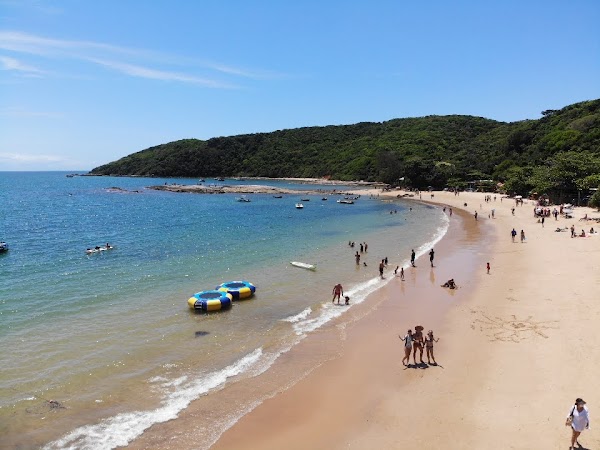
Hear Praia da Ferradura in your language
The full story, narrated, in 50+ languages. Download it before you go and it plays offline, at your own pace, with no ticket and no tour group.