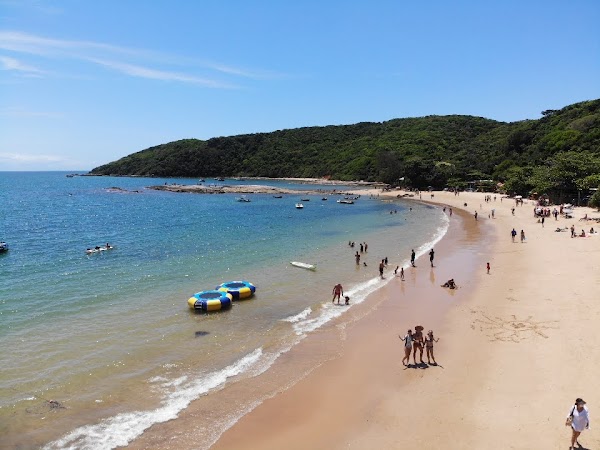
Praia da Tartaruga is a small, intimate beach backed by dense vegetation and rocky cliffs, known for sea turtles and snorkeling. It is in Búzios, Brazil. Most visitors spend 1–2 hours here. The free Lokali audio guide runs 5 minutes.
✓ Verified August 2026 · how we write these guides
Visitor facts
| Time needed | 1–2 hours |
|---|---|
| Lokali audio guide | 5 min · free |
| Type | Beach |
| Best for | Family |
| Location | Búzios, Brazil |
| Coordinates | -22.7456, -41.8667 |
| Languages | 45, in the Lokali app |
The story
The water is so clear you can count the stones on the bottom. It lies still against a thin strip of pale sand. Green hills rise behind the beach, dotted with houses. Out in the bay, boats sit at anchor on water that shades from clear to turquoise to deep blue. The air smells of salt and warm sand.
This beach takes its name from the animal that visits it. Tartaruga means turtle in Portuguese. Sea turtles come to these waters, and in the warmer months they approach the shore to feed in the shallows. The name is old and honest. It records something the local fishing families have long known about this particular stretch of coast. Names like this one are a kind of memory, passed down through the people who watched the water year after year.
The turtles arrive in a season. From November through March, in the southern summer, they come to nest and feed near the shore. Snorkelers sometimes meet them gliding through the clear water. If you swim here in those months, move slowly and keep your distance. These are wild animals following an ancient pattern, and the water is their home, not ours.
The beach is narrow. The sand forms only a thin band between the water and the green slope behind it. This means it can feel close and full when many people come at once. But it also keeps everything near at hand. The kiosks, the water, and the shade of the trees all sit within a few steps of one another. You are never far from the sea here, and never far from a cold drink either.
That clear, calm water is the main draw. The bay is sheltered, so the surface stays smooth on most days. You can see your feet as you wade. Further out, the rocks below hold small fish, and people swim there with masks to watch them. The clarity is the kind that makes you want to put your face in the water and look down.
Kiosks line the length of the sand. They serve cold drinks, fresh coconut water sipped straight from the shell, and plates of fish and rice. A restaurant sits along the beachfront, its tables set where you can eat a long lunch and still watch the water. Service here is slow in the good way. People come to spend whole afternoons, not quick visits. No one is hurried out of a chair.
Look at the hills that rise behind the beach. Houses and small hotels are built into the green slope, their windows turned toward the sea. The land is steep here, and the buildings step up it in stages, each one reaching for a view. In the late part of the day, the light moves across these hills and turns the green to a warm gold before the sun drops behind them.
Buzios sits on a peninsula crowded with beaches, and each has its own character. Some face the open ocean and take the full force of the waves. Tartaruga faces a calmer direction, tucked along the more sheltered side. This is why its water stays clear and still while other beaches churn. The shape of the land decides the mood of each shore.
Boats matter here. Many visitors arrive not by road but by sea, on the schooner tours that circle the peninsula and stop at several beaches in a day. Tartaruga is a common stop. The boats anchor in the bay, and swimmers come ashore from them. Watching the boats arrive and leave is part of the rhythm of the day.
Come prepared to look beneath the surface. The clear water rewards a mask and snorkel more than almost anything else here. Even close to shore, in water just above your waist, small fish move over the sand and rocks. Float quietly and they will carry on around you as if you were not there.
Choose your hours with care. Because the sand is narrow, the beach fills quickly when the boat tours arrive in the middle of the day. Early morning and late afternoon are quieter. In those gentler hours you can find space on the sand and a clearer view of the bay.
Sit at the edge of the water and watch the light move across it. Boats turn slowly at anchor. The hills hold the last of the sun. Somewhere out in that clear water, in the right season, a turtle is moving through the bay it has always known. You may not see it. But the name of the beach is a promise that it is there.
Key facts
What to look for
Practical tips
Common questions
How long do you need at Praia da Tartaruga?
Plan 1–2 hours. That is the time most visitors spend at Praia da Tartaruga. The free Lokali audio guide adds about 5 minutes of narration you can listen to as you walk, so it fits inside your visit rather than adding to it.
Is there a free audio guide to Praia da Tartaruga?
Yes — the Lokali app narrates Praia da Tartaruga free of charge in 50+ languages. It covers the history, what to look for on site and practical tips, and it works offline once downloaded.
Where is Praia da Tartaruga?
Praia da Tartaruga is in Búzios, Brazil, at -22.7456, -41.8667. Tap the map link on this page for directions from where you are.
What should you know before visiting Praia da Tartaruga?
Visit early or late to avoid the midday boat crowds.
What is Praia da Tartaruga known for?
Tartaruga means turtle in Portuguese, naming the beach.
What is the best time to visit Praia da Tartaruga?
Snorkel just offshore to spot tropical fish and occasionally sea turtles.
On the map
Opens directions to Praia da Tartaruga from your location.
Reference
More to see in Búzios
Hear Praia da Tartaruga in your language
The full story, narrated, in 50+ languages. Download it before you go and it plays offline, at your own pace, with no ticket and no tour group.