
Rudkhan Castle
37.0644° N · 49.2397° E · Castle
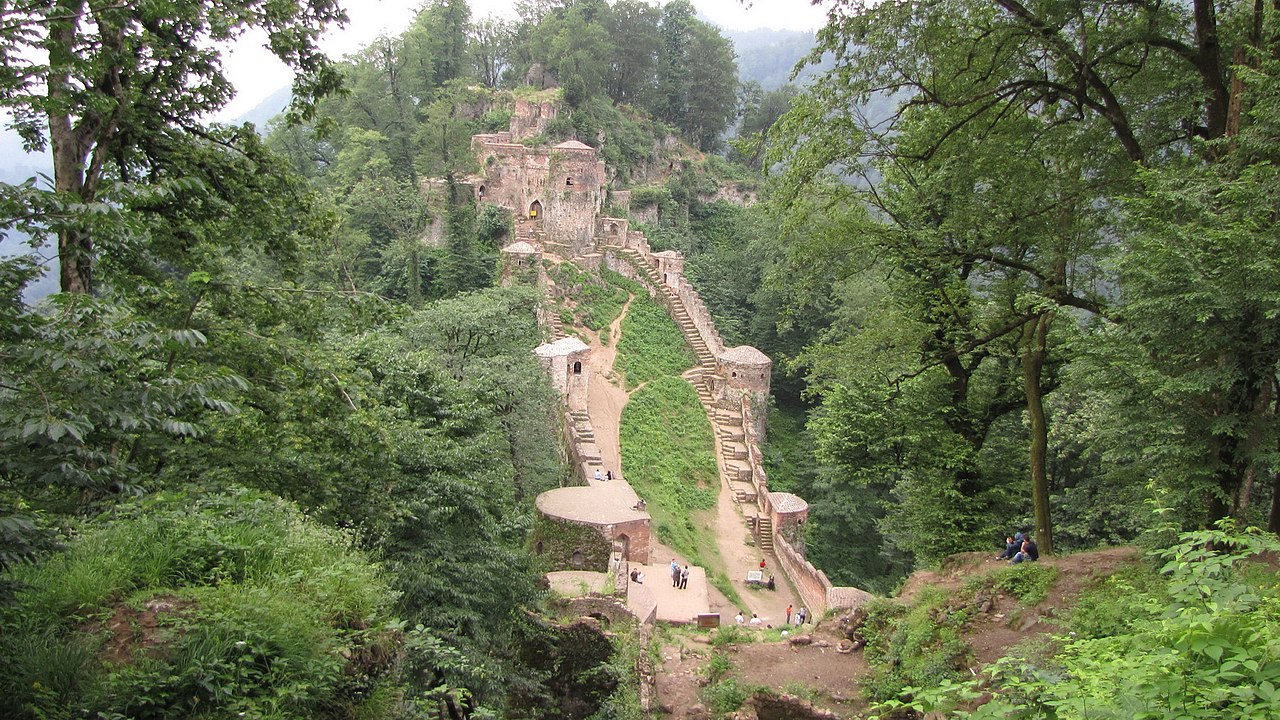
Photo: Hosseinronaghi · CC BY-SA 4.0 · Wikimedia Commons
Rudkhan Castle is a castle in Fuman County, Iranian national heritage site. Popularly nicknamed the Fortress of a Thousand Steps. The free Lokali audio guide runs 7 minutes.
✓ Published October 2026 · how we write these guides
Visitor facts
| Lokali audio guide | 7 min · free |
|---|---|
| Type | Castle |
| Location | Central District, Iran |
| Coordinates | 37.0644, 49.2397 |
| Languages | 50+, in the Lokali app |
The story
Listen first. Water runs over stones somewhere below you, and the air smells of wet leaves and moss. A thin mist often hangs between the trees here, even on a clear day in the lowlands. Underfoot, the path climbs in steps of stone and packed earth, worn smooth by many thousands of boots. Somewhere above, still hidden by the branches, a fortress waits on the ridge.
This is Rudkhan Castle, in the forested hills of Gilan Province in northern Iran, not far from the town of Fuman. Many Iranians know it by a nickname: the Fortress of a Thousand Steps. Nobody needs to count them exactly to understand the name. By the time you reach the gate, your legs will tell you the story. The climb is part of the visit, and the builders planned it that way.
Take a moment to look at the forest around you. These trees belong to the Hyrcanian forests, an old band of broadleaf woodland that runs along the southern shore of the Caspian Sea. It is green, damp and dense, very different from the desert landscapes many people picture when they think of Iran. Rain and fog are common here. The same wet climate that feeds the trees also kept this castle hidden for long stretches of its history.
The name of the place comes from the river in the valley below. In Persian, rud means river, and the stream you can hear is known as the Rudkhan. The water was more than scenery. A fortress on a high ridge needs a reliable supply, and a river at its foot, together with the heavy local rainfall, helped make a long siege more survivable for the people inside.
Now look up at the walls as they appear through the branches. They are built mostly of brick and stone, held together with mortar. The colours shift between warm reddish brick and grey stone, often dark with damp and patched with green moss. The walls follow the shape of the ridge instead of a neat geometric plan. They bend, rise and drop with the land, so the fortress seems to grow out of the mountain itself.
The question of who built Rudkhan is harder than it looks. Historians generally believe the site was fortified long ago, and many accounts link its early origins to the Sasanian period, the last great Persian empire before the arrival of Islam. Much of what you see today, however, is thought to come from later centuries of rebuilding and repair. The honest answer is that the castle grew in layers, and each era left its own work in the brick.
Here is something many visitors miss. Rudkhan is not one single building, but two connected parts. Most descriptions divide it into a section for the rulers and their households, and a section for soldiers and defence. Between them, the walls and towers link the whole ridge into one system. As you walk, try to notice where the spaces feel more open and residential, and where they feel narrow, watchful and military.
Walk along the ramparts and pay attention to the towers. They project out from the line of the wall at intervals. This was a practical design. From a tower, a defender could watch the face of the wall on both sides and shoot at anyone trying to climb it. Look through the openings in the parapet too. They are small for a reason — wide enough to see and shoot through, narrow enough to protect the person behind them.
There is also local folklore around a fortress like this one. Locals say the castle was so well hidden by forest and fog that enemies struggled even to find the way up. Treat that as a popular tale and not as documented history. Still, stand on the walls on a misty morning and you can understand why the story lasts. The valley can disappear completely below you, as if the castle floats above a white sea.
Near the main entrance, look for the remains of an inscription. Inscriptions like this usually recorded who built or restored a structure and when. Scholars connect the one here with later rebuilding by local rulers of the region. It is a quiet reminder that Gilan had its own lords and dynasties, with their own power in these forests, often at a distance from the great capitals of Iran.
The second surprise is about the people who come here today. Rudkhan is now one of the most visited historic sites in Gilan, and the climb has become a weekend tradition for many Iranian families. You will often hear children counting steps, friends laughing on the way up, and older visitors stopping to rest on a bench or a rock. Along the lower path, small stalls may sell tea, snacks or local treats. The mountain fortress has become a social place.
As you rest at the top, think about the effort behind every brick. Each one was carried up this ridge, by people and probably by animals, on paths much rougher than the one you climbed. Lime, water, stone and timber all had to come up the same slope. The view you enjoy now, across green ridges toward the lowlands, was once a working view. Guards looked out from here for smoke, movement and danger.
The castle has been restored in modern times, and you may notice the difference between older and newer work. Some sections show crisp, clean brick. Others show rough, weathered surfaces with gaps, moss and stains of rain. Both are part of the honest story of the place. A building in a climate this wet does not survive by itself. People have repaired it again and again, and that care continues today.
Before you start down, stand still for one more minute. Listen for the river again, far below. Feel the cool air coming up through the trees, and look at the line of the walls following the ridge into the mist. On the way down, the steps will feel easier, and the forest will close around you once more. Keep looking back between the branches. For a few moments, the castle stays visible — then the trees hide it again.
Key facts
What to look for
Practical tips
Common questions
Is there a free audio guide to Rudkhan Castle?
Yes — the Lokali app narrates Rudkhan Castle free of charge in 50+ languages. The guide runs about 7 minutes, covers the history, what to look for on site and practical tips, and works offline once downloaded.
Where is Rudkhan Castle?
Rudkhan Castle is near Central District, Iran, at 37.0644, 49.2397. Tap the map link on this page for directions from where you are.
What is Rudkhan Castle known for?
Popularly nicknamed the Fortress of a Thousand Steps. Named after the Rudkhan river flowing below.
What should you look for at Rudkhan Castle?
Towers projecting outward from the line of the walls. Narrow openings in the parapet for archers. Remains of the inscription near the main entrance.
What should you know before visiting Rudkhan Castle?
Wear sturdy shoes for the long, often slippery climb. Bring water and take breaks on the way up.
When is the best time to visit Rudkhan Castle?
Visit on a weekday morning to avoid weekend crowds.
On the map
Opens directions to Rudkhan Castle from your location.
More to see in Central District
Hear Rudkhan Castle in your language
The full story, narrated, in 50+ languages. Download it before you go and it plays offline, at your own pace, with no ticket and no tour group.